FAITH QUAKE

FAITH QUAKE

What a faith earthquake we’ve been through this last week. I’ve had more people reach out to me with hurt, pain, anger, and doubt in their faith than any other week ever. I can’t think of any single event in my lifetime that caused such a faith-crisis in my immediate friend-circle and beyond. And I feel it too. I’m carrying the weight of my own disappointment and frustration.

The church has lost a lot of credibility with many people (and for some it didn’t have a lot left) and I fear it will take a long time to earn any of it back. Large portions of the evangelical church will never earn it back. We’ve likely witnessed the “final straw” event for many people in their relationship with church.

Of course it had to do with the election. But not because a “republican” got elected. This isn’t about normal republican/democrat debates.  It’s not about thinking that Harris was the “Jesus” candidate. Anyone who assesses the fallout of this faith crisis as just liberals crying over a political loss won’t ever understand why people are leaving the church and will have no hope to rebuild credibility with them. 

People aren’t leaving the church because they identified Kamala Harris with Jesus and she lost. People are leaving the church because they saw the church identify hate, indecency, cruelty, racism, sexism, sexual assault, insurrection, and crude public sex jokes with being the champion of Jesus. They saw the church not just hold its nose and vote for a person in spite of that message (which might be bad enough), but in many cases give it a full-throated endorsement! They saw a church that wanted the “strongman” and felt justified in his cruel tactics, often cheering it on. 

People aren’t dumb. They know “love your neighbor” and “love your enemies” doesn’t look like that. They hear evangelicals talk about Jesus and how morals and character matter, but they no longer trust that evangelicals actually believe what they say. And why should they? 

Evangelicals may have mobilized to win an election, but they’ve lost their credibility to speak in any meaningful way into the lives of most of their neighbors. It’s why I mourn and lament. Not simply because I’m sad about what this election cycle means for our country, but because of how much damage it has done to the Christian witness. 

Those of us left who do want to advance the message of the peaceable, loving, compassionate Jesus have a lot of work to do. But at least the winnowing work has been done. The civic religion that often co-opts Jesus’ name has been exposed. We won’t have to do much work to distinguish ourselves from it anymore. Demonstrating basic love, decency, kindness, and compassion will be all it takes. It will stand it stark contrast to what passes as “Christianity” in most places today. And once the ground stops shaking as badly, I hope it’s a safe place for many to put their feet as they start to rebuild. 

So to those of who you who have been through a disaster zone this week, we see you. There are those of us who feel it too. We carry your hurt along with our own. And whenever you are ready, we are ready to join you in clearing out the rubble, picking up the pieces, and rebuilding something new.

My Post-Evangelical? Era

My Post-Evangelical? Era

It’s been a tough week for me and many of us. Apocalypse usually is that way. Apocalypse is simply an old word for “revealing” or “unveiling.” It’s the idea that something is made known to us fully that we didn’t see completely before. It’s like a curtain that goes up and we see what’s been behind it all along but didn’t have eyes to see. It feels like that happened this week in my religious world. The curtain went up and what many of us saw was worse than we expected or feared.

So, to those of you who follow Jesus and feel betrayed by the church that taught you about him . . . I understand. I feel those feelings too. I know what it’s like to be an exile from the faith that nurtured you. It hurts. It feels like grief, anger, and betrayal all wrapped up into one. It makes you question everything you’ve believed and the people that taught it to you. I get it.

But you are not alone. There are many of us out here. We feel what you feel. 

Weirdly, I find comfort and encouragement by your discontent. It reminds me that the love of Jesus can still be recognized even though a large part of the American evangelical church has been co-opted for other purposes. 

Many of us are not ready for a “what’s next” discussion. Coming to grips with the reality of our situation is difficult and requires a moment for lament. I’d encourage you to take all the time you need. No need to rush the grief or express simple platitudes of hope. It’s okay to feel the hurt for a bit. It’s okay to grieve. I certainly have been.

But, whenever you are ready (and if you ever are) . . . let’s begin a new way. 

For those of you who know me well, it won’t surprise you that I haven’t been comfortable in American evangelicalism and the small non-denominational tradition within it that has been my home for a long time. I’ve been deeply concerned about its preoccupation with coercive political power and its narrow and excluding theology since before it was cool point that out. I’ve been very vocal about it for years, hoping and urging it to reform. But I can no longer ignore the unique harm it does to the witness of Christ and to the lives of my neighbors. It has continued to reaffirm its own choice of what it wants to be, and I must make my own choice of what to do in response. I want to leave that label behind. If you are reading this, you probably do too.

I feel a sense of gratitude for the church I grew up in for first introducing me to Jesus and there are many things from that tradition that I’ll take into the future with me. But I can’t claim whatever the label of “evangelicalism” means today. It’s got so much baggage. And I’m tired of defending it and trying to reform it. We need a post-evangelical movement.

I don’t mean post-Christian. I’m not abandoning faith in Jesus. Rather, it’s because of Jesus that I feel compelled to find a new way. I’m not giving up on church as a community either. I still find a healthy church community to be hugely formative and supportive in my faith. But we do need a new expression of church beyond what is commonly called “evangelical.”

“Evangelical” is a term that is hard to define. In a certain way it just means “according to the teaching of the gospel.” And I certainly still affirm that as meaningful to my life and faith. But more popularly, “evangelicalism” has come to mean a certain type of American church that is preoccupied with conservative politics and fundamentalist theology more than the first definition. It’s that latter meaning and those type of churches I mean to depart. Truthfully, I left them in spirit long ago, but the association still remains. Today I want to make it clear, I don’t want to be associated with that at all. I’m done with all that. We need a new way forward.

I know for many my written disassociation here is not far enough. Some will find they need to pursue paths outside of the church altogether. I understand that position too. I can appreciate the intention to follow Jesus outside of traditional church environments these days and understand why some will.  

But for me, I believe there is something new on the horizon. And I’m not alone. I’ve found all sorts of people looking to forge a way forward. I’ve met some beautiful people who are Lutheran, Presbyterian and Catholic who feel the need as well. They recognize the church is off track too and want to find a better way. I think they’ve got a lot to teach me about how to go forward. Maybe we need to learn from each other. And maybe together we can forge something special in this post-evangelical landscape.

As hard as these past few days (and years) have been, perhaps we’ll experience another apocalypse in the days to come. Maybe another curtain will be pulled back and we’ll see there are more people ready to make a jump to post-evangelical life and that we aren’t the only ones needing to leave the church as it currently exist. I hope maybe you’ll catch a glimpse of that revelation just in reading this. You aren’t alone.

I’m not ready to give up on church, but it must look like something different, or I can’t continue in it either. I’m ready to explore what’s possible next. And if—at some point—you find yourself interested in taking a new journey too, just know you are not alone and there are others of us out here. We’d cherish the companionship as we look to build something new, and that you are always welcome to join along as we figure this out together. 

The comfort and peace of Jesus be with you.

An Evening Lament

An Evening Lament

It’s been a while since I posted here but I needed a place to put some words tonight. There’s no perfect place for this and the words don’t really need an audience. But I need a place to deposit them. 

I’d like to preface this by saying I’m hugely optimistic about the future of society in general and the horizon of Christian faith. I think the most inspiring and beautiful days are still ahead for those who follow the way of the Nazarene. And I believe humanity will march on toward greater justice and equality for all, even if that path isn’t as direct a line as I’d prefer and filled with far too many detours and backtracks that feels like unnecessary wasted time. 

But some days (like today) I reflect on all I’ve seen and learned in recent years and it feels right to just mourn and cry.

Tonight I choose to let that heaviness and sadness in for a few moments. To feel it’s reality.  To acknowledge its effect on me and many around me. This heaviness isn’t the final word in the story, but it is PART of the story and to ignore it is to short-circuit what I think God is doing in the midst of it all. So I choose to let it in tonight and lament. 

This is my confession and lament…

I feel such deep sadness at so much of Christianity that has lost the peaceful way of Jesus and become marked by fear, legalism, judgmentalism, racism, greed, exclusion of others, hatred of enemies, and power politics. I’m embarrassed by so much of what passes as Christianity these days.  I feel like something I thought was beautiful and true has died and yet I’m afraid a lot of it probably never was as pure and noble as I remember in my younger years. It hurts to see a message of peace and love weaponized against those that don’t meet religious expectations or mobilized in pursuit of cheap political power grabs.

I’m grieve over the graveyard of hurt that religion has caused. I’m ashamed at the role I once played in this pain and perhaps the role I still inadvertently play in causing pain for some. I weep for those who have had to abandon faith communities in order to protect themselves from the shame, exclusion and taunting of prominent voices in my religious tribe.

I also feel such deep sadness in discovering that so many people I looked up to as heroes of faith when I was younger have abandoned the very principles of Jesus they taught me to cherish.  It often feels as though I’m mourning the death of people who haven’t actually died but who I have learned aren’t at all who I thought they were or that they once were.  I don’t always know what to do with the sadness and anger I feel over what feels like the loss of grief and the sting of betrayal at the same time.  It feels lonely to carry the legacy of teachers, preachers, friends, family and mentors who taught me about Jesus so well I can no longer follow in their footsteps.  Damn . . . it’s really this part that hurts the most, isn’t it?

All of this is enough that I’m tempted to walk away from faith . . . and also desperately clinging to it simultaneously.

There’s more I suppose. But that’s what I’m willing to lament tonight.  And it feels like a lot. 

I’m not cynical (not completely anyway).  I’m not in total despair either.  I know the peaceable way of Jesus is as much “good news” now as ever.  After everything, I still think His love is the real hope of the world.

But sometimes it feels important to cry a little bit and lament the stuff that’s gone wrong and feels so heavy.  It feels honest. And maybe the work of admitting to ourselves that we are grieving and lamenting it is the first step toward finding wholeness and peace. 

Tomorrow is a new day. God’s mercies will be there new and waiting.  So I’ll cry tonight, but I’ll wake up tomorrow and embrace them.  Maybe they’ll mean even more because of it. 

What do you need to lament?

A Garden Parable

IMG_4444

I recently bought a new house. It’s a got a really nice sized backyard with a garden that I can tell was once extremely beautiful and likely the inspiration of the neighborhood.  It was clearly designed, planted and cared for by someone who really knew what they were doing. It was a backyard masterpiece. 

Unfortunately, in recent times it has become overgrown and full of weeds. You can still see the hints of what it used to be, but it’s like a fading echo now.  It’s still got some nice aspects to it for sure, but it’s not what it used to be.  

So I’ve been working to restore the yard/garden to it’s former glory.  I’m probably not adequately equipped. I don’t know everything that I need to know and have had to ask questions of people with more gardening experience, learn along the way and make mistakes. I’m nowhere near the level of the “Master Gardner” that first arranged this yard, but since it’s under my care now I’m doing the best I can do. 

And it’s taken a lot of work. I’ve spent hours on my knees doing lots of dirty work like pulling weeds. My knees hurt. My fingers constantly have dirt under the nails that I can’t get clean enough.  My muscles ache from being bent over for long periods of time. It’s not my favorite work by far. 

Close up of female hands pull out weeds from ground garden.

Some of the weeds are extremely stubborn. They have deep roots that have been allowed to grow for too long and so it’s hard to get them to release.  Some of the plants that are intended in the garden are overgrown and need trimming back significantly. The paver edge along the grass yard that gives a healthy border has slipped, sunk too low and needs dug up and rebuilt.  A feature pergola/swing that was once beautiful and inspiring is now covered in moss (and some rot) and needs power-washed, sanded, some boards replaced and re-stained.  And theres much, much more…

Of course, in this process, we’ve done some new planting, some watering, fertilizing and other measures to encourage the part of the garden that we want to grow to be healthy and strong. But given the state of the yard/garden that we inherited, most of the work has been to uproot and tear out the destructive elements that are preventing the yard/garden from being all it can be. 

Have I spent too much time on the weeding and pulling out of unwanted elements and not enough on watering and fertilizing? Maybe. Maybe not. 

By the end of the season I’m sure we’ll all be able to see whether or not the investment of my life in the backyard had any good impact on it’s state of beauty and health.

But after those long days in the yard, I go to sleep at night content that all that I have done, correctly or not, has been done in the goal of helping the yard/garden be the best it can be.  I do care for the garden.  And I’ll give it all I have to offer again tomorrow . . . and just hope that is enough. 

Maybe Ignore Your Pastor This Time

As a pastor I’ve been included in a “Pastors Only” group on Facebook for pastors to privately discuss things amongst themselves.  It’s been an eye-opening group to be in for a few years.  There are logistic questions that pastors ask one another for help with, a decent amount of complaining about church parishioners, theological debate and of course some soap-box political opinions.

But like most things in the world right now, the group has lately been dominated with discussion on the topic of the current Covid-19 Pandemic.

And the things I’ve seen predominantly said have been alarming.

As late as this week I’ve seen lots of very irresponsible discussion from pastors refusing to give up in-person gatherings; sometimes suggesting churches openly defy state orders not to gathering in groups over 10, or “accidentally” miscount (read: lying about) how many people are gathered (Hey we only have 9 people here … wink), and discussion on preachers traveling from house-to-house into older people’s homes to preach sermons.

As a leader of a faith community myself, I know first-hand what a bummer it is not to see everyone in-person. We’ve been ONLINE only for two weeks now and it feels weird. Doing things online isn’t the same. It’s missing a lot. You can’t really replicate relationship on a livestream.

IMG_4304

But the church will be just fine through a few weeks of online gathering. It won’t be the same, but we can do it. And just so we all know, Jesus won’t be mad at us if we skip the in-person “churching” for a few weeks. 

In fact, perhaps the way we can best honor God and love each other and our local communities currently is to not be physically around each other for a while. 

Spiritual communities and their leaders have a moral responsibility during this time to listen to the health experts and local authorities and help keep people safe by following their direction.

If your particular leader encourages you to something otherwise, as a pastor, I give you permission to ignore them and stay home and stay healthy.  

Participate with a church community ONLINE for now. We can keep spreading the gospel without spreading a deadly virus.

Moses Has to Beg God Not to Kill Everyone?!

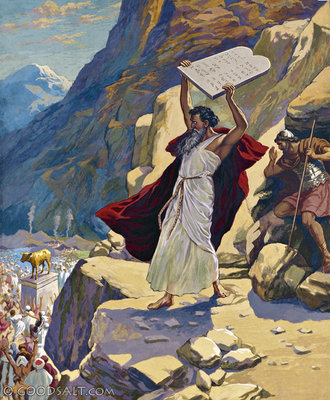
I got a few days behind on my daily Bible reading in my Bible app and have been getting caught up today. I read Exodus 32 and was reminded at what a bizarre scene it is. We meet Moses on top of a mountain, pleading with God (who had just brought all the Israelites miraculously out of Egypt) not to kill all of his people.

stdas0132

God goes to all the effort to get his people free from Egypt and then one moment later and he’s ready to kill them all?

Where is the patience? Didn’t he expect some slip-ups from these people?  Is this God really that naive?

And the only thing stopping God from wiping them out in an angry outburst is Moses’ convincing pleading? The guy who doesn’t talk so good?

What is going one here?

Maybe you should read Exodus 32 for yourself first:

https://www.biblegateway.com/passage/?search=Exodus+32&version=NIV

Okay, bizzarre right?

Let’s recap…  Moses goes up a mountain to talk to God. Meanwhile the rest of people stay behind. They get restless and tired of waiting and make an idol.  God sees it and is apparently so angry that the Israelite people have made a golden calf that he wants to destroy them. It takes Moses talking him out of it to get him to relent. Moses begs for him to pardon them. God eventually agrees.

But then Moses comes down from the mountain and sees their idolatry himself. His response is equally violent. He gathers a small militia and kills 3,000 of the offenders.

Moses then goes back to God pleading for forgiveness of the rest of the people. But oddly, God has already agreed to this before Moses had come down the mountain and killed 3,000 people. It doesn’t seem that there is any necessary reason for Moses’ violent actions.

What gives?

I think it’s possible that God (although angry) is not as angry as he first appears. (Are we really to believe that the perfect God who is merciful as well as all-powerful would so quickly give up on his plan to save all Israel and in an emotional outburst have them all killed?)

I think a better explanation is that God’s expression of anger voiced in wanting to destroy the Israelites is for Moses’ benefit. Perhaps he anticipates Moses’ violent response and tries some reverse-psychology to head it off before he heads down. Perhaps God takes on what he supposes will be Moses’ first response and allows Moses to talk him out of it to attempt to build patience and mercy in Moses. 

Perhaps this isn’t an attempt to evolve God (from anger to forgiveness) but to evolve Moses. God hopes that if Moses sees God relent in forgiveness that Moses will too.

In other words, Moses isn’t really convincing God not to kill the Israelites, rather God is trying to convince Moses not too.

(*Sidenote: It appears God has good reason to suspect Moses’ temper may lead to violence. Exodus 2:11-12 tells us of Moses loosing his cool and killing an Egyptian that is abusing an Israelite. Moses has a pretty hot temper.)

All this is confirmed at the end when God meets with Moses again and God basically tells him he doesn’t need Moses to be the arm of the law. He reminds him he is capable of handling all disciplinary measures.


Exodus 32:33-34 (NIV)
33The Lord replied to Moses, Whoever has sinned against me I will blot out of my book. 34 Now go, lead the people to the place I spoke of, and my angel will go before you. However, when the time comes for me to punish, I will punish them for their sin.”


In other words, “Go do what I told you to do, Moses, and let me take care of punishment.” God doesn’t need or desire (and certainly never asks for) Moses’ violent response to the idolatry of Israel.

This story is not about the vicious anger of God but of Moses.

It also has a parallel in Jonah. In a similar scene, God tells Jonah he is going to destroy Nineveh. Is this really his plan? I wonder.

But of course, Jonah believes him. What’s more, so do the Ninevites. They repent and God spares them.

Seems like a happy ending, but the book ends with Jonah angry and pouting because he hoped God really would destroy Nineveh. There’s a little Moses in all of us, I guess.

Again, God appears to be concerned not just with the sin of the offenders but with the attitude/actions of his spokesperson.

Back to Moses, just moments later in Exodus 34 God describes himself to Moses as a “compassionate and gracious God, slow to anger, abounding in love and faithfulness…”


Exodus 34:5-7 (NIV)
Then the Lord came down in the cloud and stood there with him and proclaimed his name, the Lord. And he passed in front of Moses, proclaiming, The Lord, the Lord, the compassionate and gracious God, slow to anger, abounding in love and faithfulness,maintaining love to thousands, and forgiving wickedness, rebellion and sin.


God’s description of himself here doesn’t exactly sound like the picture of a God who throws a tantrum on a mountain at the first sign of his people misbehaving and threatening to kill them all.  It’s almost as if God description of himself here is a correction of Moses’ view of what he is like and what Moses in turn should be like.

Now interestingly, Jonah actually quotes this description of God at the end of his story (Jonah 4:2) stating that it’s why he knew God wouldn’t follow through on his threat.


Jonah 4:1-2 (NIV)
But to Jonah this seemed very wrong, and he became angry. He prayed to the Lord, “Isn’t this what I said, Lord, when I was still at home? That is what I tried to forestall by fleeing to Tarshish. I knew that you are a gracious and compassionate God, slow to anger and abounding in love, a God who relents from sending calamity.”


As Jonah sits on a hill overlooking Nineveh wishing it had been destroyed, does he become aware that God is using a similar approach on him as he did Moses on the steeper hill of Mt Sinai?

Jonah doesn’t have anyone killed (as Moses does), but probably only because he doesn’t have the power to do so.

Exodus 32 (and the story of Jonah) are a good reminder to be cautious in assuming that our violent inclinations find any correlation with God. And we see that even in the Old Testament the picture of an angry God is more likely a “mask” put on him by others (a term used by Martin Luther) than the reality of his nature.

So let’s confess with Jonah a belief in the goodness and patience of God: “I knew that you are a gracious and compassionate God, slow to anger and abounding in love, a God who relents from sending calamity.”

And let’s be aware of when our own temperament and response is anything but God-like.

To Pledge or Not to Pledge?

I don’t pledge allegiance to the flag.

“What? Why not, Daddy? We have to do it every day at school. Didn’t you do that at school when you were a kid?”

school-not-forcing-kids-to-say-the-pledge-of-allegiance

Yes, I did. I learned it that way too. I said the pledge, while crossing my heart and staring reverently at the flag.  I was an earnest young boy. I really loved my family and the land I lived in.  And when I said the words, it sort of felt sacred.  Almost religious. 

“I pledge allegiance to the flag, of the United States of America. And to the republic for which it stands. One nation, under God, indivisible, with liberty and justice for all.”

When I was a kid, I remember having a conversation with grown ups about the pledge too. When I was in late grade school, I had some reservations.  Pledge allegiance?  To a country?  But, shouldn’t I only pledge my allegiance to God?  What if the two aren’t the same?

1200-325401-459283145.jpg

I was told then, what many are told now. It’s okay to pledge allegiance to both. Of course if one conflicts with the other, we understand that our allegiance to God supersedes country.  But how often will that really happen anyway?  This is America!

Sounds good. And for a long time I believed that settled it.  But the problem is I really don’t want the two to conflict with each other. So even when they clearly did, I  would go out of my way—through lots of intellectual and theological gymnastics and justifications—to pretend they didn’t.  I didn’t want to ever have to make the choice, so my mind helped me never see the conflict. 

Many of us find ourselves living in a weird tension in life. We know that certain things like national defense, border security, economic policy etc are best for the good ole USA (or at least certain sections of it).  But deep down, we wonder, are those things that Jesus would prioritize . . . or condemn? 

What would Jesus do about illegal immigrants looking for a better life?  

What would He think about economic policies that boost American affluence, even at the exploitation of others? 

What would Jesus think about a ballooning budget for military expansion while benefits for the poor are cut? 

We are so often caught in the tension of self-interest and Jesus’ call for radical other-centered love that requires self-sacrifice. 

America First!! But wait . . . would Jesus say that?

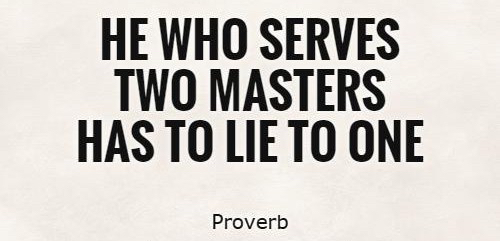
I don’t think it has to be this way. I think it’s a false tension.  We’ve convinced ourselves we can pledge allegiance to two masters.

We’ve convinced ourselves that we’ll have the objectivity to know when the interests of empire and kingdom don’t match and the courage to choose Jesus’ way (the cross) over the way of the empire (self-preservation).     

But I don’t think we are nearly as objective or courageous as we give ourselves credit.  So instead we end up syncretizing our commitment to Jesus and his call to “pick up the cross” with our empire’s convenience of money and its self-protective use of the sword.  
he-who-serves-two-masters-has-to-lie-to-one-quote-1-e1528234762679.jpg

So how do we get out of this pickle?  

Well, I know this is unpopular in many evangelical circles today, but maybe we begin by refusing to pledge allegiance to America’s flag.  

“What? It’s only a flag! We are just expressing our love of our country.”

Perhaps. But I think when we “pledge allegiance” it really means something.  It affects us. It shapes us.  Words have meaning. And as Christians, when we pledge our allegiance to anything other than Jesus, it inevitably creates conflict and tension. 

Now, please don’t misunderstand.  I don’t mean that we stop loving our country or its people. I don’t mean that we stop doing our part to contribute to our societies and neighborhoods.  I don’t mean that we stop cheering for the stars and strips in the Olympics or taking pride in the good our country can do.  I’m not suggesting we become anti-American and burn flags.   

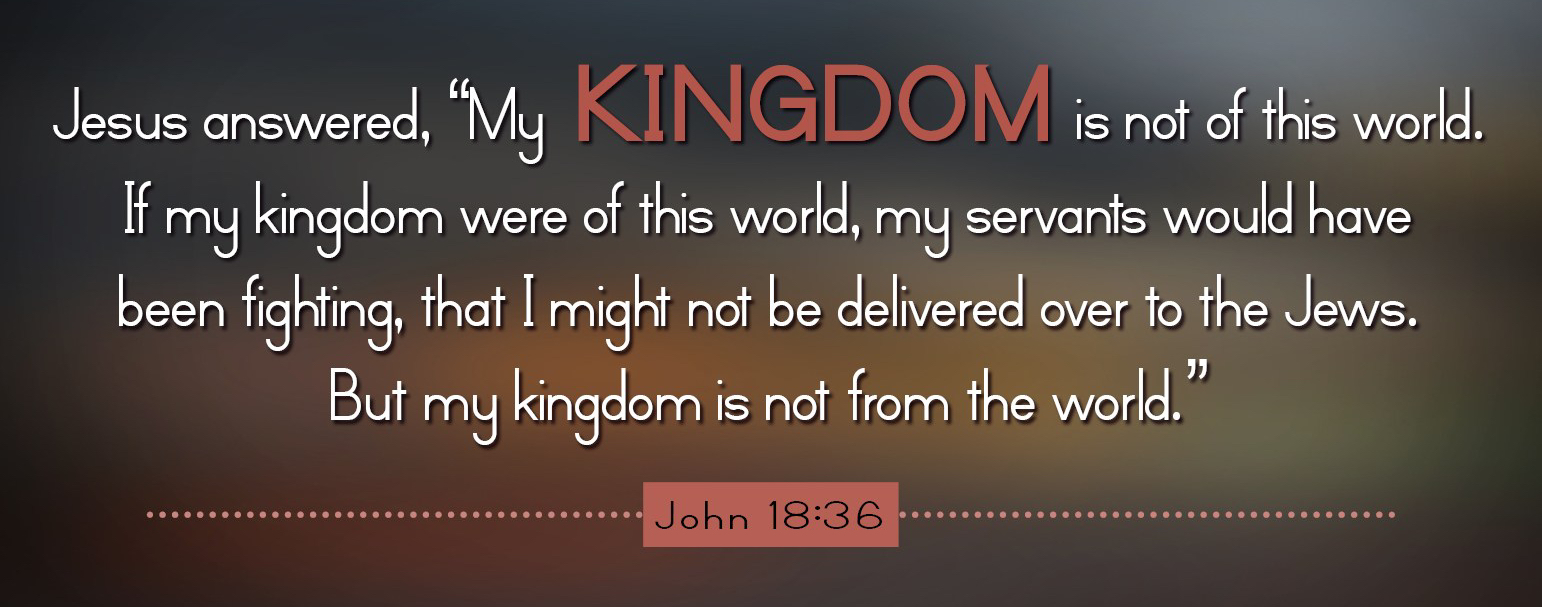
I’m simply wondering…  What if we stopped saying the words and pledging allegiance and loyalty to a worldly empire?  What if we took more serious our allegiance to Jesus as our one, true king and his way of life as our true kingdom?

Words we say matter. Pledges we make matter.

Perhaps limiting our allegiance to only Jesus might change us.  

“What might change?”  Glad you asked.

We may begin to EXPECT conflict between our empire and Jesus’ kingdom.  This is a massive change in our perspective.  Our current split-commitment makes us less likely to objectively see the obvious conflicts.  We don’t look for them; in fact, we actually try to avoid seeing them!  But giving up our allegiance to a worldly empire frees us from the (self-imposed?) blindness to the conflicts between it and Jesus’ kingdom. We now expect that they will at times conflict, rather than that they won’t.  This happens because in making a choice to refuse to say the words of allegiance, we’ve already made our commitment to expect and look for these conflicts.  So we become more observant and sharp and less prone to idolatry.  

We also become more bold.  When we have the courage to stop saying the words of allegiance to a country and only to Jesus, it gives us resolve to speak up about many other things.  One small step of courage leads to greater clarity.  The tension between competing values and allegiances often paralyzes us and stills our voices.  But now we don’t feel pressure to defend every aspect of a worldly kingdom that is inevitably flawed.  There is freedom to have a truly prophetic voice in the midst of consumerism, corruption, selfishness, exploitation, discrimination, and greed of the empire. And our voice has more legitimacy, validity, and perhaps conviction, because it isn’t tainted in the minds of our hearers (or ourselves) with a political or nationalist agenda.  

We are more likely to think of others first.  When we refuse to pledge allegiance to any human construct based on race, nationality, or artificial lines drawn on a map, it frees us to see Jesus’ kingdom as global, universal and expansive.  This new perspective moves us beyond selfishness to stand up for things that don’t benefit us personally but help the least of these.  We become more true advocates for our fellow kingdom citizens inside other human-made borders, systems, or governments.  When God’s kingdom is global, why should we care whether America is first?  Abandoning our pledge of allegiance to country is an excellent antidote to our own selfishness and pride. 

We’ll be better ambassadors for the gospel too.  When our commitments are split between God and country it becomes difficult for the world to discern whether we are promoting the gospel of Jesus or the gospel of America (or at least our version of it).  Split commitments make us more likely to become colonialists than evangelists.  And we end up having to defend things like American foreign policy and military action as part of our apologetics of Jesus.  This is all unnecessary.  As missionaries, both foreign and domestic, we have enough work on our hands as ambassadors of Jesus’ kingdom without adding ambassador to the United States onto our job description.  
k-verse.jpg

Someone asked me last week what I thought the biggest theological issue facing the church is currently.  I think this might be it. 

It can hardly be denied that Christianity as a whole has lost a great deal of its relevance in Western culture over the last few generations.  I don’t believe this has happened because the gospel of Jesus is less powerful today or because modern people have less need for it.  I think instead it’s lost its vitality because it’s been diluted and compromised with political and nationalist allegiances. 

I pledge allegiance to the flag . . . 

The way back to relevance isn’t better social media or more conservative laws.  It’s not gonna happen by electing officials or more Christian films.  It will happen when we take serious our radical allegiance to Jesus alone. That’s what will turn the world upside down.  Indeed, it’s what the early church discovered already did. 

Again, please hear me, I’m not suggesting we hate our country or do less than our best to make it a great place to live.  I think we should enjoy and appreciate this country we live in and the people that make it great.  And we should contribute to our neighborhoods and country in meaningful ways, inspiring it to be a better, more compassionate and more just society than it is now. 

But, I think Christians will do a much better job of all of that if we stop pledging our allegiance to a flag.  

It’s time to remember that Jesus himself and his way of life, is the ONLY hope of the world.

So let’s pledge allegiance to that alone.  

He Told Me to Buy a Kayak

glideblueThe only thing I never did that he told me to do was buy a kayak. 

When my kids were born he suggested that I give up golf and spend the extra time with the children as they were young. It might be because I’m a bad golfer (which I am), but he said it was more about the irreplaceable early years with kids. He said there would be time for golf (and other time consuming hobbies) later when the kids were older and didn’t have as much time for me. So I gave up golf and several other hobbies. And he was right, I’ve had the privilege of being more involved in my kids lives than most other dads.

vacation-circled-on-calendar-jpgHe told me to always have a vacation planned, even if it was a small one, so that I’d always have something to look forward to when work seemed overwhelming.  He encouraged me to have it on the calendar as soon as I got back from a vacation so it would be ready as the next motivation.  So I planned breaks just like he suggested. And it’s always worked the way he said it would.

He told me to be more careful in my social media posts and in my writing.  I made a lot of hurtful mistakes early on. He stressed to me that written word is so much more forceful than spoken word and encouraged me to always go have a conversation with a person instead of writing them a letter or a Facebook post.  And so I became more conscious of what I posted, and more committed to face-to-face discussion.  And while I still make mistakes, my relationships are so much better because of his advice.

When I was wounded and mistreated by another leader I was supposed to follow, he cautioned me against bitterness and against rash decisions to leave. He advised me to work toward forgiveness and peace before deciding to move on, so as not to jump to something that wasn’t ideal just to get away from conflict.  And so I stayed another year. I let God work on my heart. And finally made a move that was healthy in motive and opportunity.

median-home-price-house-on-mney-stackHe told me that a house costs more than just a mortgage payment. He told me roofs need replaced and furnaces go out and that I should set aside a capital items savings each month as part of what it costs to own a home. And now my roof needs replaced and my furnace is on its last legs and I’m glad I have a savings account.

When I wasn’t sure what I should be doing with my life anymore, he told me it didn’t matter as much what I did as who I surrounded myself with while doing it.  He told me that a person could have fun doing anything if they were doing it with people they loved. And so I stopped looking for the right job and found joy and contentment with my teammates.  And I started to love my job.

He even told me what to listen to on my iPod. He would often come home from a big conference all excited about some speaker that had taught him something new.  He’d hand me a thumb drive with the talk loaded on it and tell me “just listen.”  And reluctantly I would listen to it and discover it was just exactly what I needed at that moment.

But most importantly, when I was scared to take a big risk professionally, he told me to trust who God made me and lead out boldly.  He himself had so much faith in me that I couldn’t help but take the risk to trust God’s work in me too.  And it was scary, but it turned out to be the best risk I ever took.

15356623_10154758601636944_1635425140574694767_nEverything Rob Cizek ever told me to do was better than a good idea; it was great.  It was wisdom.

I’ve had many bosses, mentors and friends in my life. But none who’s advice I respected more than Rob’s.  And it was easy to accept his wisdom because I knew he genuinely cared for me.

It’s often been said that people don’t care how much you know until they know how much you care.  And Rob knew much more than most.  But he also cared even more than that.  

Every person who worked with or for Rob has the same story.  We all trusted what he said because he showed us how much he cared.  He always had our back. We’d rotate through his office and lunch meetings with our problems and frustrations, and he’d patiently listen and offer support. There had to be days that’s all he did.  It must have been overwhelming at times. It’s amazing one man could handle all the burdens we laid on him.

And when those long days were done, he’d often head out of the office to Silver Lake.  He’d put his kayak in the water, push out and relax.  He told me it was his own place of reflection. It was where he found peace.  He told me to buy a kayak, because everyone needs a spot like that.

Today, I know he’s in a real place of peace.

Rob, I’m going to miss you awfully.  There’s so many things I still wanted to ask you and learn.  So many things I still don’t know about being a dad, pastor, friend and human.  I’m going to miss our lunches, texts, laughter and friendship. There’s a bit of peace missing now in me. Today, I could really use that spot on the lake.

So I think it’s time I do the one thing you told me to do that I never got around to.  I’ll buy that kayak.  And maybe I’ll push out into Silver Lake one day soon.  And when I dip that oar in the water, I’ll think of you.  And I’ll remember what you taught me and I’ll pray that somewhere over that water I’ll find the strength that made you such a remarkable man.

Rest in peace, my friend.

Blind Spots

6a011571275931970c0163058bd7ac970d

Every car has a blind spot. An area, usually over your shoulder where the mirrors and your line of sight just can’t quite see. They are the cause of many auto accidents, even for careful drivers. We look over our shoulder, check our mirrors, and change lanes. But hiding in the blind spot is a car we never saw because it was in the one place hidden by the frame of our car that mirrors and windows didn’t give access to. We never even saw the crash coming.

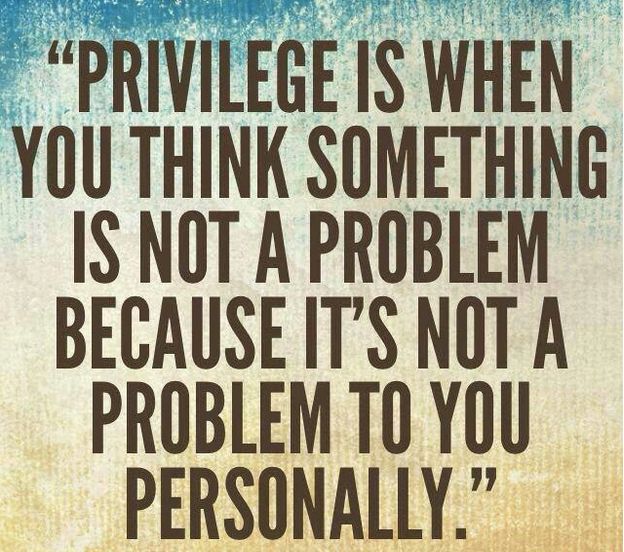
People have blind spots too. Things we don’t recognize because they are too inconvenient or too uncomfortable to acknowledge. Or sometimes things that we don’t notice because our circumstances are privileged enough not to make it a visible problem to us, though it’s obvious to others. Even those of us checking our mirrors diligently, miss it.

I was recently invited to be a part of a group called the “Superintendent’s Key Communicator’s Group” in my local school district. Each school in the district sent several representatives to hear information from the district administrators and become liaisons to other parents and community members.

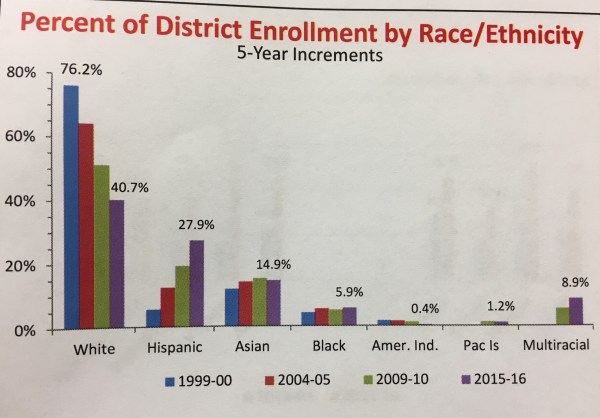
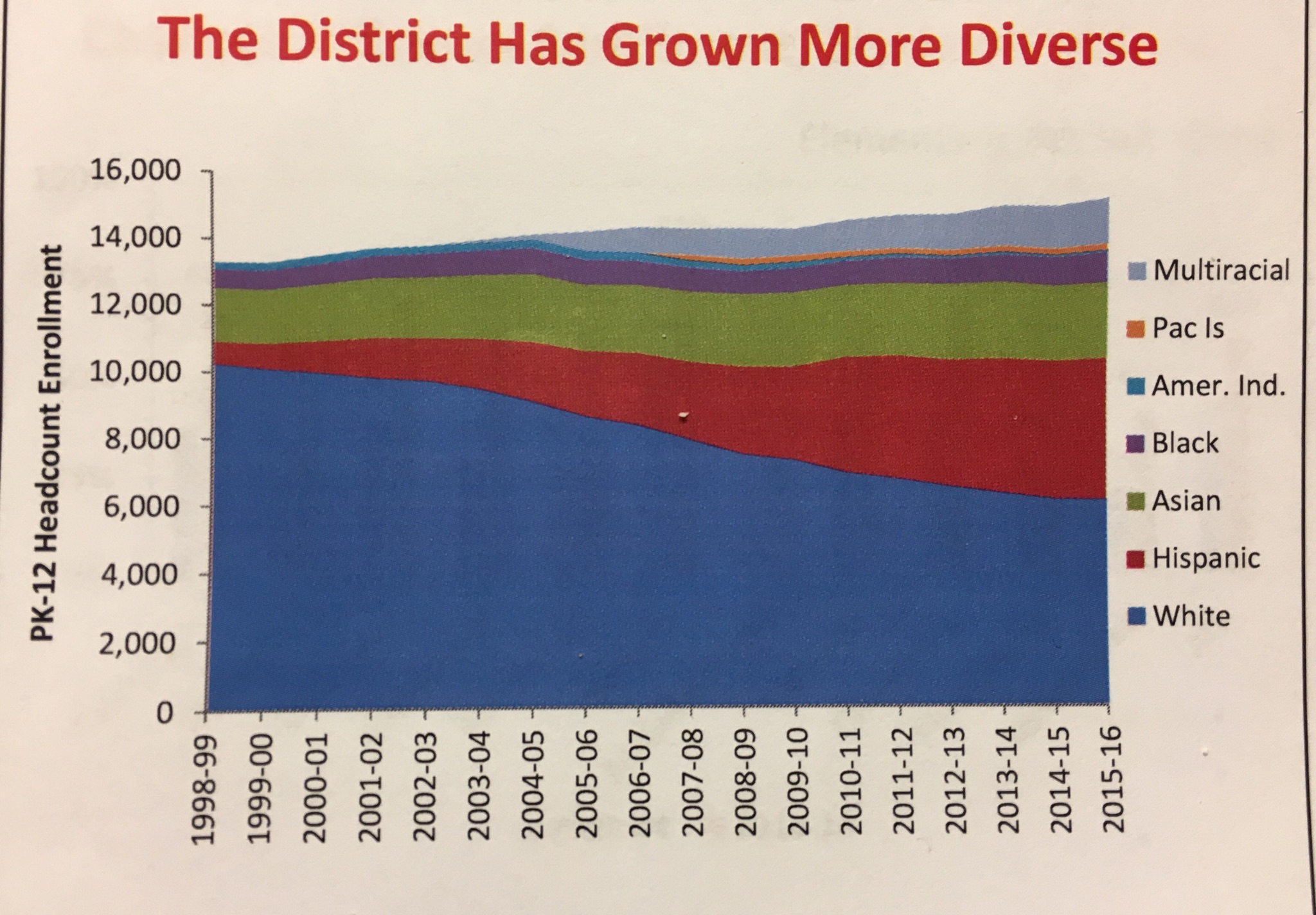
In our first gathering today, the Superintendent laid out the changing demographics of our area. In just 15 short years the racial/ethnic demographics in my community have changed a great deal; from a population that was 76% white to only 42% white. It has become a much more racially diverse community, with Hispanic, Multi-racial, Asian and African-American percentages rising as quickly as the white community has declined.

fullsizerender-jpg

In the elementary school I was representing, we have changed from 41% non-white population in 2003-04 to 67% non-white population in 2013-14.

fullsizerender-jpg-1And to the credit of the school district administration, they presented this data as an incredible opportunity for our children to learn the cultures, languages and values of different types of people. There was an embrace of this change that I was jealous the church would have for these same sort of statistics.
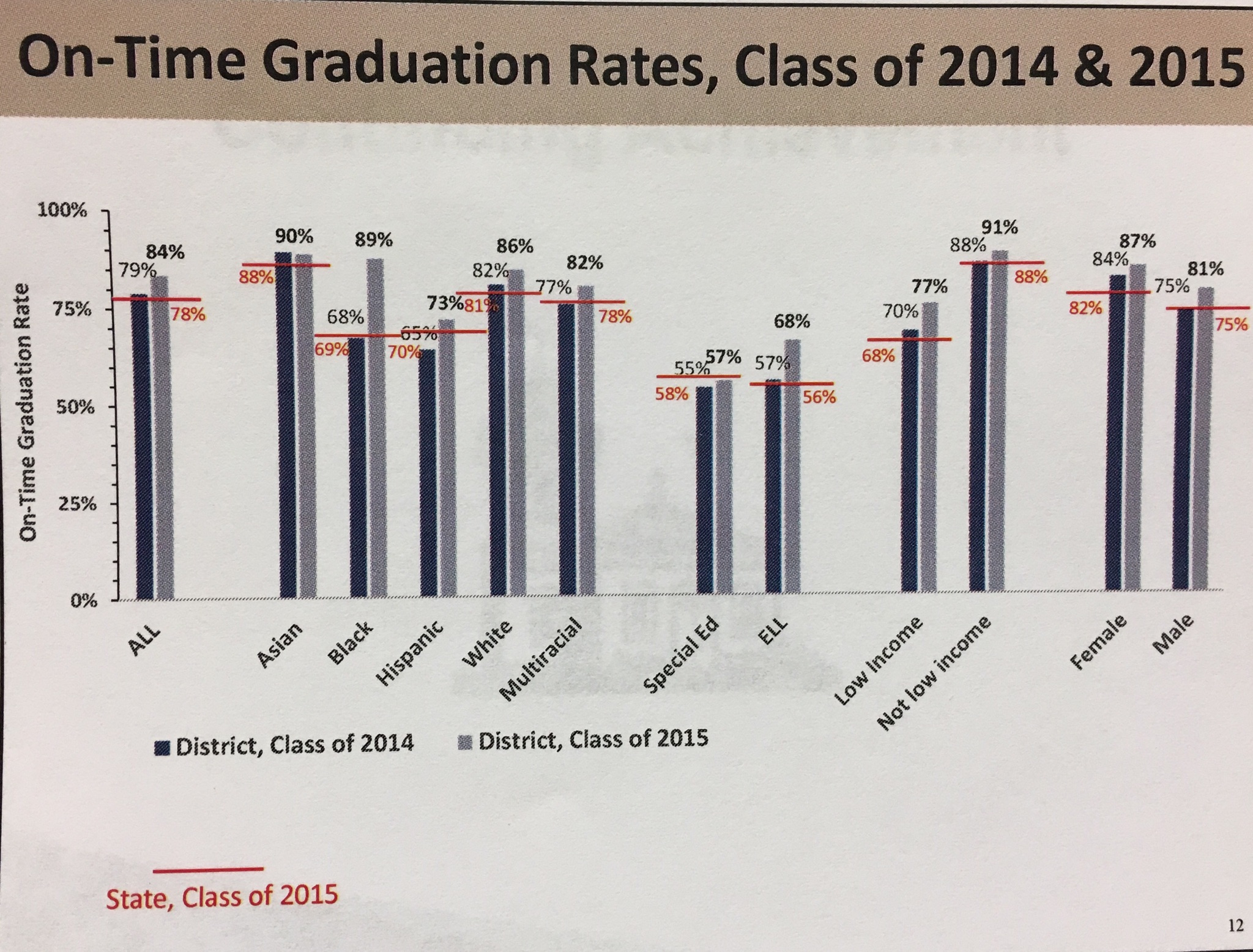
And the data showed that as we had become more diverse, so our schools were doing an even better job of increasing graduation rates for all racial and ethnic population groups.

At the end of the presentation I was feeling a great sense of pride in my community that had not only embraced cultural diversity but had helped elevate the success of white and non-white sub-groups.

fullsizerender-jpg-2

It was at this point that the administrators had us turn to someone sitting next to us and discuss our “aha’s” from hearing this data. So I turned to the young, professional lady sitting next to me. We introduced ourselves and shared our thoughts.

I shared first, telling her how I had felt encouraged that the district seemed to value diversity so much and was doing a good job working to ensure that kids in all demographic groups could succeed. I assumed she would say something similar.

But instead, she helped me see my blind spot.

My new friend just had one question based on the data, “Does the staff and administration of this district match the changed demographic of the people being served in this community?”

Hmmmmm….

I looked around the room. From a quick count, I could see that at least ¾ of the room was in the “white” people category. Strange. We were chosen to this group to represent our local school. But if the statistics just given were accurate and people like me, in the “white” category were in the minority, why were we the dominant voice in such an influential group? What about concerns that parents of color might have that I might not understand or be aware of? Why wasn’t a more racially diverse group chosen to more accurately represent the populations of the schools?

Then I thought about how I was invited to this group. This group is invitation-only after all. I was invited by the principal of the school my kids attend. The principal who is also in the “white” category. And now that I think of it, I’d say the vast majority of teachers (all who seem very sweet, well-intentioned and excellent) in our school are notably white. I wondered how many non-white principals there were in the district? How many teachers? Paraeducators?

And as I glanced up from my notes, I took an inventory of the district administrators on hand for this meeting. Most of the major players in the district administration (including the superintendent) were present. And not a one of them was in the non-white category.

Now I want to make sure at this moment to reiterate that I think all the teachers, paraeducators, principals, and district administrators I’ve met are incredibly capable, well-intentioned and caring people. I don’t perceive any intentional slight or prejudice on their part. In fact, they seem to truly value diversity of people and want the best for the community.

But what if they have a blind spot too?

You see the thing about blind spots is that you can’t see them. It’s very hard to recognize them on your own. In fact, as the discrepancy between leadership and population demographics came to my awareness I was shocked I didn’t notice it before. I try to be sensitive to things like this. But I’m not sure I would have seen it had it not been for my new friend sitting beside me.

So, why did she see it?

Well, she’s in the “non-white” category. She saw instantly what the majority of us in the room were blind to. She read the data that she was in the racial majority of the community, but vastly under-represented in this community group, in the hands-on teaching environments of the schools, and in the leadership of the district. She was worried that many of the legitimate concerns of a racially diverse community wouldn’t be addressed or even acknowledged if we don’t have diversity all the way to the top.

And she was right.

If we have a big blind spot in this crucial area, what else are we missing?

632e8dbfebe9bb99a18954afa483eec7

What we often forget about “white privilege” in this country is that it doesn’t have to be overtly racist or bad-intentioned. Sometimes people are under-represented not out of a nefarious reason but because we just can’t see our own blind spots.

So, how do we notice the blind spots?

Well, we are going to need people in the “non-white” category to lead us. Those of us in the “white” category need to do a better job of inviting the “non-white” voices into the room and hearing their perspective. We need to allow them to shine the mirror on our blind spots. And then we need the courage to trust it and make changes.

And maybe people like me need to give up our spots on the invite-only superintendents group and make sure more people of color take our place.

The Death of Religion

Jesus doesn’t really like a lot of what passes as religion.  Even religion with his name on it.  Maybe especially that kind.  In fact, he is so disturbed by the religion that was devoted to God during his day that he flat-out curses it (Matthew 23).

We recently started a series entitled “How To Kill a Religion” at church. (You can listen to them as we go along here: https://soundcloud.com/pathwayschurch).  We’ve been looking at the things from Matthew 23 that Jesus says will kill a religion.

DOR7

And while there are many fatal pills that religion can swallow that will put it six feet under, there are three that seem especially deadly:

A lack of sincerity.  Not practicing what you preach.

A lack of compassion. Prioritizing rules over people.

A lack of humility. Practicing religion in order to be noticed by other people.

Religion that lacks sincerity, compassion, and humility is dangerous. It hurts people and Jesus thinks its should die.

Probably many of us who have been hurt by that kind of religion agree. In an unexpectedly weird way, many people who are wary, skeptical and against religion are to some degree on Jesus’ side. And it has been freeing to learn this.  It’s been relieving to discover that Jesus isn’t as petty and oppressive as much of the religion we’ve seen. Sometimes I just wanna cheer, “yea, Jesus! You tell ’em!”

If I’m honest though, it’s also been a little convicting. I’m sure I am guilty at times of lacking any one of these key ingredients to religion that truly honors God.  It’s caused me to examine who I am, what I do and most importantly WHY I do it.

Am I sincere in actually living what I believe?

Do I really prioritize people over rules and rituals?

Would I do this particular thing if no one ever knew about it?


I’m finding that I can even do the right thing, but for the wrong reason. And when I do, rather than honor God, I drink the poison that kills religion.

But more than conviction, this series and these words of Jesus have caused me to dream more about the identity of our particular church community.  As we have discussed the things we DON’T want to be, it has inevitably had the side-effect of forcing me to ask “what DO we want to be?”

And what DO we want to be?

After all, while there is religion that is dangerous and hurtful, not all religion is bad.  Jesus’ own brother, James, reminds us of this:

Those who consider themselves religious and yet do not keep a tight rein on their tongues deceive themselves, and their religion is worthless.  (But) religion that God our Father accepts as pure and faultless is this: to look after orphans and widows in their distress and to keep oneself from being polluted by the world.

(James 1:26-27)

Now I know that defining ourselves by what we are NOT is not of itself adequate. But what if it adds some clarity to us as a community of things we want to avoid and prompts us, like James, to discuss what we really DO want to be about?  Saying “no” to some things may inspire us to say “yes” to what’s better.

This week we celebrate “Orphan Sunday” at Pathways Church.

We’ll be discussing ways to get involved in protecting the most vulnerable in our global society.  There will be ways to get involved that are more immersive than maybe we’ve ever been involved with before.

I don’t know what will happen with all this, but it feels big.

It feels like it might be defining for us.

Maybe there is more here than just a simple Sunday.

Maybe there is the beginning of identity.

Religious community starting to be reformed around the right things.

I’m praying that this series will be more than just a few shots at the religion God hates but that it will call us forward into the religion God delights in.  Could be this Sunday is the first step in that calling.  Join me in praying for that vision and identity to come bubbling out of these moments.