
I am at home tonight all by myself. The house is mostly dark, except for the dim 15-watt icicle-bulbs reflecting off the ornamental glass in the entryway and the soft-glow of SportsCenter spilling into my living room from the TV.
It amazes me how such a little amount of light can illuminate an area and shatter the otherwise complete darkness.
 Jesus knew about the dark. Jesus knew just how dark the world could be. Not the darkness of my living room. But the darkness of poverty, discrimination, greed, disease, oppression, tragedy, broken relationship, economic crisis, violence and war.
And in the middle of that darkness, he came forward and made a radical claim. But it isn’t just the claim that impresses me tonight, as I sit in darkness, it’s the context.
You see, once a year the Jews would celebrate a week long party called the “feast of booths” or the “feast of tabernacles” that served to remind them of their people’s history of being led around the Sinai desert, living in tents and provided for by God for 40 years.
And each year, at the end of the first day of the “feast of tabernacles” the Jews would hold a special celebration. The daylight would grow dim and finally give way to the night sky and the people would gather in a specific courtyard of the temple called the court of women.
As the people gathered, four large candelabras accompanied by four large bowls of fire would be lit. And as people arrived to this festival of light, musicians would begin to play and some would break out into song. Soon everyone was singing the ancient songs of praise. And dancers would fill the middle of the courtyard moving in sequence to the music and tossing lit torches into the sky.
 They danced and sang into the night to celebrate the God who brought Light into the darkness. They remembered the God that led their people through the utter darkness of a desert by blazing a fire into the night.
It was the dark of night, and yet the courtyard was bright like the light of day.
And it is in this context, in the middle of the festival of light, that I believe Jesus approached and said the words, which stunned the people…
“I am the Light of the world.” (John 8:12)
Can you imagine him saying that? I mean, he wasn’t just claiming to be smart, or unusually gifted. He was claiming to be “The Light.”
He was declaring that he is the one who leads us and guides us and shows the best way to live in a world that is so full of darkness.
He was referencing the first thing that God creates in Genesis (light) and claiming to be that creative power in our midst. As if he could once again recreate our dark world.
He was pointing at the brilliance of dancing flames all around and claiming to be the source of that light.
He was saying, that though the world lives by the darkness of fear, oppression, violence and power, that he offered the kind of life that could overpower that darkness for individuals and even all of humanity.
He was, as he looked around at the celebration, saying that the party was about him.
A beautiful statement. Complex. So full of subtle meaning and intent. And scandalous to be sure. To tell religious people that you are God, is fraught with controversy. =)
But, it isn’t what Jesus says about himself that is most controversial. I mean, from this side of history I can at least understand that Jesus would claim to be the “Light of the world”.
But read for a moment again what Matthew says he said about you…
“You are the light of the world.” (Matthew 5:14)
Let that sink in for a moment . . .
Jesus calls YOU the light of the world.
Now, has Jesus just lost his mind here? Does he really understand what he is saying? Did somebody perhaps quote him wrong? Did he mean to repeat that “he was the light” but goofed up? I mean, which is it? Is he the light or are you?
“I am the Light of the world.” “You are the light of the world.”
What if Jesus really meant what he was saying? What if both are true? What if in some complex, meaningful way YOU really are a partner in the recreation of this world? What if Jesus was simply saying that your life matters much more than you think? What if He is counting on your light?
In their new album, “No Line on the Horizon”, U2 has a song titled “Get on Your Boots”. And in this song, Bono is calling all of us to put on our boots and get to work re-forming this world into what God originally intended.
 “You free me from the dark dream
Candy floss ice cream
All our kids are screaming
But the ghosts aren’t real
Here’s where we gotta be
Love and community
Laughter is eternity
If joy is real
You don’t know how beautiful
You don’t know how beautiful you are
You don’t know, and you don’t get it, do you?
You don’t know how beautiful you are”
Maybe Bono is right. Maybe we really don’t know how beautiful we are. Maybe we have sat around too much waiting for what God will do, when all along Jesus was saying, “YOU are the light of the world. Go be the light!”
If this is true, than maybe my living room doesn’t need to stay dark. Maybe I just need to turn on a light . . .
In Jesus’ day, the temple of the Jews sat on the hill elevated in the city of Jerusalem. And because of its prominence, it could be seen from many parts of the city.
 And there were some who said that on this night during the festival of booths that light from the courtyard of the temple was so bright that every courtyard in Jerusalem was lit. Because the light was so intense it spilled out into the night and illuminated every other courtyard in the city.
Every courtyard was lit because of the light coming from the temple.
I wonder how many courtyards and driveways and living rooms around my city could be less dark because of the light in me.
Maybe my city is ready is ready for me to embrace not only Jesus’ statement that he is the light, but that because of him, I am now too.
“You are the light of the world.
A city on a hill cannot be hidden. Neither do people light a lamp and put it under a bowl. Instead they put it on its stand, and it gives light to everyone in the house. In the same way, let your light shine before others, that they may see your good deeds and glorify your Father in heaven.” (Matthew 5:14-16)
 Like Jesus attacking Pharisaism, Soren Kierkegaard came out swinging against every phoney form of institutionalized Christianity.
 However, I think our fear may be causing us to behave strangely. If you read this blog, you know that I often call-out the apparent un-Christlikeness of the church. In doing so, I am not meaning to say that I don’t believe in Jesus. I do. I believe Jesus has opened the fullest and most meaningful way of life for all people. I want more people to experience this life, not less. And, I am not trying to say I don’t believe in the church. Christians don’t necessarily have bad intentions. I simply think we need to be very careful and think extremely critically about our methods of communicating a message. Too often, the methods have become the message. Too easily we believe that we should use any means necessary to convey our point and “the ends justify the means” should never be the attitude of Christ’s people. Especially as it relates to the fear of “losing our Christian nation.”
 Of course we all know people that would label themselves “Christian” though they make no attempt to follow and model the life of Jesus. This country, since its beginning, has been labeled by the same generic label, “Christian.” It has become a cultural and national label rather than an affiliation with the personhood of Jesus. This faux Christianity, I contend, has actually made it much more difficult to lead people to authentic relationship with Jesus. And to see it decline, in some odd sense (to some of you) gives me great hope for the future.
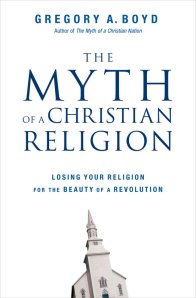
 Tomorrow is the annual “Day of Silence.” Many high school students will choose to “not talk” during the day tomorrow in order to show their solidarity with their many peers that are wrestling with LGBT issues in loneliness and fear.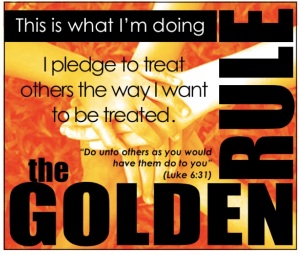
 We have FIVE final questions from this last Sunday, and I will be responding to THREE of them in today’s post followed by the last TWO tomorrow.
 My point at the beginning of the message is that it we should pick up the “rebellious spirit” of the 1960’s “flower children” and as people who follow Christ be willing to be counter-cultural. Instead of mindlessly buying into what our cultural tells us love is about, we should approach relationships with the radical “choice” and “sacrifice” oriented love of Jesus.
 Secondly, even though you feel like it, you aren’t the “only one” left out there that is still a virgin. In fact, over the last few years, lots of studies have shown that the statistics of high school students waiting until later to have sex is going up. One recent study showed that 40% of all high school students will graduate without even having had an intimate date!
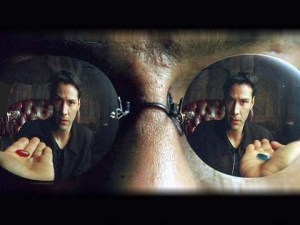 And so, maybe your perspective helps them see relationships differently. Maybe you can be like Morpheus in “The Matrix” and help them see what they couldn’t about love because all they knew was what they were culturally programmed to see.
 Oh well, apparently my lot in life is to get involved in the dirty, messy and controversial subjects. So, let’s jump right into the final question for this week, which almost gave me a coronary attack as I read it knowing I’d have to answer it! Thanks everybody… Let’s just get back to asking questions that are “safe,” huh? LOL.

 So what does the bible teach us about dating? Very little. In fact, the Bible doesn’t really prescribe any particular way that people should date, court or be “arranged” for marriage.
 This is a good question because many people start dating-from-afar. Sometimes the physical distance between people is over many states or countries. But, in another way, physical distance can be almost as far if you live in the same county but go to different schools and rarely see each other.
 However, while there are some benefits (in theory) there are also some drawbacks. People living away from each other don’t have the opportunity to experience the other person in “real life.” There is only so much you can learn from phone calls and late-night text messages. Who a person is on the phone and who they are in everyday life with their family and friends may be very different.
 Ok. Let’s see what we can make of this. It is a legitimate question; especially for someone at your phase of life. So, let me just say a few things.
 As an example: when I go to buy a new vehicle, I like to drive around to many different dealership lots and see what is out there. And before I get too serious about any of them specifically I want to go on a “test-drive”. Now, when I tell the salesman that I’d like to drive it and see how it handles, I don’t also promise to be faithful to that car and only that car. I don’t promise to love it and care only for it. I just tell him I wanna try it out. If it drives well, than maybe we can pursue it further.
 Now, I know people aren’t like cars. But, that actually strengthens my point. The boring biege Chevy Astro van isn’t going to be disappointed that in the end I choose the bright blue Toyota over it. (Btw, I would never drive an astro-van). But, people do get hurt. And we need to be careful about the commitments we make to people, especially at a young age when we aren’t ready to deliver on those large commitments anyway.
 This question, like one we had a few weeks ago, isn’t about romantic love (well, at least I hope it isn’t! Maybe in Arkansas it is! ☺ But, as Austin said on Sunday night, one type of love found in the Bible is between family members. So, I would like to respond to this one anyway.
 nickloyd.com