Love Connection – Passage 2/15/09 – Part Two

love-connection-jpgQuestion #3:
What if the person for you isn’t a Christian and you are and she wants you to ditch your Christianity for her?  What should you do about it?

This is another really good question that is often a huge source of heart-ache for people of faith.  What do you do if the person that you are very attracted to doesn’t believe what you believe about God, life, after-life, good and evil, etc.?   This is a very legitimate question and I think I speak for many of us when I say that I totally feel your pain.

But, let’s start with something that seems small.  Your question mentions “the person for you.”  Now, at the risk of saying the same thing over and over, I’m afraid that this may be the wrong way to phrase the question.  As I have responded in the last several questions, the idea that there is “one person” or as you put it, “the person for you” out there is, I think, very dangerous to relationships and isn’t backed up by scripture.

Now, why even mention this again?  Well, because it is important.  And notice how subtly it finds its way into another question.  It is such a subtle and almost unconscious myth that has seeped into our formula for love.   I’m sure the person who wrote this question didn’t even think about it as they texted it.  And yet, here it is again.

soulmatesIt is also worth mentioning because I think it is a huge part of the answer to this question.  Sometimes I think we set ourselves up for huge failure because we take a very complicated issue—such as a relationship with a non-believer—and make it a total nuclear holocaust.   When you buy into the myth that this is the only person out there for you, it makes this question almost unanswerable.

For instance, if this girl is “the person for you”, meaning she is your only shot at real love, then you’d be crazy to pass it up and God would be mean and vindictive for creating you love someone that would cause you to deny Him.  I’d think this question alone would be a good reason to question everything you know about God.  At least for me it would.

However, the other option is that God didn’t create you to only find love with this one person.   And if that is true (which I believe it is) than it takes a very painful situation and at least makes it understandable.

Will we, as Christians, be attracted to non-believers.  I think so.  Why not?  There is beauty and goodness in all people, I believe.  I’m sure that there is much to be attracted to in this girl.

game_planBut, the issue becomes not do you feel extravagant feeling towards her, but are you ready to make a CHOICE to blend your life with hers for the rest of your life and operate as “one body.”  You see, those feeling will eventually fade and then you will have decide if you are ready to play on a team that doesn’t have the same game-time philosophy that you do.

Here’s where I am at on this.  My relationship with God is the most intimate, personal and deep part of who I am.  You can learn to know a lot about me, like the activities I enjoy, the music I listen to, the things I find funny, the things that make me smile.  But, at my core, the most intimate thing you can learn about me is my relationship with God.  It is the deep of the deep.

So, when choosing someone to love, I had to decide, “will I be able to share the deepest, most intimate part of who I am with this person?”

Now, when I was dating, I went out with numerous girls that didn’t have a relationship with God.  Many of them were beautiful, sweet and good people.   Some of them had a lot in common with me.  Some of them I could even envision marrying.

But, what I decided was that I wanted to be totally united with my wife.  I wanted to come home and not just share how my day went.   I wanted to come home and share that deep of the deep.  I wanted my wife to KNOW me.  The deep part of me.  And I wanted to know her that way to.

Did that mean that I gave up relationships with some people that were great?  Yea, I suppose so.  But, I will tell you this, I have never regretted that decision.  The relationship I have with my wife today is unified.  She knows me.  And I know her.  And as Paytyn (our daughter) grows up, I know that because we are unified she can know that part of us too.    There is a connection there that goes WAY beyond anything I could have experienced with a person who didn’t share that part of their life with me.  It is a connection that I believe God designed us to have with another person.

In the end, I guess some things are more important than the feelings of attraction and even love.  Could you choose to love a person that isn’t a believer?  Sure.  But, I think you would set yourself up for a relationship that will never fulfill you the way a relationship with girl who shares your deep of the deep will.

Anyways, there are at least several other reasons for avoiding these relationships, and many often-quoted scriptures to go along (Paul cautions against it in 2 Corinthians 6:14) but this thought alone has been helpful to me and I hope it will be helpful to you.

Either way, I do understand the pain involved and I pray that you will find peace.

Question #3
If you don’t feel that love from your family like you said you give Paytyn, how do you feel that love with God and make it better?

This question, I believe, is based off a comment that I made about my daughter, Paytyn, on Sunday night.   My comment was Paytyn and puppythat as a dad, I am trying my best to love my daughter so well that when she grows up she doesn’t feel the need to find love in other, more difficult places.  My prayer is that she grows up knowing that there is nothing she could ever do or say that would make Tania and I love her any less.   That she would know God loves her the same way.

And my goal is that, one-day, she would be in a great relationship, not looking for someone to fill some hole in her life, but in order to experience the sacrifice of love with someone great.

Now, I think the question is this:  What if you don’t feel your parents have succeeded in helping you to feel this way, and how can you get that feeling from God?

Great question.

Paytyn and iPhoneLet’s me start by saying that Paytyn will probably be your age one day and feel the same way.  Of course, I hope that isn’t true, but chances are she won’t feel complete.  Why?  Well, not because we as her parents didn’t try, but because as I have stated before, no human being—whether romantic interest, good friend or even parent—can fulfill your greatest longings of love and acceptance.

I will do my best to love her unconditionally.  But, not even the love of a devoted father can fill every hole.  The human life was created with a bit of God inside us.  Genesis says we were “created in God’s image” or icon.   It’s as if God placed a bit of Himself in each of us.  And because of that, we have these deep desires for something more.  We have these longings for completeness.  But they can only be completed with our connection to the Creator, not just each other.  We are all connected, for sure, but our greatest connection is designed to be Him.

Imagine a house.  Beneath the paint and the carpet, and if you pulled away the dry-wall you would see a framework; a structure.   It is made of a solid foundation and beams that bear the weight of the roof.  And this structure is made to do one thing:  keep the house standing up right.

house-framingYou are like that house.  Beneath your hair and make-up and clothes; beneath even your personality and passions is a framework.  And that framework is designed to need relationship with God.  And until you engage completely in what that framework was designed for (relationship with God), your house will always feel shaky and unsteady.

Now you can try and fill that need with romantic relationships or friendships, or work, or success, or having enough things, or sex, or drugs, or whatever.  But, your framework wasn’t built for those.  You were hard-wired for relationship with God.  You were made in “His image.”  And you aren’t complete without Him. And when you are willing to accept that completeness, the other parts of your house (life) will make sense.

And in that way, you may have more in common with Paytyn than you think.  I can’t give her completeness anymore than your parents can give it to you.

So, even if your parents haven’t been successful in helping you feel that overwhelming love, please know that it wouldn’t be enough anyway.  Would it be nice?  Sure.  Would it be a better foundation for you?  I think so.

But, the success of your future relationships doesn’t have to depend on them.  Their love, while desired and helpful, is not the greatest love you will find.

Now finding that relationship with God is a love relationship all to itself.  And it begins, as all true love does, with thought of the other person first.  Obviously, God has done this for you.  Philippians says that Jesus “did not claim his rights as God, but made himself nothing, taking the form of a servant” for you.   In other words, God thought of you before He thought of Himself.

What is left?  For you to realize the greatness of that sacrificing love, and for you to choose to think of what God wants before what you want.  To return love.  And to allow Him to fill-in what is missing within you.

He doesn’t just want you to go to heaven, you know.  He wants to make you whole and complete right now.  He wants you to feel confident, loved, sacred and valued.  He is interested in your life right now, not just where you end up for eternity.

So, trust Him.  Give yourself to Him.  Choose that what He says means more than what anybody else says.  Make His image, your identity.

Love Connection – Passage 2/15/09 – Part One

love-connection-jpgWell, it is Monday again already.  And I woke up early to get started on more great questions that students have texted in during last night’s message.  So, I drove to my office, but then realized when I saw the gates closed on the parking lot that it is a holiday and my office was closed.

Which brings me to Starbucks.  And really, I can’t think of a better place to sit and answer questions.  To my left is an older couple (maybe in their 60’s) sitting across from each other at a small table, drinking drip coffee and sharing a breakfast sandwich.

starbucks logoTo my right is a younger couple (maybe 30’s).  They look as if they haven’t seen each other in a while.  She just came in and they got all “weepy” and started kissing.  Now they are cuddle up in the comfy chairs staring deeply into each other’s eyes.  They might need a private room.  🙂

And in front of me are two guys holding hands.  Ahhh, the diversity of relationships at the local neighborhood Starbucks!

So, with all this love “brewing” in the air (pun intended), let’s get started with the newest round of questions…  I’ll respond to two more today and then answer the final two from this weekend tomorrow…

Question #1
How do you know if you have found the “right person”?

This is a great question because it has to be one of the most frequently asked and discussed inquiries of most people.  Think about it.  How do you know that the person you feel drawn toward is a good person for you to spend your whole life with?  It seems like such a major decision.  You don’t wanna choose the “wrong person”.   After all, “the rest of your life” has such a long sound to it.   Too long to be stuck with someone that you don’t like.

Now, different people may have different responses to this question.  But let me give you my perspective.

First, as we discussed last night, I think we can be too preoccupied with finding the “right person.”  One of the great myths of true loveour culture’s recipe for love is that there is just one “right person” out there for you and that when you find them they will be able to meet all of your needs 100% of the time.   It is a myth that quietly whispers to us that we are incomplete without this one person who was created to fulfill our every need.

In this way, I don’t think you will ever find the “right person.”   According to the Bible, to hope in anything  (or anyone) else besides God for complete happiness will always end in disappointment.

Consider the words of the prophet, Isaiah:  “Even youths grow tired and weary, and young men stumble and fall; but those who HOPE in the Lord will renew their strength.  They will soar on wings like eagles; they will run and not be weary, they will walk and not faint.”

What Isaiah is saying is that everybody will let you down eventually.  Even the gorgeous young man that you think is PERFECT!   And in that way, maybe there isn’t a “right person” out there for you that is destined to complete you.

Possibly, there are many flawed individuals (just like you) that are out there.  And some of them will be more “right” for you in the sense that they have similar interests and personality, etc.  But, maybe you aren’t created to be with any of them specifically.   They could be the right “type” of person for you, but not “THE RIGHT PERSON” for you, if that makes any sense.

holeMaybe what is needed is to stop looking for the “right person” and focus on BECOMING the “right person”.  A far bigger problem in relationships today is that too many of us aren’t really ready emotionally, spiritually, and mentally for a good relationship no matter who the other person is.   We are looking for something that is missing in our lives.  We are looking for someone to come and fill a hole in us emotionally or mentally.   And our relationships are built on finding the “one right person” to fill this need, rather than built on finding ways to show sacrificial love to another person.

When we focus on finding the “right person” our relationships become about trying to help ourselves, when true love is centered on others not ourselves.

Listen to the words of Jesus about the greatest type of love available:  “Greater love has no one than this: to lay down one’s life for one’s friends”  — John 15:13 (TNIV)

For a love relationship to be successful, it must be built on more than you trying to better yourself.  It must be based on your choice to give up your rights and preferences for another person and them choosing to do the same for you.   This is love.  And if we can start to find the completeness in our life before engaging in these relationships, we will BECOME “the right person” that can succeed in a long-term relationship rather than hopelessly assuming another person can do it for us.

Question #2
Why would you want to change what you want—like your dreams—to have someone else be happy?   Are you saying that you should change yourself so many times that you are not you anymore?  How do you do that if everyone is telling us to?

This is a really good clarification question that I am glad that someone asked.   I changed how it was initially worded in the text in order to hopefully make it more readable, and so I hope that I have captured the main idea of it.  If I haven’t accurately represented your question, please text me back or let me know.

This question has to do, I believe, with the encouragement I gave last night to stop looking for the “right person” and become the “right person.”   And to some degree, I think I kind of responded to this in the question above.

However, I do want to be very clear with this point.  Becoming the right person does NOT mean that you must change who you are, your dreams, your hopes, your personality. Rather, I think it means approximately the opposite.

you-complete-meThe problem with viewing love as an attempt to find the “right person” is that we get caught in the trap of thinking that our goals, dreams, hopes, etc.  aren’t good enough and that we need someone else to come and complete them.  Looking for the “right person” minimizes what God has already given us.  We become willing to compromise what we want and feel called to, in order to find the one prize that will bring us ultimate happiness.  And then we discover that the advertisement for the prize wasn’t totally accurate and it has let us down.  But, by that point, we have given up so much.

For example, I can think of several people that I met in college.  These people were at a Bible college because they had felt since they were very young that God had called them to ministry.   So, they came to study and pursue their goal and the calling they felt from God to serve people in ministry.

However, these specific people also met love interests while in college.  And because they believed in “finding the right person,” they believed they were destined to marry them.  The problem:  these love-interests weren’t interested in ministry.  And so what happened?  These called, gifted students abandoned their dreams and ignored the call of God in their life to marry a person they believe “God had created just for them.”

They compromised.  They believed the wrong recipe and gave up what God created them to do.

Now, in “becoming the right person” you don’t need to make these concessions.  It is a process of learning to accept yourself.  To know your strengths, gifts, beauty and identity and worth as a child of God.  And to also be honest and acknowledge your weaknesses, fears, hang-ups, and struggles.

In this process, you see the good and the bad, and through relationship with God, you learn to be content with who you are.  Knowing full well the holes in your life, you allow God to fill them, and you become confident knowing that you don’t need another person to have a great life.  You won’t be looking to another human being for questions about whether your life is successful or significant, you will look to your identity in God for that.

When you have reached this point, you will have outstanding relationships because you won’t need to “change” who you are to fit another person or to make them like you or complete you.  You will find relationships in which you can be the person that God created you to be without fear or compromise.

Now, real love does make sacrifices.  But, these sacrifices won’t be a sacrifice of your worth at this point.  Actually the opposite.  You will sacrifice for your partner because of your recognition of their beauty in their identity in Christ too.

Becoming the right person isn’t about changing “who you are” so much as it is about changing where you get your confidence, strength and identity.   It is a process of discovering “Who’s you are” and being content with “who you are.”

And it is the biggest key to good relationships.

Love Connection – Part 2

Question #3:

My dad said that there’s no such thing as an “us” until you’re married in Christ. There’s just you and me. (What do you think of this?)

This seems to be a good question, if I understand it correctly.  I think your are asking about whether a “real relationship” exists before the actual marriage vows happen, or something to that effect.  From your statement, I am assuming that your Dad’s position is that two people don’t have a legitimate “union” until marriage occurs.

This question is fun because it really leads us down a road of discussion about “common law marriage” and whether two people meet the description of being “one flesh” without ever actually getting married.  Sort of the Brad Pitt and Angelina Jolie conversation (they are dating forever, but not getting married).

jenny mccarthy & Jim CarreyI was watching the “Today Show” on TV a few weeks ago and I saw an interview with Jenny McCarthy (previously from MTV).  She was talking about her relationship with Jim Carrey (they have been a couple for years now, but are opposed to marriage).  Here is what she said about the suggestion that they get married eventually: “We’re living together… and we’re very happy – all that’s going to be is a piece of paper, really.”

And they aren’t alone.  In fact there are several famous couples that have decided against “tying the knot.”  Angelina Jolie & Brad Pitt;  Charlize Theron & Stuart Townsend;  Susan Sarandon & Tim Robbins;  and Kurt Russell & Goldie Hawn, just to name a few.

Now the book of Genesis describes an incredible spiritual and physical mystery that happens when two people come together.  It describes the need for humans to have companionship and then because of that needs says this:  “For this reason a man will leave his father and mother and be united to his wife, and they will become one flesh.” – Genesis 2:24-25 (TNIV)

Crazy!  Something very amazing happens in this coming-together.  Two people somehow become one!

So, are Jenny McCarthy and Jim Carrey “one flesh” even though they aren’t married?   That is a good question!   And in this case, I think the answer is “YES.”

marriageNow, let’s think this through a bit.  As I responded in “Question 2” of the last post, there is no thought of “pre-marital” sex in the Bible.  In the Jewish culture, sex was either an act done in the relationship of an existing marriage, or was the basic form of solidifying a new one.   So, if you weren’t married and happened to have sex with a beautiful girl you met at the grocery store, guess what?  Now you are married!  Sex, in the Bible, has very large social and spiritual responsibilities as well as individual ones.
In the case of McCarthy-Carrey, I’m assuming this “union” has occurred, and the mystery the Bible talks about has happened too.  Thus, they are “one flesh.”

So too, as a high school student, depending on the depth and level you take a relationship, you also will experience deeper spiritual connection than maybe you intend.  That’s why the subject is so serious from a faith perspective.  Not just because you might get pregnant or catch an STI (sexually transmitted infection) or because God arbitrarily thinks sex is bad and dirty.  It is most serious because there is a special “joining” going on that goes beyond the physical.

Now, the danger here for the McCarthy-Carrey scenario is that this union has happened outside of a commitment to life-long security and love.  They have inter-woven their lives in very deep ways, but not made the commitment to each other long term.  They have left a “back-door” open in their relationship that either of them is free to leave through if they get frustrated, tired or just want to try something new.

In this way, your dad might be correct.  It is very difficult to experience true “oneness” with someone (free to be yourself, free from worry of abandonment, etc.) if you know that at any time the other person can just walk away.  It is the great lie of this generation as it comes to relationships.  It seems to make you safe from hurt in a relationship, but actually is much more dangerous.  I think we see the devastation of this thinking all around us today.

Ok.  I hope that answers part of your question at least.  I could write a bunch more, but we’ll be talking about this in greater detail in a later message.  Good question, though!

P.S.  After writing this response, I want to make sure I give Jenny McCarthy and Jim Carrey a fair shake.  I obviously don’t know them personally, and for all I know they may have made these commitments to each other in a non-traditional way.  People may not need to approach marriage through the current social norms of the union to be valid in God’s eyes  (i.e. with flowers, sermon, rings, kiss, bouqet, etc.).

Question #4

So my relationship with my parents is broken and I don’t know what to do but they always yell and it’s ruining my life and making me sad and depressed and it’s effecting every part of my life and making it suck and I don’t know what to say or do to make it better. They are never pleased with me.

This question is a little off the topic of “romantic relationships,” but does deal with another type of relationship and so I’d like to respond to it anyway.

Maybe the most difficult relationships to navigate besides those of the romantic nature are those between parents and students.  If grace is needed in romance, then it is REQUIRED in family dynamics.

Now, I don’t know who wrote this question or your specific situation here, which makes a great deal of difference.  But, based on what you are writing, I can say at least a few things.

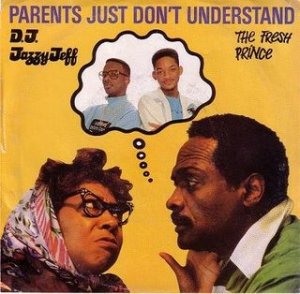
will smith1)  Parents are some times wrong.  I have a feeling probably even your parents would agree with this.  Many times they may have something that they feel is very important for you to know, do, learn, or be a part of, but they make mistakes in how they push you towards it.  Their motivation is good, but their execution is less than perfect.

2)  Parents are some times right.  I think you would probably agree that occasionally (☺) your parents get some things right, even if you don’t want to do what they say.

Grace is required either way.  That means “giving people what they don’t deserve and not giving people what they do deserve.”  That is how relationships work.  My guess is that neither your parents nor you are totally at fault.  Both parties have probably been guilty of saying or doing things that weren’t beneficial to the relationship.

This probably bleeds through into other areas of both your lives.  I’m sure the discomfort you are feeling is totally real.  And I would encourage you to share those feelings with your parents.  Tell them, calmly, about the things in your relationship that are causing you stress and depression.  And make the commitment to “give them some grace.”

There will be things that, as parents, they deem important to you and require you to do them.  That’s ok.  You may not totally enjoy it, but it is their right as your parent.  However, there will be times when they approach you in wrong ways too.  Maybe a conversation between all of you, begun with your commitment to follow their lead and give them grace when necessary, will give them the opportunity to express their apology for the times they have failed…and bring healing.

If this isn’t completely satisfying as an answer, I understand.  It is kind of generic.  And I’d love to have a more personal conversation with you later as it relates to the specifics of your situation.  Please feel free to grab me any time and we can have a better conversation.

Thanks for your openness and vulnerability in your question.

Love Connection

love-connection-jpgSo, today I am starting a bit of brief new direction in some of my blog entries.  Our high school group is currently involved in a series called, “Love Connection” where we are looking at the amazing beauty of the romantic relationships God has created us to need and enjoy.

During each week’s message, students are encouraged to bring their cellphones and text me questions that they have about relationships, dating, love and the human need for companionship.  And each week, on Monday, I will be posting their questions and answering them to the best of my ability.

Now, you may be asking yourself at this point, “Is Nick really an expert on relationships?”  The answer to that question is probably, “No.”  But, I have had many relationships.  Some good.  Some bad.  And over time, I have learned that there are things in those relationship that I regret and cherish, that I would do again and that I would never do again, and that at times have harmed me or in some cases enhanced my capacity for real and greater love.

And while I am a product of these experiences, without a doubt my most beneficial experience has been my current one.  I am currently in a life-long endeavor of a relationship that is, in my eyes, beautiful and good.  It is a melding of two people that isn’t perfect, but does feel complete.  It represents to me all that can be good in relationships; all that God has designed for relationships to be.  It is my love-story that is unfolding in the pages of my daily life with an extraordinary woman.

But, probably the biggest motivation behind the presumption that I could even begin to answer another person’s most intimate wondering about love and relationship comes not from any romantic experience I have ever had.  In fact, it isn’t any sort of knowledge that comes from me.  It isn’t in knowing all about “love” itself, but in knowing the One who created us with the capacity to love.  It comes from knowing the One that even defines himself with the idea of love:  “God is love.”  – 1 John 4:16

And so, carefully, humbly, and yes presumptiously, I attempt to answer these wonderful and profound questions of the deepest longing.  They are high school students, but their questions are the questions of more than just individuals.  They are the questions of a generation.  They are the questions of humanity.

And so, God, can you meet us here…  Can you help us to have better relationships.  May the deep cries and questions of our hearts find ultimate rest not in any answer here, but with you.

Let’s begin . . . we have four questions this week.  Each requires a long answer, so I’ll be answering two of them today and the other two tomorrow.

The First Night (2/08/09)

Question #1:

“If a couple loves each other so much, then why would someone like or
try to destroy the couple’s relationship?

I think this is a great question, because as we look around we see many relationships that are fractured, in part, because of intereference from other people.  And it makes you wonder, why would anyone want to destroy something so beautiful?

I’m experiencing this in my own life right now.  Tania and I have some close friends that are looking at separation and possible divorce.  The big problem is that one of them has been having an affair with another person.  And while much of the blame rests with the partner that choose to engage in this deception, it makes you wonder why another person on the outside of this marriage would want anything to do with breaking up a good family of a husband, wife and three little kids.   Certainly it is complex, with no easy answers, but here are a least a few ideas.

jealousyI think some people who are not involved in meaningful relationships are jealous of those that are.  And although that jealousy might be very malicious, it doesn’t have to be.   I think that some people look at the relationship of others and think, “I want what they’ve got.”   They may not want to hurt anybody.  They may simply just want to experience the goodness of that relationship.  And maybe part of the thought process is that if they can somehow hijack that relationship that they will get to experience the same things.  Sadly, I think it doesn’t usually work out this way.  Relationships that start with deception in their beginning have built that deception into their DNA and trust and genuine love will have large hurdles to overcome.

A second reason might be that this type of person has already experienced some sort of destruction in their own relationship at some time.  Maybe someone interfered in a relationship that meant a great deal to them.  And maybe not even consciously, they have become so jaded about relationships that they no longer think they are really destroying anything meaningful anyway.  It is as if relationships are no longer sacred to them.  They survived their heart-break.  And they learned that relationships NEVER WORK.  So they see the relationship that they are now interfering with as doomed to failure even if they had never gotten involved.   This is the pessimism of love.  It tears down not trying to hurt people, but out of the reaction of having already been hurt.

And also, sometimes, I think people just like hurting other people.  I understand this one least.  But, I think it is probably the more rare anyway.  Most of the time, I think there are deep, underlying reasons that people act the way they do, even if they aren’t aware of them.

Question #2

Do you believe that God created one person for everyone? Do you believe that God gives us an opportunity at some point in our lives for true love and true happiness? Do you believe that you can find your soul mate at 15 years old? Because I do.

Wow, so there are several questions here with a lot to them.  I’m not sure I’ve got enough space on the internet to answer it all thoroughly, but they are GREAT QUESTIONS!   Here is my basic answer, though…

wedding crashers (owen wilson)In one of my favorite movies, “Wedding Crashers,” Owen Wilson’s character gives this definition of love;  “Love is the soul’s recognition of it’s counter-part in another.”  He is describing this idea of “soulmate”.  And while I love that movie, I disagree with it’s definition of love.

Personally, I don’t think the idea of a “soul-mate” is a Biblical one.  I don’t read anything in my Bible that expresses this idea of your soul having a counter-part out in the world somewhere waiting for you to find it.  It is a very romantic and compelling idea, however, and Hollywood has used this idea to create some great movies over the years.

I think it works more like this:  You are an unique creation of God, given personality traits and preferences and passions, etc. that are a special combination only you have.   Given who you are, there are many people that you won’t ever really get-along-with and will have no romantic connection with.  These people aren’t bad, they just don’t fit your specific combo set very well.  However, there are probably quite a few people that you would find connection with in humanity.  These people have combo sets that match with you close enough that you could find connection, romance and even completeness (your gifts and personality filling in the holes in their own and vice-a-versa).

However, you will be limited to all these potential choices by several things.  1) Time:  you live in a certain time period in human history, so only those people that are alive now will qualify.  Wheeewww….  no marrying dead people for you!  2)  Proximity:  meaning, there may be all sorts of people in this world that you could marry and live a very happy and fulfilled life with, but many of them you will never meet because you don’t live near them.

What this means is that of all the people that you could possibly be a good match with, there are only a certain amount that you will meet.  And, somewhere in this group, you will potentially meet someone that you will have enough similarities, attractions, and even compliments to, that you will CHOOSE to love them.

Now, something should be said here about the nature of love.  Love, according to the Bible, is not a magical feeling that overcomes us and makes us act funny.  That is the job of chemicals firing in our brain.  That is similar to what animals feel while “in heat.”   Which is ok and certainly helps bring people together.  But real “Love” according to God’s thinking seems to be a CHOICE.

hosea_prophetIn the book of Hosea, God tells his prophet, Hosea, to go and marry a prostitute.  And so, strangely, he does.  But, as you could imagine, the relationship doesn’t go so well.  She is unfaithful; she cheats on him, and eventually leaves him.   And so God then tells Hosea, “Go, show love to your wife again, though she is loved by another and is an adulteress.”  And God’s reason for doing this?  “Love her as the Lord loves his people.” – Hosea 3:1 (TNIV)

How does God love?  He chooses to.  How does God tell Hosea to love his wife?  By choice.  For God, love is not a feeling or emotion, but a conscious choice.  This is the only type of love expressed in the Bible.  There is no mention of “soul-mates” in the way that Hollywood chooses to explain the term.  For Hollywood, love is not so much a choice but a magical recognition of a person you were destined to marry or spend your life with.  For several reasons, I believe this is a myth that we have bought into that has actually hurt our relationships and we will be talking more about that next week.

There might be another sense of “soulmate” that the Bible does refer to though.  The Bible does discuss a romantic spiritual connection between people.  In 1 Corinthians 6, Paul gives his commentary on God’s design of marriage in Genesis.   Genesis tells us that when man and woman come together sexually (which, by the way, signified marriage in Jewish culture.  There is no “pre-marital sex” in the Bible.  It isn’t even addressed.  All sex is considered to be in marriage or the declaration of marriage) that they are “one flesh.”  Paul says this means there is more than something physical going on in that act; that there is something spiritual going on here as well.   That just as we are joined to Jesus in spirit, so we become joined to each other in this romantic expression.  (1 Corinthians 6:15-20)

In this way, through marriage, you many have a “soulmate.”  But this is a much different understanding than Hollywood.  For Hollywood, you search for the soulmate (the one unique person alive that fits you perfectly) and then marry them.  For God, no one person can fulfill you completely (only He can) and so you find someone you CHOOSE to love and in the consummation and relationship of marriage you become spiritually entwined.

With all this said, I suppose you could meet someone at age 15 that you CHOOSE to love for the duration of your life.  It certainly happens.  I have good friends that are married and love each other deeply and were high school sweethearts.   However, I think it is rare.  Most people haven’t experienced enough relationships by age 15 to decide what type of person to ultimately choose to “love”.

Hope this helps.  🙂

Grief from a Rocking Chair

Not my best day.

I’m sitting in my daughter’s rocking chair, right now, lulling her to sleep, typing on my phone. I suppose it would be much easier and quicker to lay her down and use a computer, but I just can’t bring myself to do it.

She woke up tonight about an hour after we put her down for the night. Which is a little unusual for her and would normally have been an inconvenience for me.

But not tonight. Tonight it’s as if she knew I needed to be her Dad and rock her. She even looked me square in the eye as I picked her up to my shoulder, with a tender gaze that seemed to say, “You need this tonight more than I do.”

And she’s right, I do.

Tonight my friend, Jenna, died. Sadly, she isn’t by far the only friend I have seen die. But she is the first 5-year-old friend.

And I don’t know what to do with that. I’m sad. I’m angry. I’m so disappointed. I’m even a little relieved because she was in so much pain.

I’m heart-broken for a family that loved her so dearly.

And in the tail-spin of my thoughts, I find myself here. A dad. Rocking my daughter to sleep. I might sit here all night. Her hair wet with my tears.

It hasn’t been my best day.

God, thank you for Jenna. Thank you for her life. Thank you that she’s dancing with you now. Take care of her, we will have lots of swinging to do soon.

“Letter from SEATTLE” – (response #3)

[Response #3 from SEATTLE – Part 7 of “A Conversation between Seattle and Mississippi”, a chronicle of honest discussion between two friends.]

………………………………………………………………………………………………………………………………………….

Dear M-I-S-S-I-S-S-I-P-P-I Melissa:  (Hey, correct spelling and alliteration!)

Hahahaha!!   Now shouldn’t you have been listening or praying or singing at the church service the other day, not writing emails in your head!  LOL.  You crack me up.  You are a theology junkie!  Maybe we both need a 12-step recovery program…LOL

Now on to your response . . . I think we might be going around in circles here a bit.  I don’t totally disagree with what you are saying.  In fact, I find myself nodding my head as I read.   These are my only clarifications:

Clarification #1:

I definitely think that part of what Jesus is saying here includes non-believers.  My point was simply that Jesus said that the world would hate us as it hated him, and the majority of those that hated Jesus were the religious crowd.  I think that idea is definitely implied in Jesus’ statement here (that would have been who the disciples thought of instantly), although his use of the word “world” certainly encompasses more than that.

And, though admittedly there are some differences in Jewish religion of the 1st century and Christianity today (though I don’t agree with all the differences that you propose), I definitely think it still applies to us in both ways today.   While I agree that the religious leaders didn’t approve of or follow Jesus as the Messiah, they DID claim to follow God.  And there are many, I believe, that claim to follow God today that when it comes right down to it are a bit uncomfortable with the radical life and teachings of Jesus.  At least they live that way.  The difference may be that the Pharisees never claimed to follow Jesus and many today do, but obviously saying you follow Jesus and actually following Him are very different things.   In that way, there may be many more similarities than you might think.

In fact, I don’t think it takes much imagination to say there are many today that could be described by your words:  “Pious and self-righteous, pure blood [Christians] who had always been in charge” offended by “sinners with equal access to eternal life” . . . “because they wanted to be saved for what they were doing, not for believing in Jesus.”   (arrangement mine)

Now, I’m not trying to label anyone into that category, because really it is a matter of the heart.  I simply think there are certain parallels.  Certainly there are people, like me, that often get caught up in religion rather than following Christ.   It is as much a struggle for me as any Pharisee of old.  Religion is dangerous at all times.  In Jesus’ time.  And in our time.

What concerns me is that some people read that statement of Jesus and take it not as a caution of the logical outcome of His radical message (of course many will reject it), but as a mandate for their methodology.  So you hear things like, “Well, Jesus said we would be hated, so we’ll do whatever it takes for them to hate us the most.”  And while those sentiments carry the noble feeling of doing our “religious duty,” I’m afraid they are a very poor way of understanding Jesus’ final prayer for his people, which ends with his desire that the “world” may know Him because of their “LOVE” for each other.   (John 17)

I believe Jesus is saying that the natural conclusion is that so-called believers and unbelievers will hate us if we truly follow him, not that we should do everything in our power TO BE hated by people.   It isn’t a badge of honor or a litmus test of some kind, it is simply a reality of living a radical Jesus life.

And so in this clarification, I totally agree with your last line of that point, “Jesus will be hated by those who do not believe in him, whether they are sinners or happen to call themselves ‘religious.’”

Clarification #2:

Look, I’m not saying we should agree with pop culture that says sin isn’t sin.  Taking a stance on what we believe to be sin is important.  And while I’m for critically thinking and making sure we are labeling sin correctly, I don’t think we should just tell people that whatever they do is ok by God.

For instance, there are many people who don’t choose to believe in Christ that also don’t appreciate my stance on the nature of homosexuality.  And I’m sure I’m not popular in those circles either.

You see, I know the “world” is going to at times hate me.  And that is ok.  I just want to make sure that they hate me not because of my attitude but because of the radical message of Jesus.   The truth does divide people.  I get that.  I just want to make sure it is the truth that is doing the dividing and not me.

Again, my problem with [megapastor] is not his truth, but his methods.   Do people need truth?  Absolutely.  But I think most people need relationship to really experience truth.  Remember, Jesus said he was Truth.  But he wasn’t some cold, philosophical concept of truth.  He wasn’t truth on a sign.  He wasn’t truth in a government’s law.

He was Incarnational Truth.  Relational Truth.

Truth, as defined by the life of Jesus, is more than “I’m right” and “you’re wrong”.   It is Truth that becomes flesh and lives in our mess and dies for people who will never deserve it and many that will never accept it.   It is Truth in relationship.   It doesn’t compromise, but it doesn’t demean or coerce either.   It is a Truth that woos like a lover, not compels like a tyrant.

And so in the end, I may love people, fight for people and invest in people, but they may still choose to hate the message of Jesus that I believe in.  And maybe me because of it.   I’m totally ok with that.  Wide path, narrow path.   I just don’t want any of my actions to unnecessarily cause rejection.  If they reject Jesus, fine.   I just don’t want my methods to be why.  If any part of the message of life being accepted by them relies on me as the messenger, I want to err on the side of love not protest.

Now, should churches be doing more than a carwash and food drives?  Of course!  I’m a preacher!  I think people need God’s word.  But, I think we have divorced the social components of the gospel from the propositional truth components.   We tend to break down into camps of either one or the other, when Jesus seemed to hold on to both.   And it is the extremism (of either side) that I think becomes dangerous and leads to lazy spirituality or capricious elitism.

And so, in my mind, I feel as though we agree a great deal here.  Hopefully you agree! ☺  I’m all for calling sin what it is.  Humanity needs to know where it is broken, so it can be healed.  And, I’m for staying the course on those convictions through cultural pressure.

My only clarifications here are that we think very carefully about the methods we use in offering these truths to people who are free to choose to ignore them.   And then be OK to live in a world where many will not agree with us though we give our own lives to show them.   That we would be so committed to bringing Truth to people that we would sacrifice even our own rights or lives to bring them to Him, not simply take the easy way out (from my perspective) and protest them.

Power-under.  Not power-over.

As far as your last line about being united, I agree with that as well.  I don’t hate [megapastor].  I don’t even know him personally.  And I hope I don’t come off that way.    In reality, I’ve thought a lot about that and I do choose to love him.   To be a consistent lover of people, like Jesus, I’m called to love the brothers and sisters I disagree with as much as I love the people I think they often turn off.   Like it or not, right or wrong, they are my family.  And you can choose your friends, but you’re stuck with your family.  ☺

However, while I love them, I will still question their methods, their theology and their understanding of God’s grace.  For it was within these ranks that Jesus reserves his challenges and questions.   And beyond the pattern of His life, it is those letters to the churches in Revelation and the words in 1 Corinthians (among others) that compel me to do so.  For these are words directed towards believers and the correction we are to make within the community of Christ.

“I have written you in my letter not to associate with sexually immoral people—not at all meaning the people of this world who are immoral . . . [but] with anyone who calls himself a brother but is sexually immoral or greedy, an idolater or a slanderer, a drunkard or a swindler.” 1 Corinthians 5:9-11 (NIV)

Apparently, Paul saved his moral criticism for the believers as well, rather than outsiders.

Okey, doke….

Now, I gotta go cause my wife is making dinner and I told her that I would be home 30 minutes ago.   And yes, I probably could stand to miss a meal here and there, but if I get home in time I’ll be able to watch my daughter put banana chunks in her hair while she eats and who would wanna miss that?

Grace and Peace,

SEATTLE

“Letter from MISSISSIPPI” – (#3)

[Letter #3 from MISSISSIPPI – Part 6  of “A Conversation between Seattle and Mississippi”, a chronicle of honest discussion between two friends.]

………………………………………………………………………………………………………………………………………….

Hello again SEATTLE,

I hope you had a great Thanksgiving!

Sitting in church listening and thinking, I have come up with more thoughts for you on this conversation.

First, I have also experienced the desire to let people know that not all Christians are like “that.”  I’ve spent time and energy trying to convince some people of that, and finally realized that as long as I believed the Bible was exclusively true, and not just a nice story, they thought of me like “that” anyway.  So I guess I have gotten burned by that type of motivation….I also came to realize that pride was at least part of it.  “If you knew ME you might have a better view of Christians, I’m not THAT kind of (ignorant, stupid, prejudiced, kooky, crazy, homophobic, racist, redneck, protesting, abortion-clinic-blowing-up, hateful or judgmental) Christian.”  I really thought that those adjectives were the problem. And for some people, maybe they are.  Let’s make sure we aren’t doing the damage ourselves, however, by misrepresenting our brothers and sisters as actually being this way, if they are not…(dishonest protest picture).

Second, I mentioned that Jesus promised the world would hate us.  Not that we should seek that out from the world, but that we shouldn’t have a problem with the world hating us or hating Jesus because of us.  It’s just not true that “we must be doing something wrong if people hate us.” In fact, considering what Jesus promises, a more appropriate question would be, are we following him with integrity if no one hates us?

You interpret “the world” to mean other Christians. This gets into a really common attitude today.  People love to say that Christ’s biggest enemies were the religious people of his day…implying therefore, if He came back today, WE would be his enemies.  Todd Agnew’s popular song, “My Jesus” says: my Jesus would never be accepted in my church / The blood and dirt on His feet might stain the carpet / But He reaches for the hurting and despises the proud / I think He’d prefer Beale Street [bars/nightclubs] to the stained glass crowd….

Back then “religious” people were completely different than they are today.  They were an orthodox group with special status…not just any common person could believe and become “religious” the way they do today.  For the most part, those who are “religious” by today’s definition are not modern-day Pharisees, but rather his disciples!  His disciples were sinners who changed their entire lives after encountering him.  The “sinners” he loved too much, gathered around to hear him speak the good news.  They loved and believed in him.

The Pharisees’ problem was not that Jesus loved too much, it was his message that sinners-become-disciples had equal or greater spiritual status than the Pharisees.  The prodigal son who comes home and the man who begins work at the 11th hour receive equal rewards as lifelong rule-keepers.  Rather than the pious and self-righteous, pure-blood Jews who had always been in charge, every day “sinners” had equal access to eternal life.  This offended those in charge, because they wanted to be saved for what they were doing, not for believing in Jesus.  My point is that Jesus will be hated by those who do not believe in him, whether they are sinners or happen to call themselves “religious.”

I also think you made a false statement about the world we live in.  You said, “If people who DID believe thought Jesus loved too much, how much more those who don’t believe?”  First, like I said, I don’t think it was those who believed, and I don’t think it was loving too much, it was not wanting everyone who believed in Christ to be saved.  But, my real problem with this statement is that it misrepresents our culture.  Tolerance, acceptance and affirmation are the gods of our age.  I would be shocked if “the world” would ever hate anyone for loving too much today.  So I really just don’t think that’s what Jesus is talking about here.

Finally, I thought about Sodom & Gomorrah and Lot’s attitude there, and that he was praised as a righteous man…He did not engage or accept the culture there.  In fact he was accused of “judging” them simply for not wanting to aid them in their sin.  You mentioned Jonah…whatever other points might be made, the message he was sent by God to preach to total strangers was, repent or be destroyed.  That was the message, and it worked!  Even though he didn’t love them first or at all, even though they had no relationship with him and no reason to listen to him.  Verbal violence?  God was pleased that he was able to spare Ninevah (I am sure they were thrilled too) and that would not have been possible if not for Jonah’s message.  In Revelation and the letters to the churches, tolerating the sinful, immoral and idolatrous among them is an incredible offense against Jesus; not tolerating or even hating the wicked is seen as a virtue!  In Romans 1, Paul talks about people knowing that sins deserve death but that they not only continued sinning but also approved of those who did, implying that something other than approval was needed.

Intolerance for sin seems to be biblical….but it’s pretty much the worst thing you could display in our culture. So I think that’s a pretty good reason why the world might hate us. I never said we should be hateful or that we should not love sinners, but I don’t think that we should turn against other Christians who feel called to speak the truth.  We don’t know that someone might not be saved that way.  Who’s to say that but God?  One of my old churches decided to not try to bring anyone to church but just offer free water or carwashes on Saturday so they could be loving like Jesus.  That’s good for the church members, but I’m sure it won’t help anyone else’s soul.  And frankly, as long as there is just 1 wacky church out there to make the news, our PR with the world is never going to be improved anyway.  That seems to be the wrong tree to be barking up.

Like I said, I’m not condoning hate and I do realize there are hateful Christians out there.  I’m also not saying that having these meaningful, loving relationships with the lost is wrong.  I don’t think that, I think it’s awesome.  I’m glad there are Christians out there doing that but I am also glad there are Christians out there willing to speak the truth in a culture where that is one of the only things considered to be “wrong.”  It’s a shame that believers are hating you for what you’re doing, but I also think it’s a shame that believers have joined the world in hating the others for their message.  Because I think that’s what we are all supposed to be about, in a united way, now more than ever.

Many more thoughts to follow…. I have started rereading the NT through this lens.  It is strange that I would consider something so important and basic, a new way of thinking.  But for me, a lot of these questions and considerations really are new.  I suppose what is new, is the postmodern statement that protest without relationship is verbal violence, along with the presumption that publicly speaking truth is “protest.” But whatever the prompting, I think the question is important and deserves to have time spent on it!  So, thanks again.

MISSISSIPPI

“Letter from SEATTLE” – (response #2)

[Response #2 from SEATTLE – Part 5 of “A Conversation between Seattle and Mississippi”, a chronicle of honest discussion between two friends.]

………………………………………………………………………………………………………………………………………….

Hey, MISSISSIPPI:

Hahahahaha!  You respond so quickly!  It takes me weeks to have time to sit down and write an email like that, and before I wake up you have written back. =)  So, I thought I would continue the dialogue—a little quicker myself.

And I think you must have been watching me write the last email because I really was smiling and laughing half the time!  Of course, it was late at night and I get a little delirious when I’m tired.   Well, and Jay Leno and Conan were on, so that makes me laugh too.

But, I also do appreciate a good friendly conversation that isn’t communicated through anger, meanness or general insensitivity.  If you only saw some of the emails and comments that come my way!  I don’t even show them to my wife, most of the time, because they are so full of anger and intensity.  And sadly, they often come from “Christian” brothers and sisters.

I really believe that these are the types of civil and open conversations that more Christians should be having with each other.   And I sincerely appreciate your views and the attitude with which you communicate them.

In regards to your last email, I think we probably agree in more areas than we realize.  For instance, I agree that at times we will be persecuted by people for standing up for what is right.  As you correctly stated, Jesus promises us that the world will hate us as it hated him.   And in that regard, I am OK with not being popular or liked.  Trust me, I have to have some thick skin to write blogs like that!  As much as you might think there are many who would cheer that blog, there are three times more that would like to dis-fellowship me for it.   I simply choose not to post their emails or comments because they are too rude and at times vulgar.

Here is the rub for me, though.  I believe Jesus was willing to be hated and I should too.  However, I just want to make sure that I am hated for the things that Jesus was hated for.  I want to “stand-up” for what Jesus stood for.   And as I read through the gospels, I can’t think of a single time that Jesus was hated because of his proclamation of repentance to people that were notorious sinners, unbelievers, non-religious or of other religious persuasion.  His methods seemed different when it came to outsiders.  He didn’t shy away from the problem, but he didn’t seem to start with behavior modification or correction either.   I do think Jesus wants repentance, but I can’t find any story there that is similar in method to the [mega-pastor] event.  Jesus lived love, and out of that love, spoke healing truth into people’s lives.  His message was about the “Kingdom” available to all, not simply adjusting your behavior.

Honestly, I really want to have those conversations with people around me that are hurting.  And I do engage in those conversations.  In all my relationships with people that don’t follow Christ, I am longing toward one-day (in some cases sooner, others later) sharing the truth as I see it in God’s word that can set them free from oppression, self-indulgence, greed, hostility, loneliness, and despair.  But, with so many of them I can’t start there or they’ll never hear it.  I have to earn that right to speak into their life.

I approach it that way (and hopefully some of my other nut job Christian friends do too) not because I’m ashamed of the message, but because I’m not ashamed to love them regardless of whether or not they ever believe it.

Also, I agree that there are those apparently following Christ who appear “ashamed” of the relationship and of any standard that God calls us to.  Whether this is more so now than at other times, I don’t know.  It seems that truly following Christ has always been counter-cultural and the temptation exists to make His radical claims more palatable.

This, of course, is unnecessary.  And those that distance themselves from the difficult parts of Jesus’ teaching in order to make Jesus sound more acceptable to hearers are not only fooling themselves, but really deceiving those they intend to attract.  And at any rate, I think there are many well-meaning people that are lumped into this category that actually believe more of what I have described above than just “shame” in following Christ.

And, I’m not saying that there aren’t ever going to be times that non-believers disagree with us and even antagonize us for it.  I think that happens too and we should be OK with it.  But I think that happens for similar reasons when the world sees us caring for people it casts-off (i.e. drug dealers, sex offenders, terrorists, etc.).  If people who DID BELIEVE think that Jesus loved too much, how much more those that don’t believe?

Interestingly, though, when Jesus talks about being hated, the reference—I believe—is more the religious people around them than the non-religious.  In Jesus’ own context it was the religious leaders that always hated him.  It was they who killed him.  Not because he preached so much propositional truth, but because he loved too much. Or, if preaching, because he preached the truth about love.

In that way, I think [the mega-pastor] (if the illustrated scenario you described was accurate) misunderstood sacrifice.   He could have still been unpopular in his belief on homosexuality (I think that is fine, in fact, theologically we agree), but found an equally unpopular way (in Jesus’ sense) of loving outsiders.  Instead, it felt to me like he was willing to be unpopular with the world to in some small way be more popular with his church friends.

Now I’M being dangerous because I’m guessing at his motives!  And maybe I’m mistaking his motives (which isn’t really my point anyway—I’m not criticizing his motives, he might be a fine man, just his methods that I don’t think are consistent with Jesus), but if he did feel like a prophet, he’d do well to remember that is was God’s people that were angry with the prophets, not outsiders.  They existed, primarily, to reform God’s people, not convert others.  (the only exception I can think of here is Jonah, and without going into another long email, I think the circumstances illustrate a similar point).

In terms of media, I think you are right here as well.  They do often cast all Christians in one-boat as a bunch of wackos.   Of course media has an agenda too.  And very often they do choose the worst to represent us all.  And in that way, they share part of the blame of the perception of Christians today.  Although, I think we’d be wise to own up to our own fair share responsibility.   The Church does do some weird things sometimes!  LOL.

But, this comes down to several things for me too.  1)  There is a difference, I think, between the “cultural Christianity” in America today and real Authentic Jesus-following stuff.   The “cultural Christianity” (CC) is what makes the news.  It’s the people that say they are Christian, go to church occasionally, but live lives that look nothing like Christ.  Christianity isn’t so much a lifestyle to them, but a cultural definition of who they are.  However, whenever there is something to protest (and I’m not lumping [mega-pastor] in with this group) that is different than their American-Christian worldview, they are the first to speak up.  Not so much based on conviction about Christ’s transformation in their life or the world, but out of a sense of pride in their worldview they’ve always known being right.  These are the people that news agency’s love because they are full of hypocrisy, contradictions and have volatile sound-bites.

Then, there are the many good and devoted followers of Jesus in this country that really live what they preach and love God deeply.   And it is this group that I think you rightly pointed out are doing a great many things in their churches and communities that doesn’t make the TV.  And to these people I am deeply indebted and extremely proud.

Now, I know for me personally, when I am found agreeing with the media about the Christian stereotype, it is not because I’m ashamed of what that latter group believes and lives, or that I find it easier to perpetuate the media’s skewed perceptions.   But, rather, it is my agreement that the former group IS fraudulent and in many ways destructive.   I want people to see through that type of commitment anyway.

Which brings me to the second point . . . 2) I often spend a great deal of time criticizing the former group because I have to convince people today that not all Christians are like that.   To convince them that there are many followers-of-Jesus found in group 2 that are consistent, truthful and worthy of admiration.   It’s why I often don’t even use the name “Christian” for myself anymore (because it is culturally associated with CC), but use something else, such as “follower-of-Christ.”

My thought is that many people our age have noticed this difference as well.  Now, no doubt there are some that simply want to hide from difficulty, as you suggest, and it is easier for them to agree with mainstream thoughts about Christians.  And shame on them.

But a great deal more may simply be trying to make the point that Christianity is not a cultural garment to be worn when convenient, but is a life-altering commitment that invades every moment of your life.   It may be that this language we hear is an attempt at making that distinction in post-Christian culture that thinks they’ve heard everything there is to know about Jesus already—even though they probably haven’t.

Can it go overboard?  Probably.  I think it is a tough line to walk.   You are trying to build credibility, while still showing the good that exists in the bride of Christ.   Maybe I don’t always walk it correctly myself.  But, I really do try hard.   And I’m sure people of both good and bad motives go overboard in this area and that is regrettable.

At any rate, while not all helpful or purely motivated, some of what I hear today actually gives me hope that things can be better, not worse.

Ok.  Long enough for email #2.   See you got me all thinking today, when I should be working!  LOL.

Grace and peace,

SEATTLE

“Letter from MISSISSIPPI” – (#2)

[Letter #2 from MISSISSIPPI – Part 4  of “A Conversation between Seattle and Mississippi”, a chronicle of honest discussion between two friends.]

………………………………………………………………………………………………………………………………………….

Hey SEATTLE,

Superb response!!  So good to hear back from you.  I love how much time you spent responding and how thoughtful and helpful to me this is.  I agree with you about the attitude of humility, and this is something I can learn from….of course.

I’m relieved to know that picture wasn’t from the actual protest and wasn’t actually a picture of real Christians protesting.  Putting it in your blog about Hutch is really misleading (I’m glad it wasn’t you) and it illustrates my feelings pretty well.  I do agree that there was likely a better way for him to go about this.  But for the sake of argument, let’s say that he didn’t do this to make himself feel good or hold on to any rights but because he prayed about it and genuinely thought his message needed to be heard by a hurting, lost world.  Maybe more as a prophet. The picture which is not even from a real event, somehow ends up illustrating his message. Fair?  No.  But maybe that is the very picture of what Jesus did, in laying down his personal rights to popularity, to being liked or loved, to not being a target for persecution and murder; I think he had to lay down those rights in order to speak the truth to people who didn’t want to hear it. Yes, he did it lovingly and through sacrifice but his message of repentance was never absent.

I think being persecuted for speaking truth is also a Christ-like way of laying your personal rights down, not keeping silent about the truth so people will look more favorably on you and your beliefs.  I just don’t think we can be caught up in how we might be represented in the media, in a world that is hostile to Christ.  If you’re angry at the picture of Christians that gets portrayed in the media, you should actually be angry with the media.  They ignore all the good that churches and Christians do and focus on the few cases they can find that misrepresent Christ; or they distort the actions of genuine Christians themselves, kind of like that fake protesting picture being shown in the context of Hutch’s protest.  But since Christ was treated no better, maybe we shouldn’t be angry at all—maybe we should expect others to see us this way and continue on faithfully, not bending our message to suit the fancy of those who are convicted by it and don’t wish to be.

I’m not so worried about the slippery slope, or keeping intact a culture that recognizes the moral truths that have produced a wonderful society.  I understand that Christianity has thrived more in cultures that are hostile to it.  My thinking is all about how and what Christians are saying about the truth.  Are we ashamed to be recipients of his grace, to know the One way and the One truth? Are we ashamed of the privilege and blessing of being saved, of telling others they need saving too? Are we ashamed of the material blessings God has given us, as we have lived faithful, generous, disciplined lives, and as we use it to bless others in ways that no other group of people does?  I hear this “Christian guilt” everywhere I turn and have a hard time squaring it with Scripture. “I am not ashamed of the gospel, because it is the power of God for the salvation of everyone who believes;” Rom. 1:16

It seems that more often than not especially with Christians our age, there is a public bashing of Christianity, and of those who would preach the Word or call sin what it is, and many of us are changing the message or watering it down because the world sees it as intolerant.  The world feels condemned in the presence of truth, but truth is not the problem.  The world WILL see our message in a very negative way if we are at all true to it.  Jesus promises exactly that.  We have to be true to the Word and let that be seen by the world—as much as they may then hate us, or Jesus for it (He promises us that too).  Only then will the hurting lost people who are actually looking for an answer, see any difference between our message and that of the world’s message of moral relativism.  To do otherwise is to hide our light under a bushel.  Obviously, there are more and less effective ways of doing this but I have to say I am weary of hearing Christians say that we should apologize to non Christians and never ever tell them the truth about their lives.  I’m not saying we should cast stones by any means, but we go so far as to agree with the lies the media is spreading about who we are!  Talk about doing something because it makes us feel good…I’m pretty sure no one is going to want to throw rocks at our heads or crucify us for such statements.

Anyway, that’s my concern and where I’m coming from.  I hear what you’re saying too & have read Miller, Claiborne, Camp, Wallis etc.  I have really enjoyed this dialogue b/c usually people get kind of uptight, over serious or angry and I can almost hear your laughter and smile coming across through cyberspace. God has blessed you with a beautiful compassion for the lost and hurting in our world and no doubt, if all Christians were like you then I do think our message would have a lot more weight.  I do.  So, you have been a really good example and given me a lot to think about with your blog and email.  Thanks so much for taking the time to read all this and respond.  I will be thinking about what you have said and pray about my understanding of these times and our role in them.

Have a great Thanksgiving!

MISSISSIPPI

“Letter from SEATTLE” – (response #1)

[Response #1 from SEATTLE – Part 3 of “A Conversation between Seattle and Mississippi”, a chronicle of honest discussion between two friends.]

………………………………………………………………………………………………………………………………………….

Hey, MISSISSIPPI:

Thanks for your note!  It is just great to hear from you guys.  Tania showed me some pictures of your kids and I can’t believe how big they have gotten.  Crazy!

Sorry it has taken me so long to respond.  My life is a little hectic right now.  Ministry is going completely awesome, but between all the work there and learning to be a dad it feels like I don’t have time to just sit down and “be” sometimes.

Anyway, your response was a little involved and in order to take it seriously, I needed a little bit of time to answer.  This is really the first time I have sat down since I first read it, and had time to respond.   So, all that to say, sorry it took so long. ☺

In regards to your concerns, I suppose I have a few thoughts.   First, I think I understand where you are coming from in being confused with apparently opposing points-of-view.   In fact, that is why I think these discussions are so important and that our views should be held with a degree of humility.  These are very complicated issues, involving real people and not abstract theology.

I have read a great deal on the issue of homosexuality (from a biblical perspective and otherwise) from many different authors from many different backgrounds.  And in that reading and research of my own, I have probably found myself more confused, not less.   There are genuinely good reasons that people argue over this stuff.  I used to think that the matter was rather cut and dry (homosexuality in all forms is sin), and like you, I assumed that those who argued against it were more motivated by political agenda than honest struggle with God’s truth.   However, I now think it is more difficult than that.

This argument exists in large part because there are legitimate reasons (at least in my mind) for disagreement.  For instance, there are word choices that the Apostle Paul could have chosen that would have made it much more clear (i.e. in Romans 1 and 1 Cor. 6:9-10, etc.), but unfortunately he didn’t.  And the Greek words he did use carry more ambiguity than I am comfortable with.   I encourage you to look into it yourself, of course, but I’ll be the first to admit that I end up more “confused” for the research, to use your terminology.

All that said and despite what I consider legitimate dissension, here is where I come out personally on this issue…  I still believe that as best as I can tell, homosexuality in all its forms is normatively sinful.  Hahahahaha!   And you thought I was going all crazy on you!

Anyways, there are lots of reasons for me ending up here, but this response will be long enough as is.  LOL.

However, even though this is my conviction (and what I will stand up for and teach), I have learned to hold that conviction with as much humility as I can.  Philosophers speak of a term, “epistemological humility.”  It means being humble about what you think you know and believe, because history it seems is full of well-meaning people who were passionately convinced on many issues (slavery or women’s rights to name just two), but on the wrong side of justice as we look back at them now.

And so, I live in this weird world where I hold to my convictions and teach them unapologetically, but try not to hold them so tightly that they define me more by what I’m against than what I am for.

Interestingly enough, most of my non-Christian friends already knew the troubling spots about homosexuality in the Bible before I did.  And, in my experience, they have become much more open to my understanding of homosexuality since I became humble in my dialogue with them about it.   It‘s as if they trust what I have to say more now that they perceive that I’m not just proverbially “drinking the Kool-Aid” of Christianity, but willing to think critically and openly.

And in that sense, I have learned to be a little less scared of the “slippery slope” theology that I think you expressed in your response.   It’s that feeling that Christians today buy into little things that might seem harmless; things the culture tells them is ok, but in the end is a slow start to a fast decline in the righteous path of God.

Now, I do feel scared about that at times.  But more often than not it is about things that are much more subtle, and in my mind, much more dangerous.  Things like consumerism, misplaced patriotism that becomes synonymous with faith in God, or spiritual pride.  That could be a whole response in itself!  LOL.

And to some degree I think issues like homosexuality are like that as well.  It concerns me greatly that a person would simply accept homosexuality as a normative behavior without wrestling with God’s word.  But it also concerns me that someone would condemn it without doing the same diligent work.   We tend to be lazy.   Lazy in our study of God’s Word and lazy in our dialogue with God and each other about what that Word might mean.  And in that sense, I think there are a lot of people out there that are sliding into either total relativism or total elitism, and I believe both slopes are equally slippery.

In terms of [The Mega-Pastor], I suppose I was a bit hard on him.   I looked into the graphic that you mentioned.   I actually didn’t put that in the blog myself;  I had an assistant who did that for me (I’m not all that tech savvy).  FYI — That photo isn’t from the [mega-pastor] protest, but is apparently a famous parody of those types of protests.  And in that way, I agree it may be misleading.  [Note to reader:  I have left it posted as it was for the purpose of this conversation].

In any event, I talked with people close to [the mega-pastor] and I think I understand his point-of-view in holding the protest.  I understand that he is protesting not the event but it’s placement in the educational system.

My problem with the protest was not with his concerns but with his methods.  There is definitely some pro-gay agenda to that event.  No doubt.  But several things are important here, 1) it is an event put on by students, not adults coming in to “indoctrinate” them.   Had it been a planned school event, hosted by the district or its employees, I think [mega-pastor] would have a better argument.   And 2) the effective end to his method was all my non-Christian friends (and everyone in Seattle) seeing Christians standing up for what they are AGAINST again.  All they saw was Christians protesting gay people.   And in that way, [mega-pastor] could have been right—and even won the battle—but because of his methods, lost the war for those people’s hearts.

Now, maybe that isn’t what [mega-pastor] wanted to communicate, but I don’t think that really matters.  That IS WHAT WAS COMMUNICATED.

So, how would I respond better?  I’m not sure.  I’m thinking it through for this year.  But, what I think would be more powerful is for Christians to EARN the right to speak into these students lives by showing up and RALLYING around the parts of it that they can support—such as the protection of the weak and vulnerable.   And even if they know there is an underlying gay agenda, to show up and demonstrate that they are FOR things like love, compassion, and grace too.

It’s an issue of language.  [Mega-pastor] didn’t speak a language that reached those students or that community.  He held a protest that made him and his followers FEEL GOOD about themselves and their convictions, but in the end, it didn’t reach a single person (that I know of) with a life-changing opportunity of faith in God.   He stood up for his rights, when he should have laid them down.  He asserted his beliefs by force, when he could have sacrificed his time and pride with unconditional love.

And in that way, I do believe that an act can be “violent” without actually being “violent.”  Well, maybe that’s not the real problem.  Maybe it was simply that it didn’t demonstrate “ultimate Jesus-like love.”

Listen, I know this is counter-intuitive.  It seems like exactly the opposite of what we should do when culture presses in on us.  It seems like we should fight back.  It seems like we should protest and pass legislation and speak loudly.   It seems ridiculous to be right but not ask for your rights.

But, I’m absolutely convinced that even though it makes no sense, it is the way of Jesus.   I think what Jesus came to teach us is that the “power-over” model of persuasion belongs to the world and not us.  In some strange way, it is the “power-under” model of love and sacrifice that wins the day.  That love wins.  Not protest.  I mean, that was Jesus’ own life model, wasn’t it?   He didn’t protest prostitutes, he loved them and forgave them.  He didn’t pass laws on greedy tax collectors, he went and ate dinner with them.   He didn’t even fight back when he was accused on trumped up charges, He choose instead to die for those who brought the charges.

Somehow, I think we have bought into the model of the world and tried to fit Jesus into it, rather than just follow the example of Christ.   And when we do that, we may very well win the battle for being “right”, but lose the hearts and souls of many people as collateral damage.

Anyway, that is a long answer to your questions, I know.  But you did ask, and I would feel bad blowing you off with some trite answers rather than the thoughts of my heart.  I only hope that I have clearly answered what you were really asking.

At any rate, it is discussions like this that I think Christians would be best served having right now.  Especially in light of new California laws and retaliations.   It may be that we have much to still learn in how to live with this righteousness “not our own.”

Give my best to your family.  I pray that you all are still enjoying Mississippi and of course that you will decide it isn’t for you and move back to Seattle!  Have a great Thanksgiving!

Grace and peace,

SEATTLE.