Restoring the Conversation

Recently I was approached by a friend who shares an opposite viewpoint on violence than I do and he was expressing some concerns about my steadfast belief that violence in all its forms is outside the reality of the kingdom of God.

And as he shared his concerns, he made one statement that has propelled me to greater research:  “That (viewpoint) isn’t what we teach here (at this church).”

no creed but christNow, to give you some context, I am a part of a non-denominational Christian church that has “no creed but Christ” and is a link in a long chain of churches that has held to the ideal that “we are Christians only, but not the only Christians.”

We are a movement that has held certain things we have considered essential to faith in Christ fiercely, but made allowance and grace for various other viewpoints on the periphery of these things to exist and be discussed in the life of the body.

It is, in my mind, a beautiful ideal and a marvelous history.  And though I believe we have not been totally (or in some cases even mostly) successful in achieving this ideal, it is a goal that I think is noble and reflects Jesus’ desire that we “be one” as a unified body made up of diverse and unique individuals.

Now these “Restoration churches,” as we call them, have tried to achieve this ideal by “restoring” the things we find in the early church.   The basic idea is that Christians can find unity together from various ecclesial backgrounds by escaping (as much as possible) the telephone game diversions in church history through returning to the “ancient reset-buttonorder of things” or The SOURCE (Jesus) and the early church.

It is an attempt to “restore” or “reset” to the biblical origins of church and abandon the many other traditions, creeds and theological constraints that people have evolved throughout history to designate people as either “in” or “out” of their particular brand of church club.

The forefathers of this movement believed that the body of Christ could exist in unity, despite different views of end times, atonement, predestination/free-will and many other tests of membership that groups throughout history have employed, by uniting around one simple statement, “Jesus is Lord.”

In short, these “restoration pioneers” made great sacrifice and dedicated their lives to allowing the conversation that we are having today.  I believe it was their intent and belief that the body of Christ is best when it talks, stretches, converses and grows in difficult issues, but always while maintaining the “spirit of unity”.

Now, some today would say that conversations like this one do harm to the church by causing division.   But, in response, I believe my church tradition would say that it is this very diversity that when approached in love and mutual respect is what makes the body of Christ so unique in this world; that it is one of the defining characteristics of the true kingdom of God.

Yes, unity is the ideal.  But unity is not achieved by taking a single theological cookie-cutter to clone the individuals of our body or by refusing to challenge each other to better model the life and teaching of Jesus.  Unity is not preserved in “turning off our brains” and skirting difficult issues. Unity is what we commit to and fight for as we share the burden of stretching and growing in the likeness of Christ.

conversationIn this regard, the enemy of true unity is not discussions like these, but a spirit-of-disunity within these discussions and a loyalty to any human rationalization or construct that takes priority over what we find in Jesus and the early church.

Most historically, this is what “my” church teaches.  And seemingly, it is as relevant today as it was in the 1800’s on the American frontier.

So, as we continue to think about this difficult topic and submit ourselves to God who is constantly working to move us to greater depth of understanding and participation in His kingdom, keep in mind that it may be discussions like this that help move us closer in that direction.  May the voice of God arise out of the murmur and discussion of His people!

Here’s what is coming next:

1)    What the “Restoration” church fathers thought about violence
2)    What to make of the nation of Israel’s war and violence in the Old Testament
3)    What is a Christian’s responsibility to government?
4)    So what?  Why is this particular discussion important?

The middle two topics will be addressed by two phenomenal guest bloggers (I can’t wait to tell you who they are!), so make sure and check back on their excellent insights!

In grace and for peace…

Divided in Discussion, United in Prayer

Military260Should we recognize “Armed Forces Day” in our church worship services?

What place does the community of God have with human armed conflict?

That was the question that we faced this week.   Apparently, AFD is this Saturday, and Memorial Day is, of course, soon upon us too.   So the question is, how much should we recognize military action in church context?

I doubt we were unified on our answer.   LOL!   It seems that many of us come from very divergent perspectives on the place and appropriateness of war and violence for Christians.  And so, a lengthy discussion ensued.

I thought I would mention it here in the blog, however, because I think I have learned a lot through this interaction.  And hopefully there is something you can learn here too, or contribute to this conversation.

I was already in the process of putting together a work on “non-violence” in preparation for Memorial Day and this discussion allowed me to purposely interact with my peers and colleagues and learn much more.

Over the next several days, I will be sharing with you some of my own conclusions on violence and war, based on how I understand Jesus, but I’d like to start today by sharing what I learned from just the act of discussing this issue this week with people I care deeply about.

1) I love my church! The great thing about the church I am a part of is that we have many divergent views on many topics, but we are committed to loving each other anyway.   I know of very few places in the world where people can feel safe to genuinely disagree on complex issues and still feel acceptance and love.

Often the church is criticized as a place where differing opinions are not welcome.  There is a sense that you must “check your brain at the door” and just go along with the party line when it comes to church.  And while I have seen places that this is true, church at its best is open to discussion and exploration and genuine conversation that seeks to understand God and our life with God better.

To those that are skeptical of church for this reason, I would like to encourage you that there are communities that are open to your dialogue.  These difficult issues can be what divide us.  Especially in church.  And yet, in the context of my community, I found it a wonderful chance to explore the reasoning and understanding of different views and grow in the process.   Thank you to my friends, Paul and Dave and others who chimed in and contributed their wonderful assessments and convictions!

It is discussions like this one this week that remind me of why I love being a part of the body that I am.  The Apostle Paul calls us to “be devoted to one another” or to stand by each other through thick and thin.  And in this interaction, I have seen yet again that our body models this call extremely well.  Cheers to you, brothers and sisters!

prayer2)  Whether pacifists or “just war” proponents, we all agree that we should support and pray for the people from our body that are currently surrounded by and engaged in violence.

And in the end, maybe that is what matters.  We may disagree about war, national violence, or the extent to which we should participate in our country’s defense of itself and ideals, but at the conclusion all of us love and care deeply about those in our body that are in danger (physically, mentally/emotionally, spiritually) due to war and violence.

I think we will all be praying even more diligently for these brothers and sisters over the next few weeks, in part possibly because of this conversation.  I know I will.  And I will be encouraging those around me to spend more time praying .

I would encourage you to spend some time praying for people that you know that are serving in the military this weekend as well.

Pray for their physical safety, of course.  Pray that they will return home to have full lives away from such violence.

Pray for their emotional/mental health.  We have all seen the devastating effect on the human psyche (especially in recent news stories of military suicides and post-traumatic stress issues) that violence-seen or participated-in creates.

personaluse2_9050019~A-Makeshift-Peace-Sign-of-Flowers-Lies-on-Top-John-Lennon-s-Strawberry-Fields-Memorial-PostersPray for their spiritual health as they wrestle with things they’ve seen, things they’ve been called to do and the terrible side of humanity that they have been exposed to.

Also, join me in praying for PEACE.  While it seems that eradicating the planet of violence is impossible, I believe that all things are possible with God.  Pray with me that we may sow seeds of PEACE and that because of the message of Christ our world will change.  Pray that our sons, daughters, brothers, sisters, husbands, wives, and friends will no longer need to leave us to go to war.  Pray that nations will beat their weapons into plowshares.   Pray for PEACE.

In the next few days we’ll look at some Scripture and the message of Jesus to discuss the place of violence and war in the life of a follower of Jesus.  We will be thinking about whether Christians should involve themselves in various types of violence: national violence (military service), self-defense (if attacked by another), in protection of another that is being attacked, or various other situations.

Hopefully it will be helpful and create broader discussion.  I’ll probably break it into a three-part blog series.  So, check back and feel free to leave a comment and join the conversation.

‘Till then, Grace and peace…

ReThinking Religion

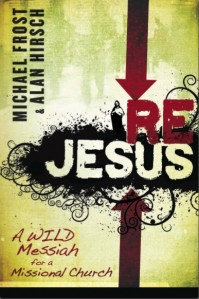
I just finished reading a book, “ReJesus” by Alan Hirsch and Michael Frost.  I will be doing a full book review tomorrow, however, there was a great quote that I thought I would post today.   The quote comes as a bit of a “side-note” in the greater context of the book, but is well worth the space re-typing it  here.

————————————————————————————————————————-

“For many suburban, middle-class churches, niceness is the supreme expression of discipleship.  But any cursory reading of the Gospels will serve to remind you that Jesus wasn’t always nice.  He was good.  He was loving.  He was compassionate.  But he wasn’t always nice.  The church must abandon its preference for good-manners piety and adopt again the kingdom values as taught by Jesus.

rejesusAllow us to give you an example.  Some time ago Michael wrote an article for a Sydney newspaper, commenting on the influence of Sydney’s largest church, Hillsong.  In the article, he defended the church against various attacks in the media, but he also gently raised his concerns about Hillsong’s emphasis on prosperity doctrine (the so-called health and wealth gospel).  He received an avalanche of letters and emails berating him for daring to be publicly critical of another church.  A significant number of these angry correspondents claimed that it was un-Christlike to criticize the church in any way.

Now, whether you agree with Michael’s decision to write such a thing in the media or not is beside the point.  But the point is that somehow these people, most of them ministers, failed to recognize that Jesus was regularly and scathingly critical of the religious leaders of his faith community.  Furthermore, Jesus’ seven messages to the seven churches in the book of Revelation (Rev. 2:1-3:22) contain plenty of harsh critical comments directed at the church!

To claim that it is un-Christlike to criticize the church is to disregard the example of Jesus.”

—————————————————————————————————————————

Wow!  Nicely said.  In the Spirit of Jesus and the personality of those like yesterday’s Soren Kierkegaard, maybe the call is for at least a few to become this new voice of reformation in the church today.   Could it be that what is needed is not so much a voice that is critical of unbelievers, but an “inner-voice” within the church that is critical of what we have created out of Jesus’ teachings and life?

Of course there is no room for a spirit of meanness, disrespect and destruction, but maybe as much as any time in history, the church needs the new voices of Luther, Kierkegaard, Calvin and even Jesus Himself to be heard.

Rather than reacting with anger towards these voices calling us to reform, perhaps it is time to evaluate the merit of what is being said and look again with a critical eye at the static religion we have created out of the wild and beautiful revolution Jesus initiated.

Possibly we are due for a total re-calibration and re-centering on the person of Jesus in our organizational churches.

For a great start to this discussion, consider picking up a copy of “ReJesus“.

Think about it…

Personality Highlight – Soren Kierkegaard

“My mission is to introduce Christianity into Christendom.”

kierkegaardLike Jesus attacking Pharisaism, Soren Kierkegaard came out swinging against every phoney form of institutionalized Christianity.

“An apostle proclaims truth, an auditor is responsible for discovering counterfeits,” wrote this nineteenth-century Danish philosopher and theologian.  He saw it as his mission to be an auditor of Christendom, an institution he charged with sanitizing Jesus and makeing light of his message.

Denmark’s state church, he wrote, was “just about as genuine as tea made from a bit of paper which once lay in a drawer beside another bit of paper which had once been used to wrap up a few dried tea leaves from which tea had already been made three times.”

One of the fathers of existentialism, this remarkably complex and intelligent man underwent a profound spiritual transformation at the age of thirty-five and thereafter sought to apply some of his existential ideas to Christianity and thus reintroduce his nation to Jesus.  Individuals, not the state, Kierkegaard argued, needed to make a “leap of faith” in order to enter into authentic Christianity.

As a little Jesus, he hoped that his attacks against the banality of institutional religion would anger Danish Christians enough to make them re-examine their relationship to Jesus.

(taken from “ReJesus” by Alan Hirsch and Michael Frost)

While I don’t agree with everything that Kierkegaard wrote and said, I love his spirit and passion for reform.  One wonders if we could use a few more people to take up his mantle in this culture and at this time to call us away from our religious idolatry and back to Jesus.

Think about it….

The End of Christian America

[great article link at the bottom of this post!]

Until recently, I lived in the most “unchurched” region of the country.

Now apparently, that designation has switched (very slightly) from the Northwest part of our country to the Northeast (though really “church” hasn’t been popular in either region for years).  But, whether we are first in “lack of churchiness” or second, if there is one thing I know it is living in a post-Christian religion environment.

Newsweek coverWhich is why it interested me to read several articles recently that seemed to indicate what many of us have thought for years, that the rest of the country is catching up to us… in godlessness, that is.   [see “The End of Christian America” and  “The Coming Evangelical Collapse”]

Recent studies find that American people are exiting the Christian religion in greater numbers than ever.  Be it evangelical, mainline, etc, America is losing it’s religion.

So what does this mean?  Well, I suppose that depends on who you ask.  Many people think that it isn’t exactly ideal.  I have heard many well-meaning preachers proclaim it as the beginning of the end; the ushering in of Armageddon.  Ahhh, you premillenialist friends are always looking for the signs of the end, aren’t you?  =)

But, it isn’t among just preachers.  There is panic among many everyday Christians.  There is fear that what has been the driving force of morality in this country is going to erode and leave their children depraved and godless.  I have sat in a pew next to many parents who feel this tension all too keenly.  Even in Seattle (where we have a several decade head start in living in this environment) the church (generally), is characterized by great fear in this arena.  It seems as though this decline in the Christian religion–at least in the form we are accustomed to–can only be a bad thing.

Now, before going any further, I’d like you to know that I understand this fear.  I think I understand why many of my brothers and sisters, whom I love, feel this way.  It is indeed scary to see the moral/religious fiber of your country shaken.  I can sympathize with this uncertainty.

christian_america2However, I think our fear may be causing us to behave strangely.  If you read this blog, you know that I often call-out the apparent un-Christlikeness of the church.   In doing so, I am not meaning to say that I don’t believe in Jesus.  I do.  I believe Jesus has opened the fullest and most meaningful way of life for all people.  I want more people to experience this life, not less.  And, I am not trying to say I don’t believe in the church.  Christians don’t necessarily have bad intentions.  I simply think we need to be very careful and think extremely critically about our methods of communicating a message.  Too often, the methods have become the message.  Too easily we believe that we should use any means necessary to convey our point and “the ends justify the means” should never be the attitude of Christ’s people.  Especially as it relates to the fear of “losing our Christian nation.”

Fear of the end of Christian America.

Because of this fear, we have seen (I believe) many Christians behaving in ways that do not show love.  Whether it is the polarizing political attempt to legislate Christianity, the stereotyping generality of protest signs or simply the attempt to shame those who are perceived as the danger through our bumperstickers, t-shirts and slogans.

Because of fear we have reacted poorly.

But, perhaps, we do not need to fear this decline so much as we have thought.  Maybe what we feel we need to protect doesn’t need protected at all.  Maybe, the cause of Christ could be advanced in a much more meaningful way if what we are scared to lose was really to disappear.

You see, living in Seattle, I have heard for as long as I can remember about how non-churched this region is.  I grew up knowing that I was among less than 10% of my local population that attended any type of church each week.   I heard these statistics as a teenager, while in Bible college and beyond in ministry.  I was taught that I was the only beacon of religion in a depraved land.

But, as I’ve hung out with people, got to know them and seen many of them make decisions to follow the life and example of Jesus with their lives authentically, I have learned that these statistics are a bit misleading.  The reality of my interaction with people in this “godless” land is not as dire as I had been made to believe.  In fact, while we may be declining in religious fervor, I have found people here to be more spiritually open to discussion than ever before.

Almost no one that I meet anymore is unwilling to have a spiritual discussion with me, as long as it is honest and not aimed at “converting” them.   And though this seems strange to some of you, I actually think that the message of Jesus is finding more traction in this culture that we fear than in the one we felt comfortable in previously.  It is almost as if the dismantling of the “civic religion of Christianity” is helping people to rediscover the Jesus behind this cultural influence.

church_stateOf course we all know people that would label themselves “Christian” though they make no attempt to follow and model the life of Jesus.  This country, since its beginning, has been labeled by the same generic label, “Christian.”  It has become a cultural and national label rather than an affiliation with the personhood of Jesus.  This faux Christianity, I contend, has actually made it much more difficult to lead people to authentic relationship with Jesus.  And to see it decline, in some odd sense (to some of you) gives me great hope for the future.

I believe we live in the greatest moment for followers of Jesus in the history of our world (and country).  I believe that this decline is preparing the soil (and has already) for a much deeper commitment to Jesus in the hearts of people than we have seen in our lifetimes.   It is not a day for fear, but for great expectation.  It is a great day to be a follower of Jesus!

I have included a link below to a blog by Greg Boyd.  His excellent blog lays out several reasons not to fear this decline.  Hopefully, it will be very helpful to some of you.

“Don’t Weep for the Demise of American Christianity”

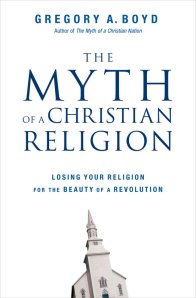
But he also has two excellent books on this subject.  The second of which just came out last week and is fantastic.  Both of these books should be required reading for Christians in America.  If you haven’t read them, please consider picking up a copy this week.

themythofachristiannation

myth of a christian religion

Love Connection – 3/22/09 – Part 2

Ok, this may be the most “scandalous” blog that I have written to date.  Wait, a minute… probably not.  The “Gay-Bath House” series was a bit scandalous too, huh? (Gay-Bath House article).

love-connection-jpgOh well, apparently my lot in life is to get involved in the dirty, messy and controversial subjects.   So, let’s jump right into the final question for this week, which almost gave me a coronary attack as I read it knowing I’d have to answer it!  Thanks everybody…  Let’s just get back to asking questions that are “safe,” huh?  LOL.


Question #3:
What are your views on masturbation?  Is it okay?

Wow, so we’re gonna go THERE now?  Ok.  I guess I should have known that we would eventually get here.   This question doesn’t necessarily have to do with relationships, however it is an issue that could impact relationships on many different levels.   So let’s go ahead and discuss it.

This is a very difficult question to answer.  On the one hand, many people believe it is wrong.  But, on the flip side, many Christians believe it is not.  Either way I answer I do two things:  1) I make half of everybody angry.  2) I assume that I actually know the answer.  (LOL)

So, let me give you my best effort at an answer.  It may not be perfect, but for better or worse, it is what I believe by faith right now.

First, the Bible has nothing to say directly about this issue.  The word “masturbation” is not in the Bible at all.  It is a subject, like dating, that isn’t discussed.  And without making too much of an “argument from silence” it does at least gives us a little bit of flexibility here.

However, there is one Bible text that has been used to condemn the behavior and it is worth mentioning here because its often use in this manner is not only unwarranted but flat-out coercive and wrong.

onanGenesis 38:8-10:  “Then Judah said to Onan, “Sleep with your brother’s wife and fulfill your duty to her as a brother-in-law to raise up offspring for your brother.  But Onan knew that the child would not be his; so whenever he slept with his brother’s wife, he spilled his semen on the ground to keep from providing offspring for his brother.  What he did was wicked in the LORD’s sight; so he put him to death also.”

Wow!  How’s that for a little provocative Bible reading?  Just tell your parents: “Hey, you wanted me to read the Bible.”

Now, when I was a teenager (like 100 years ago), this verse was quoted to me as God’s ultimate word against masturbation.  The line went like this, “See, Onan wasted his seed  (sperm) and God’s punishment for him was DEATH!!”

Nothing like a little fear that God will strike you dead to keep you from masturbating!

However, this story has ABSOLUTELY NOTHING TO DO WITH MASTURBATION.  It is a story about a strange, but merciful Jewish law that took care of widows and passed on family inheritance.

In the Jewish culture, if the husband of a woman died, his brother was required to marry her and save her from widowhood.  And if she did not have a son to pass the deceased husband’s land and assets to, then the brother was required to father a son with her.   This son would not be considered the brother’s son, but the deceased husband’s son and thus he would inherit the land.   It was God’s way of providing for families in crisis and ensuring rightful land inheritance.

In this text, then, God is not addressing masturbation at all.  He is punishing Onan for purposefully being disobedient and not taking care of his brother’s family.

So, if the bible doesn’t directly address this question, than what are we to make of it?  Is it okay?  Is it a sin?

Well . . . to say that it is a sin goes beyond what we have God directly saying to us in the Bible.  Because of this, theoretically, I believe that the act itself is not sin.

looking with lustHowever, while this makes sense theoretically, there is a very practical reality to consider.  Maybe most compelling are the inevitable thoughts that go along with this act.   And while no Bible text deals with masturbation, per se, Jesus does have some pretty radical things to say about our thought-life.

“You have heard it said that you should not commit adultery.  But I tell you that anyone who looks at a woman lustfully has already committed adultery with her in his heart.”  — Matthew 5:27-28

What Jesus is saying here is that our “thoughts” are as important as our “actions.”   The intention behind what we do or don’t do is as crucial as our actual actions.

Now, even if theoretically, masturbation isn’t a sin, think of all the thoughts that usually invade your mind during those moments.  I would say that it is extremely rare that one engages in that action without some sort of impure thoughts about another person, whether you know them or don’t know them (in the case of most pornography).  And these thoughts are IMPORTANT, because they affect our relationships with other people and how we see other people.  Particularly for guys, this type of visualization reinforces “objectification” of women–seeing women as “objects” to possess rather than people to be honored and loved.

Couple that with the fact that masturbation is about selfish gratification (as opposed to sexual intercourse which when performed “in love” as intended is done as much for the other person as for you) and you at the very least have a less than beneficial activity.

So when it comes right down to it, I’m not sure I can make that judgment call for you.  I don’t know what goes on in your head.  Only you do.  And I don’t know what God’s Spirit convicts you about.

But it might help as you think through this issue for yourself to be reminded that sin is not primarily a legal infraction.  Sin is not like a speeding ticket.  God isn’t necessarily keeping track of all your tickets and waiting for you to “pay-up.”

Instead, I believe sin is more like an infection.  It is something that messes up your relationships with God and other people, like an infection messes up the way your body is supposed to work.

With this in mind, I don’t think God is going to kill you for it and you won’t be sent to hell for masturbating too much.   However, it may warrant a bit of caution.  Just because something may not be sin, doesn’t necessarily mean that it is good for you or for your relationships with other people.   And if this issue causes problems between you and God or you and other people, you would be wise to listen to that prompting of the Spirit and choose differently.

Ok.  Hope that helps.

By the way, for those counting at home, I said the word, “masturbation” nine times.  Oops, make that ten.

“Letter from MISSISSIPPI” – (#3)

[Letter #3 from MISSISSIPPI – Part 6  of “A Conversation between Seattle and Mississippi”, a chronicle of honest discussion between two friends.]

………………………………………………………………………………………………………………………………………….

Hello again SEATTLE,

I hope you had a great Thanksgiving!

Sitting in church listening and thinking, I have come up with more thoughts for you on this conversation.

First, I have also experienced the desire to let people know that not all Christians are like “that.”  I’ve spent time and energy trying to convince some people of that, and finally realized that as long as I believed the Bible was exclusively true, and not just a nice story, they thought of me like “that” anyway.  So I guess I have gotten burned by that type of motivation….I also came to realize that pride was at least part of it.  “If you knew ME you might have a better view of Christians, I’m not THAT kind of (ignorant, stupid, prejudiced, kooky, crazy, homophobic, racist, redneck, protesting, abortion-clinic-blowing-up, hateful or judgmental) Christian.”  I really thought that those adjectives were the problem. And for some people, maybe they are.  Let’s make sure we aren’t doing the damage ourselves, however, by misrepresenting our brothers and sisters as actually being this way, if they are not…(dishonest protest picture).

Second, I mentioned that Jesus promised the world would hate us.  Not that we should seek that out from the world, but that we shouldn’t have a problem with the world hating us or hating Jesus because of us.  It’s just not true that “we must be doing something wrong if people hate us.” In fact, considering what Jesus promises, a more appropriate question would be, are we following him with integrity if no one hates us?

You interpret “the world” to mean other Christians. This gets into a really common attitude today.  People love to say that Christ’s biggest enemies were the religious people of his day…implying therefore, if He came back today, WE would be his enemies.  Todd Agnew’s popular song, “My Jesus” says: my Jesus would never be accepted in my church / The blood and dirt on His feet might stain the carpet / But He reaches for the hurting and despises the proud / I think He’d prefer Beale Street [bars/nightclubs] to the stained glass crowd….

Back then “religious” people were completely different than they are today.  They were an orthodox group with special status…not just any common person could believe and become “religious” the way they do today.  For the most part, those who are “religious” by today’s definition are not modern-day Pharisees, but rather his disciples!  His disciples were sinners who changed their entire lives after encountering him.  The “sinners” he loved too much, gathered around to hear him speak the good news.  They loved and believed in him.

The Pharisees’ problem was not that Jesus loved too much, it was his message that sinners-become-disciples had equal or greater spiritual status than the Pharisees.  The prodigal son who comes home and the man who begins work at the 11th hour receive equal rewards as lifelong rule-keepers.  Rather than the pious and self-righteous, pure-blood Jews who had always been in charge, every day “sinners” had equal access to eternal life.  This offended those in charge, because they wanted to be saved for what they were doing, not for believing in Jesus.  My point is that Jesus will be hated by those who do not believe in him, whether they are sinners or happen to call themselves “religious.”

I also think you made a false statement about the world we live in.  You said, “If people who DID believe thought Jesus loved too much, how much more those who don’t believe?”  First, like I said, I don’t think it was those who believed, and I don’t think it was loving too much, it was not wanting everyone who believed in Christ to be saved.  But, my real problem with this statement is that it misrepresents our culture.  Tolerance, acceptance and affirmation are the gods of our age.  I would be shocked if “the world” would ever hate anyone for loving too much today.  So I really just don’t think that’s what Jesus is talking about here.

Finally, I thought about Sodom & Gomorrah and Lot’s attitude there, and that he was praised as a righteous man…He did not engage or accept the culture there.  In fact he was accused of “judging” them simply for not wanting to aid them in their sin.  You mentioned Jonah…whatever other points might be made, the message he was sent by God to preach to total strangers was, repent or be destroyed.  That was the message, and it worked!  Even though he didn’t love them first or at all, even though they had no relationship with him and no reason to listen to him.  Verbal violence?  God was pleased that he was able to spare Ninevah (I am sure they were thrilled too) and that would not have been possible if not for Jonah’s message.  In Revelation and the letters to the churches, tolerating the sinful, immoral and idolatrous among them is an incredible offense against Jesus; not tolerating or even hating the wicked is seen as a virtue!  In Romans 1, Paul talks about people knowing that sins deserve death but that they not only continued sinning but also approved of those who did, implying that something other than approval was needed.

Intolerance for sin seems to be biblical….but it’s pretty much the worst thing you could display in our culture. So I think that’s a pretty good reason why the world might hate us. I never said we should be hateful or that we should not love sinners, but I don’t think that we should turn against other Christians who feel called to speak the truth.  We don’t know that someone might not be saved that way.  Who’s to say that but God?  One of my old churches decided to not try to bring anyone to church but just offer free water or carwashes on Saturday so they could be loving like Jesus.  That’s good for the church members, but I’m sure it won’t help anyone else’s soul.  And frankly, as long as there is just 1 wacky church out there to make the news, our PR with the world is never going to be improved anyway.  That seems to be the wrong tree to be barking up.

Like I said, I’m not condoning hate and I do realize there are hateful Christians out there.  I’m also not saying that having these meaningful, loving relationships with the lost is wrong.  I don’t think that, I think it’s awesome.  I’m glad there are Christians out there doing that but I am also glad there are Christians out there willing to speak the truth in a culture where that is one of the only things considered to be “wrong.”  It’s a shame that believers are hating you for what you’re doing, but I also think it’s a shame that believers have joined the world in hating the others for their message.  Because I think that’s what we are all supposed to be about, in a united way, now more than ever.

Many more thoughts to follow…. I have started rereading the NT through this lens.  It is strange that I would consider something so important and basic, a new way of thinking.  But for me, a lot of these questions and considerations really are new.  I suppose what is new, is the postmodern statement that protest without relationship is verbal violence, along with the presumption that publicly speaking truth is “protest.” But whatever the prompting, I think the question is important and deserves to have time spent on it!  So, thanks again.

MISSISSIPPI

“Letter from SEATTLE” – (response #2)

[Response #2 from SEATTLE – Part 5 of “A Conversation between Seattle and Mississippi”, a chronicle of honest discussion between two friends.]

………………………………………………………………………………………………………………………………………….

Hey, MISSISSIPPI:

Hahahahaha!  You respond so quickly!  It takes me weeks to have time to sit down and write an email like that, and before I wake up you have written back. =)  So, I thought I would continue the dialogue—a little quicker myself.

And I think you must have been watching me write the last email because I really was smiling and laughing half the time!  Of course, it was late at night and I get a little delirious when I’m tired.   Well, and Jay Leno and Conan were on, so that makes me laugh too.

But, I also do appreciate a good friendly conversation that isn’t communicated through anger, meanness or general insensitivity.  If you only saw some of the emails and comments that come my way!  I don’t even show them to my wife, most of the time, because they are so full of anger and intensity.  And sadly, they often come from “Christian” brothers and sisters.

I really believe that these are the types of civil and open conversations that more Christians should be having with each other.   And I sincerely appreciate your views and the attitude with which you communicate them.

In regards to your last email, I think we probably agree in more areas than we realize.  For instance, I agree that at times we will be persecuted by people for standing up for what is right.  As you correctly stated, Jesus promises us that the world will hate us as it hated him.   And in that regard, I am OK with not being popular or liked.  Trust me, I have to have some thick skin to write blogs like that!  As much as you might think there are many who would cheer that blog, there are three times more that would like to dis-fellowship me for it.   I simply choose not to post their emails or comments because they are too rude and at times vulgar.

Here is the rub for me, though.  I believe Jesus was willing to be hated and I should too.  However, I just want to make sure that I am hated for the things that Jesus was hated for.  I want to “stand-up” for what Jesus stood for.   And as I read through the gospels, I can’t think of a single time that Jesus was hated because of his proclamation of repentance to people that were notorious sinners, unbelievers, non-religious or of other religious persuasion.  His methods seemed different when it came to outsiders.  He didn’t shy away from the problem, but he didn’t seem to start with behavior modification or correction either.   I do think Jesus wants repentance, but I can’t find any story there that is similar in method to the [mega-pastor] event.  Jesus lived love, and out of that love, spoke healing truth into people’s lives.  His message was about the “Kingdom” available to all, not simply adjusting your behavior.

Honestly, I really want to have those conversations with people around me that are hurting.  And I do engage in those conversations.  In all my relationships with people that don’t follow Christ, I am longing toward one-day (in some cases sooner, others later) sharing the truth as I see it in God’s word that can set them free from oppression, self-indulgence, greed, hostility, loneliness, and despair.  But, with so many of them I can’t start there or they’ll never hear it.  I have to earn that right to speak into their life.

I approach it that way (and hopefully some of my other nut job Christian friends do too) not because I’m ashamed of the message, but because I’m not ashamed to love them regardless of whether or not they ever believe it.

Also, I agree that there are those apparently following Christ who appear “ashamed” of the relationship and of any standard that God calls us to.  Whether this is more so now than at other times, I don’t know.  It seems that truly following Christ has always been counter-cultural and the temptation exists to make His radical claims more palatable.

This, of course, is unnecessary.  And those that distance themselves from the difficult parts of Jesus’ teaching in order to make Jesus sound more acceptable to hearers are not only fooling themselves, but really deceiving those they intend to attract.  And at any rate, I think there are many well-meaning people that are lumped into this category that actually believe more of what I have described above than just “shame” in following Christ.

And, I’m not saying that there aren’t ever going to be times that non-believers disagree with us and even antagonize us for it.  I think that happens too and we should be OK with it.  But I think that happens for similar reasons when the world sees us caring for people it casts-off (i.e. drug dealers, sex offenders, terrorists, etc.).  If people who DID BELIEVE think that Jesus loved too much, how much more those that don’t believe?

Interestingly, though, when Jesus talks about being hated, the reference—I believe—is more the religious people around them than the non-religious.  In Jesus’ own context it was the religious leaders that always hated him.  It was they who killed him.  Not because he preached so much propositional truth, but because he loved too much. Or, if preaching, because he preached the truth about love.

In that way, I think [the mega-pastor] (if the illustrated scenario you described was accurate) misunderstood sacrifice.   He could have still been unpopular in his belief on homosexuality (I think that is fine, in fact, theologically we agree), but found an equally unpopular way (in Jesus’ sense) of loving outsiders.  Instead, it felt to me like he was willing to be unpopular with the world to in some small way be more popular with his church friends.

Now I’M being dangerous because I’m guessing at his motives!  And maybe I’m mistaking his motives (which isn’t really my point anyway—I’m not criticizing his motives, he might be a fine man, just his methods that I don’t think are consistent with Jesus), but if he did feel like a prophet, he’d do well to remember that is was God’s people that were angry with the prophets, not outsiders.  They existed, primarily, to reform God’s people, not convert others.  (the only exception I can think of here is Jonah, and without going into another long email, I think the circumstances illustrate a similar point).

In terms of media, I think you are right here as well.  They do often cast all Christians in one-boat as a bunch of wackos.   Of course media has an agenda too.  And very often they do choose the worst to represent us all.  And in that way, they share part of the blame of the perception of Christians today.  Although, I think we’d be wise to own up to our own fair share responsibility.   The Church does do some weird things sometimes!  LOL.

But, this comes down to several things for me too.  1)  There is a difference, I think, between the “cultural Christianity” in America today and real Authentic Jesus-following stuff.   The “cultural Christianity” (CC) is what makes the news.  It’s the people that say they are Christian, go to church occasionally, but live lives that look nothing like Christ.  Christianity isn’t so much a lifestyle to them, but a cultural definition of who they are.  However, whenever there is something to protest (and I’m not lumping [mega-pastor] in with this group) that is different than their American-Christian worldview, they are the first to speak up.  Not so much based on conviction about Christ’s transformation in their life or the world, but out of a sense of pride in their worldview they’ve always known being right.  These are the people that news agency’s love because they are full of hypocrisy, contradictions and have volatile sound-bites.

Then, there are the many good and devoted followers of Jesus in this country that really live what they preach and love God deeply.   And it is this group that I think you rightly pointed out are doing a great many things in their churches and communities that doesn’t make the TV.  And to these people I am deeply indebted and extremely proud.

Now, I know for me personally, when I am found agreeing with the media about the Christian stereotype, it is not because I’m ashamed of what that latter group believes and lives, or that I find it easier to perpetuate the media’s skewed perceptions.   But, rather, it is my agreement that the former group IS fraudulent and in many ways destructive.   I want people to see through that type of commitment anyway.

Which brings me to the second point . . . 2) I often spend a great deal of time criticizing the former group because I have to convince people today that not all Christians are like that.   To convince them that there are many followers-of-Jesus found in group 2 that are consistent, truthful and worthy of admiration.   It’s why I often don’t even use the name “Christian” for myself anymore (because it is culturally associated with CC), but use something else, such as “follower-of-Christ.”

My thought is that many people our age have noticed this difference as well.  Now, no doubt there are some that simply want to hide from difficulty, as you suggest, and it is easier for them to agree with mainstream thoughts about Christians.  And shame on them.

But a great deal more may simply be trying to make the point that Christianity is not a cultural garment to be worn when convenient, but is a life-altering commitment that invades every moment of your life.   It may be that this language we hear is an attempt at making that distinction in post-Christian culture that thinks they’ve heard everything there is to know about Jesus already—even though they probably haven’t.

Can it go overboard?  Probably.  I think it is a tough line to walk.   You are trying to build credibility, while still showing the good that exists in the bride of Christ.   Maybe I don’t always walk it correctly myself.  But, I really do try hard.   And I’m sure people of both good and bad motives go overboard in this area and that is regrettable.

At any rate, while not all helpful or purely motivated, some of what I hear today actually gives me hope that things can be better, not worse.

Ok.  Long enough for email #2.   See you got me all thinking today, when I should be working!  LOL.

Grace and peace,

SEATTLE

“Letter from MISSISSIPPI” – (#2)

[Letter #2 from MISSISSIPPI – Part 4  of “A Conversation between Seattle and Mississippi”, a chronicle of honest discussion between two friends.]

………………………………………………………………………………………………………………………………………….

Hey SEATTLE,

Superb response!!  So good to hear back from you.  I love how much time you spent responding and how thoughtful and helpful to me this is.  I agree with you about the attitude of humility, and this is something I can learn from….of course.

I’m relieved to know that picture wasn’t from the actual protest and wasn’t actually a picture of real Christians protesting.  Putting it in your blog about Hutch is really misleading (I’m glad it wasn’t you) and it illustrates my feelings pretty well.  I do agree that there was likely a better way for him to go about this.  But for the sake of argument, let’s say that he didn’t do this to make himself feel good or hold on to any rights but because he prayed about it and genuinely thought his message needed to be heard by a hurting, lost world.  Maybe more as a prophet. The picture which is not even from a real event, somehow ends up illustrating his message. Fair?  No.  But maybe that is the very picture of what Jesus did, in laying down his personal rights to popularity, to being liked or loved, to not being a target for persecution and murder; I think he had to lay down those rights in order to speak the truth to people who didn’t want to hear it. Yes, he did it lovingly and through sacrifice but his message of repentance was never absent.

I think being persecuted for speaking truth is also a Christ-like way of laying your personal rights down, not keeping silent about the truth so people will look more favorably on you and your beliefs.  I just don’t think we can be caught up in how we might be represented in the media, in a world that is hostile to Christ.  If you’re angry at the picture of Christians that gets portrayed in the media, you should actually be angry with the media.  They ignore all the good that churches and Christians do and focus on the few cases they can find that misrepresent Christ; or they distort the actions of genuine Christians themselves, kind of like that fake protesting picture being shown in the context of Hutch’s protest.  But since Christ was treated no better, maybe we shouldn’t be angry at all—maybe we should expect others to see us this way and continue on faithfully, not bending our message to suit the fancy of those who are convicted by it and don’t wish to be.

I’m not so worried about the slippery slope, or keeping intact a culture that recognizes the moral truths that have produced a wonderful society.  I understand that Christianity has thrived more in cultures that are hostile to it.  My thinking is all about how and what Christians are saying about the truth.  Are we ashamed to be recipients of his grace, to know the One way and the One truth? Are we ashamed of the privilege and blessing of being saved, of telling others they need saving too? Are we ashamed of the material blessings God has given us, as we have lived faithful, generous, disciplined lives, and as we use it to bless others in ways that no other group of people does?  I hear this “Christian guilt” everywhere I turn and have a hard time squaring it with Scripture. “I am not ashamed of the gospel, because it is the power of God for the salvation of everyone who believes;” Rom. 1:16

It seems that more often than not especially with Christians our age, there is a public bashing of Christianity, and of those who would preach the Word or call sin what it is, and many of us are changing the message or watering it down because the world sees it as intolerant.  The world feels condemned in the presence of truth, but truth is not the problem.  The world WILL see our message in a very negative way if we are at all true to it.  Jesus promises exactly that.  We have to be true to the Word and let that be seen by the world—as much as they may then hate us, or Jesus for it (He promises us that too).  Only then will the hurting lost people who are actually looking for an answer, see any difference between our message and that of the world’s message of moral relativism.  To do otherwise is to hide our light under a bushel.  Obviously, there are more and less effective ways of doing this but I have to say I am weary of hearing Christians say that we should apologize to non Christians and never ever tell them the truth about their lives.  I’m not saying we should cast stones by any means, but we go so far as to agree with the lies the media is spreading about who we are!  Talk about doing something because it makes us feel good…I’m pretty sure no one is going to want to throw rocks at our heads or crucify us for such statements.

Anyway, that’s my concern and where I’m coming from.  I hear what you’re saying too & have read Miller, Claiborne, Camp, Wallis etc.  I have really enjoyed this dialogue b/c usually people get kind of uptight, over serious or angry and I can almost hear your laughter and smile coming across through cyberspace. God has blessed you with a beautiful compassion for the lost and hurting in our world and no doubt, if all Christians were like you then I do think our message would have a lot more weight.  I do.  So, you have been a really good example and given me a lot to think about with your blog and email.  Thanks so much for taking the time to read all this and respond.  I will be thinking about what you have said and pray about my understanding of these times and our role in them.

Have a great Thanksgiving!

MISSISSIPPI

“Letter from SEATTLE” – (response #1)

[Response #1 from SEATTLE – Part 3 of “A Conversation between Seattle and Mississippi”, a chronicle of honest discussion between two friends.]

………………………………………………………………………………………………………………………………………….

Hey, MISSISSIPPI:

Thanks for your note!  It is just great to hear from you guys.  Tania showed me some pictures of your kids and I can’t believe how big they have gotten.  Crazy!

Sorry it has taken me so long to respond.  My life is a little hectic right now.  Ministry is going completely awesome, but between all the work there and learning to be a dad it feels like I don’t have time to just sit down and “be” sometimes.

Anyway, your response was a little involved and in order to take it seriously, I needed a little bit of time to answer.  This is really the first time I have sat down since I first read it, and had time to respond.   So, all that to say, sorry it took so long. ☺

In regards to your concerns, I suppose I have a few thoughts.   First, I think I understand where you are coming from in being confused with apparently opposing points-of-view.   In fact, that is why I think these discussions are so important and that our views should be held with a degree of humility.  These are very complicated issues, involving real people and not abstract theology.

I have read a great deal on the issue of homosexuality (from a biblical perspective and otherwise) from many different authors from many different backgrounds.  And in that reading and research of my own, I have probably found myself more confused, not less.   There are genuinely good reasons that people argue over this stuff.  I used to think that the matter was rather cut and dry (homosexuality in all forms is sin), and like you, I assumed that those who argued against it were more motivated by political agenda than honest struggle with God’s truth.   However, I now think it is more difficult than that.

This argument exists in large part because there are legitimate reasons (at least in my mind) for disagreement.  For instance, there are word choices that the Apostle Paul could have chosen that would have made it much more clear (i.e. in Romans 1 and 1 Cor. 6:9-10, etc.), but unfortunately he didn’t.  And the Greek words he did use carry more ambiguity than I am comfortable with.   I encourage you to look into it yourself, of course, but I’ll be the first to admit that I end up more “confused” for the research, to use your terminology.

All that said and despite what I consider legitimate dissension, here is where I come out personally on this issue…  I still believe that as best as I can tell, homosexuality in all its forms is normatively sinful.  Hahahahaha!   And you thought I was going all crazy on you!

Anyways, there are lots of reasons for me ending up here, but this response will be long enough as is.  LOL.

However, even though this is my conviction (and what I will stand up for and teach), I have learned to hold that conviction with as much humility as I can.  Philosophers speak of a term, “epistemological humility.”  It means being humble about what you think you know and believe, because history it seems is full of well-meaning people who were passionately convinced on many issues (slavery or women’s rights to name just two), but on the wrong side of justice as we look back at them now.

And so, I live in this weird world where I hold to my convictions and teach them unapologetically, but try not to hold them so tightly that they define me more by what I’m against than what I am for.

Interestingly enough, most of my non-Christian friends already knew the troubling spots about homosexuality in the Bible before I did.  And, in my experience, they have become much more open to my understanding of homosexuality since I became humble in my dialogue with them about it.   It‘s as if they trust what I have to say more now that they perceive that I’m not just proverbially “drinking the Kool-Aid” of Christianity, but willing to think critically and openly.

And in that sense, I have learned to be a little less scared of the “slippery slope” theology that I think you expressed in your response.   It’s that feeling that Christians today buy into little things that might seem harmless; things the culture tells them is ok, but in the end is a slow start to a fast decline in the righteous path of God.

Now, I do feel scared about that at times.  But more often than not it is about things that are much more subtle, and in my mind, much more dangerous.  Things like consumerism, misplaced patriotism that becomes synonymous with faith in God, or spiritual pride.  That could be a whole response in itself!  LOL.

And to some degree I think issues like homosexuality are like that as well.  It concerns me greatly that a person would simply accept homosexuality as a normative behavior without wrestling with God’s word.  But it also concerns me that someone would condemn it without doing the same diligent work.   We tend to be lazy.   Lazy in our study of God’s Word and lazy in our dialogue with God and each other about what that Word might mean.  And in that sense, I think there are a lot of people out there that are sliding into either total relativism or total elitism, and I believe both slopes are equally slippery.

In terms of [The Mega-Pastor], I suppose I was a bit hard on him.   I looked into the graphic that you mentioned.   I actually didn’t put that in the blog myself;  I had an assistant who did that for me (I’m not all that tech savvy).  FYI — That photo isn’t from the [mega-pastor] protest, but is apparently a famous parody of those types of protests.  And in that way, I agree it may be misleading.  [Note to reader:  I have left it posted as it was for the purpose of this conversation].

In any event, I talked with people close to [the mega-pastor] and I think I understand his point-of-view in holding the protest.  I understand that he is protesting not the event but it’s placement in the educational system.

My problem with the protest was not with his concerns but with his methods.  There is definitely some pro-gay agenda to that event.  No doubt.  But several things are important here, 1) it is an event put on by students, not adults coming in to “indoctrinate” them.   Had it been a planned school event, hosted by the district or its employees, I think [mega-pastor] would have a better argument.   And 2) the effective end to his method was all my non-Christian friends (and everyone in Seattle) seeing Christians standing up for what they are AGAINST again.  All they saw was Christians protesting gay people.   And in that way, [mega-pastor] could have been right—and even won the battle—but because of his methods, lost the war for those people’s hearts.

Now, maybe that isn’t what [mega-pastor] wanted to communicate, but I don’t think that really matters.  That IS WHAT WAS COMMUNICATED.

So, how would I respond better?  I’m not sure.  I’m thinking it through for this year.  But, what I think would be more powerful is for Christians to EARN the right to speak into these students lives by showing up and RALLYING around the parts of it that they can support—such as the protection of the weak and vulnerable.   And even if they know there is an underlying gay agenda, to show up and demonstrate that they are FOR things like love, compassion, and grace too.

It’s an issue of language.  [Mega-pastor] didn’t speak a language that reached those students or that community.  He held a protest that made him and his followers FEEL GOOD about themselves and their convictions, but in the end, it didn’t reach a single person (that I know of) with a life-changing opportunity of faith in God.   He stood up for his rights, when he should have laid them down.  He asserted his beliefs by force, when he could have sacrificed his time and pride with unconditional love.

And in that way, I do believe that an act can be “violent” without actually being “violent.”  Well, maybe that’s not the real problem.  Maybe it was simply that it didn’t demonstrate “ultimate Jesus-like love.”

Listen, I know this is counter-intuitive.  It seems like exactly the opposite of what we should do when culture presses in on us.  It seems like we should fight back.  It seems like we should protest and pass legislation and speak loudly.   It seems ridiculous to be right but not ask for your rights.

But, I’m absolutely convinced that even though it makes no sense, it is the way of Jesus.   I think what Jesus came to teach us is that the “power-over” model of persuasion belongs to the world and not us.  In some strange way, it is the “power-under” model of love and sacrifice that wins the day.  That love wins.  Not protest.  I mean, that was Jesus’ own life model, wasn’t it?   He didn’t protest prostitutes, he loved them and forgave them.  He didn’t pass laws on greedy tax collectors, he went and ate dinner with them.   He didn’t even fight back when he was accused on trumped up charges, He choose instead to die for those who brought the charges.

Somehow, I think we have bought into the model of the world and tried to fit Jesus into it, rather than just follow the example of Christ.   And when we do that, we may very well win the battle for being “right”, but lose the hearts and souls of many people as collateral damage.

Anyway, that is a long answer to your questions, I know.  But you did ask, and I would feel bad blowing you off with some trite answers rather than the thoughts of my heart.  I only hope that I have clearly answered what you were really asking.

At any rate, it is discussions like this that I think Christians would be best served having right now.  Especially in light of new California laws and retaliations.   It may be that we have much to still learn in how to live with this righteousness “not our own.”

Give my best to your family.  I pray that you all are still enjoying Mississippi and of course that you will decide it isn’t for you and move back to Seattle!  Have a great Thanksgiving!

Grace and peace,

SEATTLE.