
What does my specific church history teach about non-violence?
As we pick up our discussion on “Jesus & Non-violence” again today I am going to say very little and allow several historical voices to share their understanding of obedience to Christ and renunciation of violence.
A little background will be helpful.
I belong to an independent and non-denominational Christian church. I wrote about the roots and history of this movement in my last post (Restoring the Conversation).
And I have spent the last few weeks researching the position my church has historically taken on violence and war. In this research, I discovered that nearly all of the founding visionaries of this movement were well known pacifists.
These leaders include Alexander Campbell, Barton W. Stone, Benjamin Franklin, J.W. McGarvey, Moses E. Lard, Robert Milligan, Tolbert Fanning, David Lipscomb and many, many others.
Apparently, the apple does not fall far from the tree!
By far the two most notable people in this list are Alexander Campbell and Barton Stone. Campbell specifically has an amazing essay on the issue titled, “An Address on War.” I wish I could print the entire thing here. I may work on getting it online at some point. But, lets just take a quick look at the statements of these two influential men, without whom my church would not exist today.
——————————————————————————————————————–
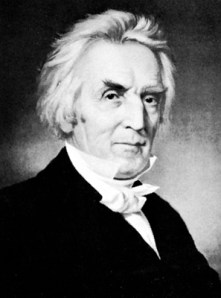
Alexander Campbell
“But as respects the works peculiar to a soldier, or the prosecution of a political war, they (have) no commandment. On the contrary, they were to live peaceably with all men to the full extent of their power. Their sovereign Lord, the King of nations, is called ‘The PRINCE OF PEACE.’ How, then, could a Christian soldier, whose ‘shield’ was faith, whose ‘helmet’ the hope of salvation, whose ‘breastplate’ was righteousness, whose ‘girdle’ was truth, whose ‘feet were shod with the preparation of the gospel of peace’ and whose ‘sword’ was that fabricated by the Holy Spirit, even ‘the Word of God.’ I say, how could such a one enlist to fight in the battle of a Cesar, a Hannibal, a Tamerlane, a Napoleaon, or even a Victoria?-!”
— Alexander Campbell (“An Address on War.” Millennial Harbinger, 1848. Pg. 374)
“Two swords for twelve Apostles? Truly they are dull scholars who thence infer he meant that they should literally buy two swords to fight with!”
— Alexander Campbell (“An Address on War.” Millennial Harbinger, 1848. Pg. 375)
“Decidedly, then, the spirit of Christianity is essentially pacific.”
— Alexander Campbell (“An Address on War.” Millennial Harbinger, 1848. Pg. 375)
“That the genius and spirit of Christianity, as well as the letter of it, are admitted, on all hands, to be decidedly ‘peace on earth and good will among men,’ needs no proof to any one that has ever read the volume that contains it.”
–Alexander Campbell (“An Address on War.” Millennial Harbinger, 1848. Pg. 375)
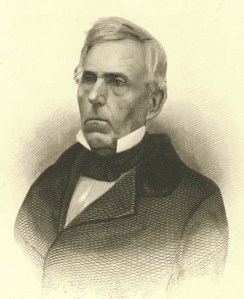
Tolbert Fanning
“Need we any other proof that a Christian people can, in no way whatever, countenance a war as a proper means of redressing wrongs, of deciding justice, or of settling controversies among nations?”
–Alexander Campbell (“An Address on War.” Millennial Harbinger, 1848. Pg. 377)
“The precepts of Christianity positively inhibit war—by showing that ‘wars and fighting come from men’s lusts and evil passions’, and by commanding Christians to follow ‘peace on earth and good will among men.’”
–Alexander Campbell (“An Address on War.” Millennial Harbinger, 1848. Pg. 383)
“We must create a public opinion on this subject. We should inspire a pacific spirit, and show off on all proper occasions the chief objections to war.”
–Alexander Campbell (“An Address on War.” Millennial Harbinger, 1848. Pg. 385)
“In the language of the eloquent Grimke, we must show that ‘the great objection to war is not so much the number of lives and the amount of property it destroys, as its moral influence on nations and individuals. It creates and perpetuates national jealousy, fear, hatred, and envy. It arrogates to itself the prerogative of the Creator alone, to involve the innocent multitude in the punishment of the guilty few. It corrupts the moral taste, and hardens the heart; cherishes and strengthens the base and violent passions, destroys the distinguishing features of Christian charity, its universality and its love of enemies’; turns into mockery and contempt the best virtue of Christians—humility; weakens the sense of moral obligation; banishes the spirit of improvement, usefulness, and benevolence, and inculcates the horrible maxim that murder and robbery are matters of state expediency.’”
–Alexander Campbell (“An Address on War.” Millennial Harbinger, 1848. Pg. 385)
“The spirit of war is always a rebellious spirit.”
–Alexander Campbell (“The Spirit of War.” Millennial Harbinger, 1861. Pg. 338)
“The Christian is not permitted to redress his wrongs by taking vengeance upon the wrong-doer. He is to commit his cause to Him who judges righteously, to whom vengeance belongs.”
–Alexander Campbell (“The Spirit of War.” Millennial Harbinger, 1861. Pg. 338)
“Now we trust that no Christian man who fears God and desires to be loyal to Messiah, the Prince of Peace, shall be found in the ranks of so unholy a warfare.”
–Alexander Campbell (“The Spirit of War.” Millennial Harbinger, 1861. Pg. 339)

David Lipscomb
“I freely expressed my views of war and other aberrations from the Christian religion.”
–Alexander Campbell (“War.” Millennial Harbinger, 1846. Pg. 638)
“But so long as any man admits the dying testimony of Jesus Christ to be true, he must, I contend, give up his ‘Christian wars’ ‘Christian armies,’ ‘Christian navies,’ ‘Christian victories,’ and military glory.
–Alexander Campbell (“War.” Millennial Harbinger, 1846. Pg. 640)
(speaking of Jesus’ claim that His kingdom is not of this world) “The conclusion of these words is inevitable. My kingdom being not of this world, my servants cannot fight for me, not even in a defensive war.”
–Alexander Campbell (“War.” Millennial Harbinger, 1846. Pg. 640)
“If, then, the Messiah would not, in defense of his own life, have his servants to take the sword, for whose life ought it to be unsheathed?!”
–Alexander Campbell (“War.” Millennial Harbinger, 1846. Pg. 641)
“Indeed, the spirit of war and the spirit of Christ are as antipodal as light and darkness, as good and evil.”
— Alexander Campbell (“War.” Millennial Harbinger, 1846. Pg. 641)
“Christianity, (is) essentially pacific, conciliatory, and forgiving. The Saviour of the world is the Prince of Peace, and all his true subjects are sons of peace and advocates of glory to God in the highest, peace on earth, and good will amongst men.”
–Alexander Campbell (“War and Christianity Antipodal.” Millennial Harbinger, 1850. Pg. 524)
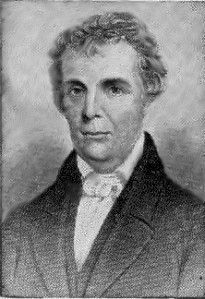
Barton W. Stone
“His laws are pacific, he is the Prince of Peace—his subjects are the children of peace. Nothing appears so repugnant to the kingdom of heaven as war…”
–Barton W. Stone (“Christians Holding Offices.” The Christian Messenger, 1842. Pg. 205)
(speaking of Christians and war), “If these things be true, the Christian world is truly in an awful state of apostacy! It is surely high time to think seriously and reform.”
–Barton W. Stone (“Christians Holding Offices.” The Christian Messenger, 1842. Pg. 205)
“The Gospel aims a death blow at the very root and principle of war”
— Barton W. Stone (The Christian Messenger, July 1835)
—————————————————————————————————————–
Wow, quite a body of work from just TWO of the leaders of this movement. Much more could be quoted from David Lipscomb (a Christian anarchist) and Tolbert Fanning alone. For purposes of space, however, I thought that these two provided an adequate representation of the many others.
Maybe most interesting are Alexander Campbell’s words at the end of his “Address on War.” Not only does he lay out a great case for pacifism, he ends by pleading for all of us to promote the cause of the non-violent kingdom of God whenever possible…
“I must confess that I both wonder at myself and am ashamed to think that I have not spoken out my views, nor ever before written an essay on this subject . . . I am sorry to think, very sorry indeed, to be only of the opinion, that probably even this much published by me some three years, or even two years ago, might have saved some lives that have been thrown away in the desert—some hot-brained youths.
“We must create a public opinion on this subject. We should inspire a pacific spirit, and show off on all proper occasions the chief objections to war.”
–Alexander Campbell (“An Address on War.” Millennial Harbinger, 1848. Pg. 385)
I presume Campbell would be pleased with this topic for our conversation.
Okay, next post we will have a guest blogger! Very exciting!
Keep thinking and growing!
 Now, to give you some context, I am a part of a non-denominational Christian church that has “no creed but Christ” and is a link in a long chain of churches that has held to the ideal that “we are Christians only, but not the only Christians.”
 order of things” or The SOURCE (Jesus) and the early church.
 In this regard, the enemy of true unity is not discussions like these, but a spirit-of-disunity within these discussions and a loyalty to any human rationalization or construct that takes priority over what we find in Jesus and the early church.
 And if you remember playing this game, then you remember how funny it was when the last person to get the message finally tells everyone else what strange sentence they heard at the end of the line. Most of the time, the statement began as something like, “The baker made an apple pie” and ended up as “Your face makes me wanna cry.” They rhyme, but they aren’t really the same thing.
 matter, but I would like to caution us to rethink our stance in light of the telephone game.
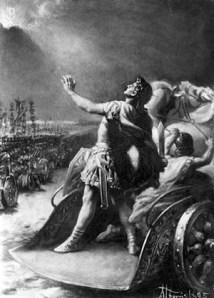
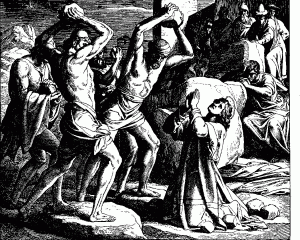 A similar story is found later in the book of Acts when Paul is also violently attacked for his beliefs, and yet does not seek revenge:

 Today, we will continue our discussion on how a follower of Jesus should respond to violence and whether or not we are ever to involve ourselves in this type of activity. We are building on several concepts here as we go along. Here is what we have established so far: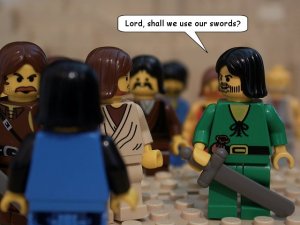
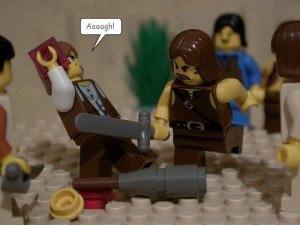
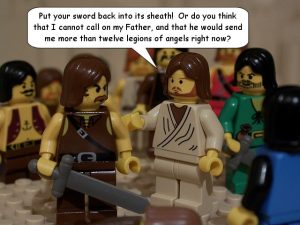

 I know that “Memorial Day” is designed to honor the soldiers from the United States that have died in combat. However, I would like to suggest that as Christians this scope is too narrow. We have the opportunity to engage it in a much more profound and meaningful sense that embraces the kingdom of God not just the kingdom of this nation.
 everything for our belief that Jesus is the way to peace. If we still believe it, now is the time to live what we have spoken.
 Taking another quick break from our discussion of non-violence, I thought I would throw in a recent survey done by the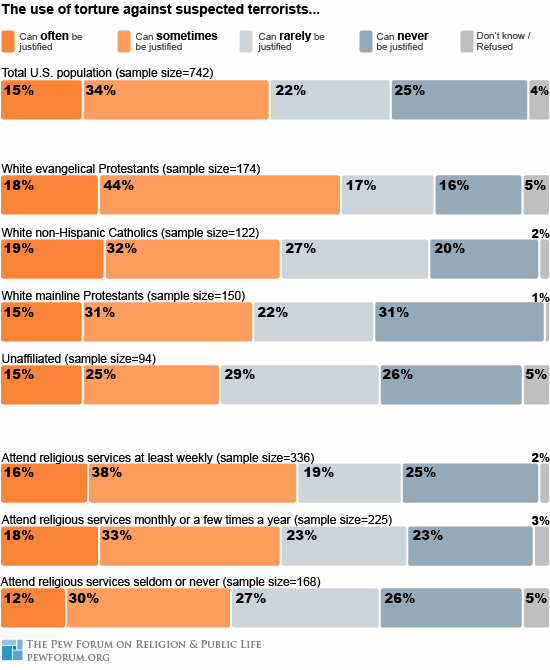

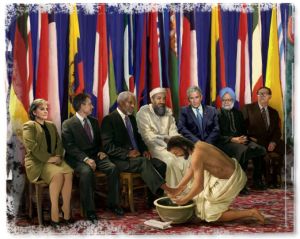 Jesus is saying things here that go beyond our sense of what we feel like we should “reasonably” be called to do. And as uncomfortable and even angry as these statements made the original hearers (they killed him for these types of things), it is understandable that it would be a difficult teaching for us as well.
 Which, I admit, is kind of strange to me. I obviously expect that many Christians are pro-national violence (at least as it relates to their own country), however it somewhat surprises me that these people are so vehemently opposed to the suggestion that Christ calls us to a life of non-violence. I understand the general disagreement. But, were I just to read the Gospels (the story of Jesus), I would assume the controversial issue would be that any Christian might actually think that violence of any kind was okay.
 “In Christ all the fullness of the Deity lives in bodily form” (Colossians 2:9-10)
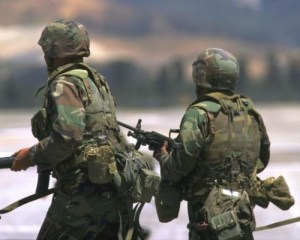 Should we recognize “Armed Forces Day” in our church worship services?
 2) Whether pacifists or “just war” proponents, we all agree that we should support and pray for the people from our body that are currently surrounded by and engaged in violence.
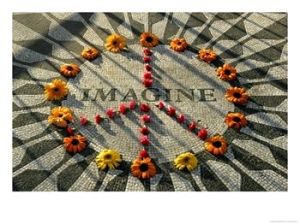 Pray for their spiritual health as they wrestle with things they’ve seen, things they’ve been called to do and the terrible side of humanity that they have been exposed to.
 nickloyd.com