Memorial Day “Prayer for Peace”

Happy Memorial Day, everyone. I’m sure most of you will be enjoying BBQ’s and family and relaxation. Today marks the beginning of the summer season and a great day to rest from our normal activities and embrace life.

But, as you are eating burgers, playing cards and watching the matinee showing of “Terminator”, please join me in remembering all of those who have died in the wars and violence on this planet.

peace_symbol_1I know that “Memorial Day” is designed to honor the soldiers from the United States that have died in combat. However, I would like to suggest that as Christians this scope is too narrow. We have the opportunity to engage it in a much more profound and meaningful sense that embraces the kingdom of God not just the kingdom of this nation.

All people are created in the image of God. Soldiers on either side of any conflict are equally loved by their Creator. In fact, it is our proclamation that God became a human and Himself died for ALL people, whether Muslim, Jewish, Hindu or even Christian; whether Russian, Sudanese, Iraqi or even American; whether Al Qaida terrorists, Taliban oppressors, or even Coalition “freedom-fighters.”

Still today, the fabric of our world is torn by war and violence and our message as Christians is that there is a better way; Jesus’ way of peace, self-sacrifice, humility, understanding, and above all things: love.

So, fire up the grill, and sear the heck out of delicious steak. But, stop and reflect today on the many men and women who’s live were cut short because of humanity’s thirst for violence.

And pray for PEACE.

Also, I’d like to point you towards one of my very favorite groups today:

CHRISTIAN PEACEKEEPING TEAMS.

Spend some time on their website and take a few moments from your BBQ to see what “Active Pacifism” is all about. And read the words of one of the catalysts of this movement, Ron Sider, who gave these words as a challenge to the Mennonite World Conference in Strasbourg, France in 1984:

“Over the past 450 years of martyrdom, immigration and missionary proclamation, the God of shalom has been preparing us Anabaptists for a late twentieth-century rendezvous with history. The next twenty years will be the most dangerous—and perhaps the most vicious and violent—in human history. If we are ready to embrace the cross, God’s reconciling people will profoundly impact the course of world history . . . This could be our finest hour. Never has the world needed our message more. Never has it been more open. Now is the time to risk cpt_logoeverything for our belief that Jesus is the way to peace. If we still believe it, now is the time to live what we have spoken.

“We must take up our cross and follow Jesus to Golgotha. We must be prepared to die by the thousands. Those who believed in peace through the sword have not hesitated to die. Proudly, courageously, they gave their lives. Again and again, they sacrificed bright futures to the tragic illusion that one more righteous crusade would bring peace in their time, and they laid down their lives by the millions.

“Unless we . . . are ready to start to die by the thousands in dramatic vigorous new exploits for peace and justice, we should sadly confess that we never really meant what we said, and we dare never whisper another word about pacifism to our sisters and brothers in those desperate lands filled with injustice. Unless we are ready to die developing new nonviolent attempts to reduce conflict, we should confess that we never really meant that the cross was an alternative to the sword . . .”

CHRISTIAN PEACEMAKER TEAMS WEBSITE

In GRACE and for PEACE

Nick.

Waterboarding for Jesus?

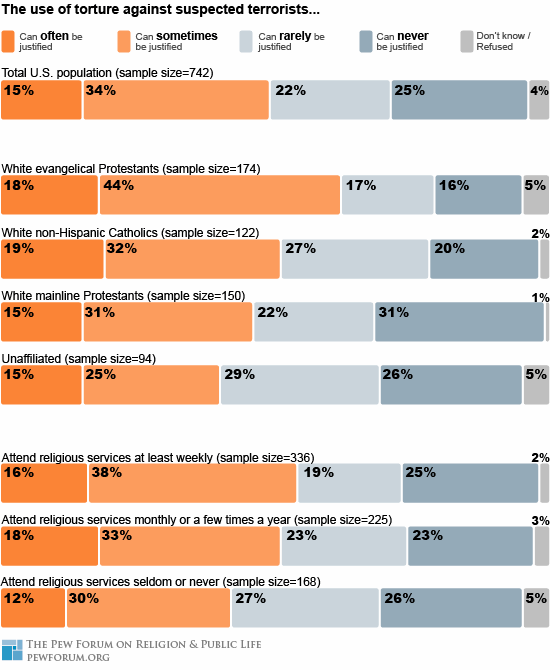
waterboardingTaking another quick break from our discussion of non-violence, I thought I would throw in a recent survey done by the research of the PEW FORUM.   It is a survey that has been passed around a lot for the last two weeks, but is worth mentioning here in the context of our discussion.

If you haven’t seen it, then let me warn you… it isn’t pretty.  I mean, torture of course isn’t pretty (though I wonder if most people in this study have thoroughly thought about its appalling reality), but uglier still is the statistics on its acceptance among regular church-goers.

The survey shows that 62 percent of white evangelicals believe torture of suspected terrorists is “often” or “sometimes” justified.  A total of 79 percent of the same group were “okay” with torture if pushed far enough.

And, maybe most disturbing, those who attend church regularly were more likely to rationalize and justify torture than those who do not go to church.

SERIOUSLY?  Something is definitely perplexing when the “body of Christ” is the expert at the rationalization of torture, for any reason.  What’s next?  Waterboarding for Jesus?  An argument for a “just war” theology is one thing, but the use of torture (even on those who are guilty of atrocities) would surely seem to go far beyond even those guidelines.

I’d be interested to hear how other Christians in favor of these methods justify this “utilitarian ethic” in light of Jesus.  I would hope that the response would be something more Christ-like than a simple, “the ends justify the means.”  I welcome your comments with any rationalization that makes an attempt to address Scripture on this topic.

We’ll continue on with our discussion next post (though this topic is clearly related) but take a look at these statistics and see if they look anything like what the followers of the Christ, who was Himself tortured and killed, should endorse.  It appears to be a very sad commentary, I’m afraid, of American Christianity’s syncretism with national idolatry and military power.

For another good article on this study click on this short Christianity Today blog by Skye Jethani.

torture

For another good article on this study click on this Christianity Today blog by Skye Jethani.

Would Jesus Wear Kevlar?

Welcome back.  As we get closer to Memorial Day, we are continuing our discussion of violence and its place (or lack thereof) in the life of a follower of Jesus.

hagia_sophia_vestibule_christ_mosaicIn the last post, we discussed the importance of a Christocentric hermeneutic (or interpreting the Bible through the person of Jesus).  We determined that Jesus is the primary revelation of God and that whatever we learn about God through the rest of the Bible, it must be made sense of and consistent with this Jesus.  This reading of Jesus as the center of scripture is the church’s classic way of reading and understanding the Bible (starting with Jesus Himself and the first apostles).

So, today, let’s take a look at the actual words of Jesus—our STARTING POINT and the “Author and Perfecter” of our faith.  Here are just a few of his actual words regarding physical violence.  (Quoted from TNIV)

———————————————————————————————————–

Jesus said,  “Blessed are you when people insult you, persecute you and falsely say all kinds of evil against you because of me.   (Matthew 5.11)

Jesus said, “You have heard that it was said to the people long ago, ‘You shall not murder, and anyone who murders will be subject to judgment.’  But I tell you that anyone who is angry with a brother or sister will be subject to judgment. Again, anyone who says to a brother or sister, ‘Raca,’ is answerable to the Sanhedrin. And anyone who says, ‘You fool!’ will be in danger of the fire of hell.   (Mt. 5.21-22)

Jesus said,  “You have heard that it was said, ‘Eye for eye, and tooth for tooth.’ But I tell you, do not resist an evil person. If anyone slaps you on the right cheek, turn to them the other cheek also.  And if anyone wants to sue you and take your shirt, hand over your coat as well.  If anyone forces you to go one mile, go with them two miles.  (Mt. 5.38-41)

Jesus said,  “You have heard that it was said, ‘Love your neighbor and hate your enemy.’  But I tell you, love your enemies and pray for those who persecute you, that you may be children of your Father in heaven. He causes his sun to rise on the evil and the good, and sends rain on the righteous and the unrighteous.  If you love those who love you, what reward will you get? Are not even the tax collectors doing that?”    (Mt. 5.43-46)

Jesus said,  “Everyone will hate you because of me, but those who stand firm to the end will be saved. When you are persecuted in one place, flee to another.   (Mt. 10.22-23)

Jesus said,  “Do not be afraid of those who kill the body but cannot kill the soul. Rather, be afraid of the One who can destroy both soul and body in hell.”   (Mt. 10.28)

Jesus said,   “Whoever wants to be my disciple must deny themselves and take up their cross and follow me.  For whoever wants to save their life will lose it, but whoever loses their life for me will find it.”   (Mt. 16.24-25)

Open Bible
Jesus said
, “You must love your neighbor as yourself.”   (Mt. 22.39)

Jesus said, “you know the commandments: you must not kill…”    (Mark 10.19)

Jesus said,  “But to you who are listening I say: Love your enemies, do good to those who hate you, bless those who curse you, pray for those who mistreat you.  If someone slaps you on one cheek, turn the other also. If someone takes your coat, do not withhold your shirt. Give to everyone who asks you, and if anyone takes what belongs to you, do not demand it back.  Do to others as you would have them do to you.”   (Lk. 6.27-31)

Jesus said,  “If you love those who love you, what credit is that to you? Even sinners love those who love them.  And if you do good to those who are good to you, what credit is that to you? Even sinners do that.  And if you lend to those from whom you expect repayment, what credit is that to you?  Even sinners lend to sinners, expecting to be repaid in full.  But love your enemies, do good to them, and lend to them without expecting to get anything back. Then your reward will be great, and you will be children of the Most High, because he is kind to the ungrateful and wicked.”   (Lk. 6.32-35)

Jesus said, ” Be merciful, just as your Father is merciful.  Do not judge, and you will not be judged. Do not condemn, and you will not be condemned. Forgive, and you will be forgiven.”   (Lk 6.36-37)

Jesus (on the cross) said,  “Father, forgive them, for they do not know what they are doing.”   (Lk 23.34)

Jesus said,  “I have told you these things, so that in me you may have peace. In this world you will have trouble. But take heart! I have overcome the world.”   (Jn. 16.33)

Jesus said,  “My kingdom is not of this world. If it were, my servants would fight to prevent my arrest by the Jewish leaders. But now my kingdom is from another place.”   (Jn. 18.36)

—————————————————————————————————————-

And though there are other statements that we could look at as well, it is also worth noting that Jesus not only speaks these words but also lives them out with the most powerful witness of non-violence in the face of the worst of humanity’s thirst for blood that history has ever seen.  Jesus backs up his words with his willingness to go without a fight to his ruthless and unimaginably violent death.

But, a few comments about his actual statements.

1)    THEY ARE RADICAL! It comes as no surprise that these words make us uncomfortable.  It is not shocking that we would try to explain them away as meaning something else other than what they plainly seem to mean.  To accept them as they are is unpalatable to our sense of entitlement.
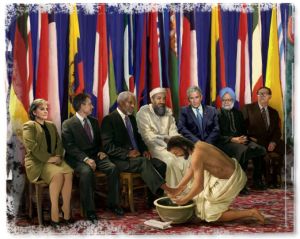
jesuswashingfeetJesus is saying things here that go beyond our sense of what we feel like we should “reasonably” be called to do.  And as uncomfortable and even angry as these statements made the original hearers (they killed him for these types of things), it is understandable that it would be a difficult teaching for us as well.

These statements are not safe.  They are as radical a stance on human violence that the world has ever seen—addressing not only preemptive violence, but self-protection and even intention that is not acted upon.

Jesus is no doubt calling us to something far beyond the brokenness of normal humanity.  He is describing life in a totally different kingdom–His kingdom–and we should not be surprised that his calling is a radical diversion from life as we have known it.  He is choosing to live and asking us to be a part of something that seems ridiculous to the rest of the world and operates on a totally different set of values.

2)   THEY ARE CONSISTENT.   In our next post we will be looking at several glimpses into the life of Jesus that some would say illustrate his acceptance of violence to one degree or another and finding a better explanation.

However, before even beginning this process, it is important to notice the overwhelming non-violent context that these very few glimpses are immersed in.  Jesus consistently speaks of returning ONLY good toward evil.  To interpret these few other instances as anything other than coherent with the broader and more expansive context of non-violence that Jesus promotes here and demonstrates in his death seems an irresponsible interpretation at best.   Especially as we will find that they are easily understood as fitting into Jesus’ much more prevalent framework of non-violence.

(We also find that this is exclusively how the early church fathers read these statements and interpreted them as well.  But we’ll dig more into that in a further post.)

Where we have such a greater context of non-violence, the burden is on placing these few other instances within this context, not making the broader picture fit into several verses that are of difficult explanation.  Difficult passages should always be interpreted by the clarification of those passages that are easily understood.

3)   THEY ARE COMPREHENSIVE.   Though I personally would be much more comfortable with a tame Jesus that only calls me to not be a “first initiator” of violence, instead in the gospels I find a much more wild Jesus that makes a claim on all forms of violence.

Multiple times he says to “love your enemies”.  He assumes in several verses that I will be attacked, but says my response should be love of the person and trust in God.  This love apparently applies when people try to take what is rightfully mine, force me to do what I am not required to do, or even (as Jesus demonstrates from the cross) if my own life is in jeopardy.  I am even called to “take up my own cross.”  It seems as if there is no dimension of violence that Jesus does not speak into.  He is consistent and thorough.  We are to live only love in response to violence and trust everything to God.

So, what does this mean for us?  How do we actually live this way?  Does it mean that we are totally passive and never try to stop evil from happening?  We will jump into more of that in another post.

Up next, though, the difficult passages, then maybe a word about a government’s role in protection and violence and whether Christians should participate.  We have a long way to go here, but let’s keep building on these ideas!

Till then, happy thinking!

Sebastian’s Voodoo

We’ll take a quick break from our discussion on non-violence today and I’d like to show you a short film by Joaquin Baldwin that a good friend of mine shared with me the other day.  This film has won just about every award a short film can win.  It is a great story of self-sacrifice with tons of Jesus overtones.  Enjoy!

About:  A voodoo doll must find the courage to save his friends from being pinned to death. Created at the UCLA Animation Workshop, with music by Nick Fevola.  Short by Joaquin Baldwin.

Sebastian’s Voodoo website

God’s Character in Reverse

Welcome.  We are in a little discussion series on whether or not Christians should be involved in violence for any reason.  I’m assuming that most Christians believe that unprovoked violence is wrong, so we will be spending most our time thinking about national violence (military), self-defensive violence (fighting or killing only when your own life is in jeopardy), and protective violence (done to protect another person).

It is a discussion that, apparently, is controversial for many people, especially Christians.

pacifism1Which, I admit, is kind of strange to me.  I obviously expect that many Christians are pro-national violence (at least as it relates to their own country), however it somewhat surprises me that these people are so vehemently opposed to the suggestion that Christ calls us to a life of non-violence.  I understand the general disagreement.  But, were I just to read the Gospels (the story of Jesus), I would assume the controversial issue would be that any Christian might actually think that violence of any kind was okay.

All that to say, from everything we know about Jesus, it seems weird to me that the non-violent position is in the minority, at least in Western Christianity.  But, I suppose that is why we are having this discussion in the first place.  And as Memorial Day approaches, it is a good time for us to think through these issues more fully.

Now there are many Scriptures that are debated and scrutinized in this dialogue, and we will be looking at these texts over the next several days.  Many of these surround God’s involvement in the nation of Israel’s military violence in the Old Testament.   Also, there are many philosophical challenges to Jesus’ way of non-violence that are often mentioned and we will deal with those as well.

However, I’d like to have us start by laying a foundation for all of this discussion somewhere else, before we dig into the rest of the arguments.  So, put aside all of this anxiously awaited fodder and lets begin somewhere more broadly.

In this post, then, I’d like us to look at where we gather our primary pictures and assumptions of God’s character.  In other words, what is our main source for knowing what God is actually like?

Youth pastors, preachers, and well-meaning leaders have told me since I was very little that I get to know who God is best through the Bible.  And while I have found this to be quite true, I have also found that it was not quite specific enough.  Through the Bible, God gives his very specific direction on how to know who He is and what He is like.

Let’s take a look at this direction:

reading-bible-blueIn Christ all the fullness of the Deity lives in bodily form”  (Colossians 2:9-10)

Jesus answered: “Don’t you know me, Philip, even after I have been among you such a long time? Anyone who has seen me has seen the Father. How can you say, ‘Show us the Father’?  (John 14:9)

He is the image of the invisible God, the firstborn over all creation.” (Colossians 1:15)

“No one has ever seen God, but God the One and Only (Jesus), who is at the Father’s side, has made him known. (John 1:18)

In other words, God says, “you want to know who I am and what I am like?  Okay, here I am.  I am exactly like this.  Like Jesus.”   He even goes so far as to say that Jesus has made God known, as if until Jesus we didn’t fully know who God was.  Apparently, as good as the stories in the Old Testament are, they didn’t reveal God adequately.

Only the Incarnate Son is an appropriate full-picture of God.

The writer of Hebrews (whoever she was) put it most directly like this:

1In the past God spoke to our forefathers through the prophets at many times and in various ways, 2but in these last days he has spoken to us by his Son, whom he appointed heir of all things, and through whom he made the universe. 3The Son is the radiance of God’s glory and the exact representation of his being, sustaining all things by his powerful word. After he had provided purification for sins, he sat down at the right hand of the Majesty in heaven.  (Hebrews 1:1-3)

Did you catch that?  (I hope so; I underlined it and made it bold).  Jesus is the EXACT REPRESENTATION of God’s being.  Nothing defines God like Jesus.  He is not an approximate picture of God, or just one side or facet of God.  He is not the non-violent side of an otherwise “just war” God.  He is the EXACT REPRESENTATION.

hagia_sophia_vestibule_christ_mosaicNow, because Jesus is the fullest picture of God, when it comes to the Bible, I am compelled to read everything through the eyes of Jesus.   As this applies to our discussion at hand, it means that I must fit any violent stories of the Old Testament (which are problematic) into what I know of Jesus as revealed in the New Testament, not the other way around.

For instance, many people read stories in the Old Testament and glean what they perceive are “attributes” or “characteristics” of God from these stories and then apply them to their picture of Jesus.   In this case, since God involves himself in the violent battles of the Israelites, then we assume that this “necessary violence” is something Jesus would condone (even if it apparently includes mass infanticide and genocide).

However, when God directs us to know Him through Jesus most perfectly, we are called to learn His character backwards.  We learn what God is like by observing and studying Jesus and then read backward through the Old Testament through His lens.

Whatever these violent stories may mean (some are more confusing than others), through the primacy of Christ we regard them as an incomplete and inadequate picture.  Where they contradict what we see in Jesus (war, genocide, even self-defensive violence), we embrace Jesus’ way as the EXACT REPRESENTATION of God, and find some other way to make sense of them.

Interestingly, I believe this is why Jesus’ time on this earth was so long.   Certainly the death of Jesus was important in freeing us from the bondage of our brokenness, but his life was equally as important.  For in his life, and ultimately in his self-sacrificial manner of death (the final exclamation point to how we should respond to violence), God demonstrates his character and what he desires.  He lives and interacts with people and finally dies non-violent in the face of violence to show THE EXACT REPRESENTATION of God.

The problem of violence in the Old Testament is admittedly uncomfortable, but however these scenes are explained, as followers of Christ we are compelled to not use them to create pictures of God that are contradictory to what we plainly see in Jesus.

Ok.  That’s enough for today.  We’ll jump into some more tangible parts of the discussion in the next post.

Happy Thinking…

Divided in Discussion, United in Prayer

Military260Should we recognize “Armed Forces Day” in our church worship services?

What place does the community of God have with human armed conflict?

That was the question that we faced this week.   Apparently, AFD is this Saturday, and Memorial Day is, of course, soon upon us too.   So the question is, how much should we recognize military action in church context?

I doubt we were unified on our answer.   LOL!   It seems that many of us come from very divergent perspectives on the place and appropriateness of war and violence for Christians.  And so, a lengthy discussion ensued.

I thought I would mention it here in the blog, however, because I think I have learned a lot through this interaction.  And hopefully there is something you can learn here too, or contribute to this conversation.

I was already in the process of putting together a work on “non-violence” in preparation for Memorial Day and this discussion allowed me to purposely interact with my peers and colleagues and learn much more.

Over the next several days, I will be sharing with you some of my own conclusions on violence and war, based on how I understand Jesus, but I’d like to start today by sharing what I learned from just the act of discussing this issue this week with people I care deeply about.

1) I love my church! The great thing about the church I am a part of is that we have many divergent views on many topics, but we are committed to loving each other anyway.   I know of very few places in the world where people can feel safe to genuinely disagree on complex issues and still feel acceptance and love.

Often the church is criticized as a place where differing opinions are not welcome.  There is a sense that you must “check your brain at the door” and just go along with the party line when it comes to church.  And while I have seen places that this is true, church at its best is open to discussion and exploration and genuine conversation that seeks to understand God and our life with God better.

To those that are skeptical of church for this reason, I would like to encourage you that there are communities that are open to your dialogue.  These difficult issues can be what divide us.  Especially in church.  And yet, in the context of my community, I found it a wonderful chance to explore the reasoning and understanding of different views and grow in the process.   Thank you to my friends, Paul and Dave and others who chimed in and contributed their wonderful assessments and convictions!

It is discussions like this one this week that remind me of why I love being a part of the body that I am.  The Apostle Paul calls us to “be devoted to one another” or to stand by each other through thick and thin.  And in this interaction, I have seen yet again that our body models this call extremely well.  Cheers to you, brothers and sisters!

prayer2)  Whether pacifists or “just war” proponents, we all agree that we should support and pray for the people from our body that are currently surrounded by and engaged in violence.

And in the end, maybe that is what matters.  We may disagree about war, national violence, or the extent to which we should participate in our country’s defense of itself and ideals, but at the conclusion all of us love and care deeply about those in our body that are in danger (physically, mentally/emotionally, spiritually) due to war and violence.

I think we will all be praying even more diligently for these brothers and sisters over the next few weeks, in part possibly because of this conversation.  I know I will.  And I will be encouraging those around me to spend more time praying .

I would encourage you to spend some time praying for people that you know that are serving in the military this weekend as well.

Pray for their physical safety, of course.  Pray that they will return home to have full lives away from such violence.

Pray for their emotional/mental health.  We have all seen the devastating effect on the human psyche (especially in recent news stories of military suicides and post-traumatic stress issues) that violence-seen or participated-in creates.

personaluse2_9050019~A-Makeshift-Peace-Sign-of-Flowers-Lies-on-Top-John-Lennon-s-Strawberry-Fields-Memorial-PostersPray for their spiritual health as they wrestle with things they’ve seen, things they’ve been called to do and the terrible side of humanity that they have been exposed to.

Also, join me in praying for PEACE.  While it seems that eradicating the planet of violence is impossible, I believe that all things are possible with God.  Pray with me that we may sow seeds of PEACE and that because of the message of Christ our world will change.  Pray that our sons, daughters, brothers, sisters, husbands, wives, and friends will no longer need to leave us to go to war.  Pray that nations will beat their weapons into plowshares.   Pray for PEACE.

In the next few days we’ll look at some Scripture and the message of Jesus to discuss the place of violence and war in the life of a follower of Jesus.  We will be thinking about whether Christians should involve themselves in various types of violence: national violence (military service), self-defense (if attacked by another), in protection of another that is being attacked, or various other situations.

Hopefully it will be helpful and create broader discussion.  I’ll probably break it into a three-part blog series.  So, check back and feel free to leave a comment and join the conversation.

‘Till then, Grace and peace…

Magical Unicorns

I bought my friend, Jenna, a unicorn today.

She didn’t ask for it. I just saw it in the store and bought it for her. And in the end, i’m not sure she really noticed too much or even cared. It wasn’t a real unicorn, after all. It was just a helium balloon. But, I wish it was real.

I wish it was real (are there “real” unicorns?) because I think real unicorns are magic. And Jenna needs some magic right now. I wish it was real because I think real unicorns could fly away to imaginary land and leave the problems of this world behind. And Jenna has too many problems in this world. But, most of all, I wish it was a real unicorn because I imagine that real unicorns ride very fast and a girl deserves a pony ride on her 5th birthday. And instead, Jenna is lying in a hospital bed fighting cancer.

More than anything, I wish it was a real unicorn . . .

But, I don’t believe in unicorns.

And some days, like today, I find it hard to believe in God, too. Now, I know I’m a pastor or whatever and supposed to be rock solid on that conviction. But today, I wonder how a little innocent girl could experience such physical evil. I wonder why God would allow her to spend more of her birthdays in a hospital than out of it. I wonder why people pray (for years) for this girl and yet the doctor always has more bad news.

Five years old. Cancer for the third time. In a hospital bed again for another birthday. Treatment options limited. Hope weakening.

Now, I’ve got all sort of theological reasons for bad things happening to good people. You see, I obviously don’t think Jenna deserves cancer. And I don’t believe God gave Jenna cancer. I think someone is responsible, but it’s God’s enemy not God. I even believe that God wants Jenna to be healed and that He hurts seeing her there on her birthday too. I realize there is a war going on in this world and that what God wants isn’t always what happens, at least not yet (why else would Jesus have to pray that God’s will would be done here on earth as it is in heaven?”). I understand the consequences of free-will and of the devastating meddling of the enemy.

But as much logical sense as the theological reasons make, at this moment they make very little difference to Jenna or to her family or to me. All I know is Jenna is sick and five year-old girls shouldn’t live in hospitals.

I assume this is how Habakkuk felt when he yelled at God about the misery, violence and evil he saw in his day. In fact, rather than give God the silent treatment (which I’m tempted to do today), Habakkuk climbs the highest tower in the city–apparently to be as close to the face of God as possible–and expresses his displeasure in what I like to imagine as a very antagonistic tone.

And remarkably, God doesn’t strike Habukkuk dead for the protest. In fact, God responds and answers him. Habukkuk has asked “why” and “how long” and God replies with what some have said is the theme of the whole Bible. And yet, it isn’t what you’d expect.

The great answer of human suffering by God: “But the righteous will live by faith.” (Habakkuk 2:4)

He doesn’t answer why. He doesn’t give any idea about how long the suffering will last. He simply says three Hebrew words: righteous live faith.

And really, maybe that is all I need to hear today anyway. Even if I heard the rationale of why, I’m not sure it would help. Even if I knew the future of this little girl, I’m not sure what I’d do with that info. Maybe all I need to know is that even surrounded by evil, those who want to be right with God will experience real and full life if they just trust the deeper answers to God even when things don’t make sense. Maybe I don’t need to know why so much as I need to know what to do, how to be and how to live in the face of it.

Is that a perfect answer? No. Is it the magical unicorn that makes me feel ok and whisks a beautiful girl off to better times? No. It still comes with a lot of questions. I may still find myself at times on barely-speaking terms with God or yelling from a high tower. But, it’s practical. It tells me how to live, even when I don’t know what to think. And maybe that is what I need most. I need to know how to go on and live in the midst of what has gone so wrong.

Right now, I’m a conflicted, angry, cynical preacher. Following Christ hasn’t made everything nice and tidy for me. But as clueless and helpless as I feel on days like this, I will choose to trust God. Not because I’m naive, I don’t think, but because only He tells me how to act and live, regardless of why Jenna sits in a hospital. And that is what I really need to know.

In the end, I know there’s no magic unicorns. But, I’d like to think that bringing a balloon to a little girl this morning brought her a bit of magic anyway. And in that sense, maybe the way I live really does bring life into the midst of evil. Maybe the righteous really do live by faith.

Book Review – “ReJesus”

Today I am going to start another dimension to this blog experience.  Not another dimension in the sense that we are going to explore alternative realities of existence, although I did watch the new STAR TREK last night and it was absolutely phenomenal!  (ok, I’m an old school trekkie, I admit it).

star-trek-movieBut, I have been reading my eyeballs out for the past few years and have come across some excellent books that have helped re-shape my thinking about God, humanity, church and life in general.


Often now I as I talk with people someone will say, “wow, that’s crazy!  I never thought of it like that… How did you come to that conclusion?”

Now, on the one hand, I like those questions because it gives me an opportunity to address a whole system of thought that I think needs voiced.  But, on the other hand, so much has shaped me, I sometimes wonder where to begin.

Many of you have also wanted to do some thinking and reading on your own about these same topics and I have tried to recommend some good resources to you as I come across them.

page30_4Along this line, about a month or so ago, I agreed to join a viral-blog group for TheOOZE.com to read and write reviews for new books.   If you have never stopped by TheOOZE.com, I would encourage you to become a regular visitor.

Those of you who really know me know that I love to read and write and so it seemed like the natural thing to do.
As I have been reading, I have found several books to be not only interesting for me personally, but the type of thing I’d love to pass on to you, if you have the same desire to continually rethink your relationship with God and this life.

So, today is my first real review.  My hope is that I will be able to convey some of the content and purpose of these works in a way that might help you decide whether it might be a helpful read for you as well.

I sincerely believe that we are in the midst of great transition in the life of humanity on this planet and in the church, especially in the West.  The more of us that are rethinking the issues of what it means to follow in the life of Jesus in this context, the better.

So happy reading and thinking!  And as you read and think, please leave a comment and contribute your own “review” to the rest of our community.

Oh, and do yourself a favor and go watch STAR TREK!

Buy your STAR TREK tickets on Fandango here!

Buy your STAR TREK tickets on Fandango here!

————————————————————————————————————————————–

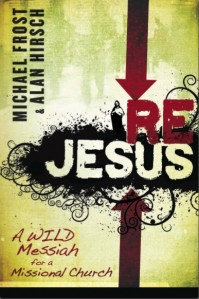
Today, I want to look briefly at a book called, “ReJesus” by Alan Hirsch and Michael Frost.

rejesusFor those of you who are unfamiliar with these names, you should definitely pick this book up because they are among the most articulate and well-thought-out voices in the “missional theology” discussion today.  I would highly recommend nearly anything from either of these two authors to give perspective and depth to whatever you have heard called, “missional”.

At under 200-pages, I expected ReJesus to be a rather quick read.  I expected to find a popularized, easy-to-read summary of what it means to be missional.

But, while the book is clearly written and very understandable, it was anything but a quick read.  I found myself reading paragraphs over and over, not because the authors didn’t write clearly, but because there were so many thoughts to explore and rethink in every sentence.

This work is clearly more than a popularized summary of what it means to be missional.  This is a concisely written missional theology manifesto.  It has depth of thought and intentionality that went beyond my expectations.

ReJesus is a book aimed at redeveloping Christology as the center of the modern church.   Or as they state it,

“to reinstate the central role of Jesus in the ongoing spiritual life of the faith and in the life and mission of God’s people… it is an attempt to recalibrate the mission of the church around the person and work of Jesus.”

Michael Frost

Michael Frost

The critique of the writers is that the church has, over many centuries, gotten sidetracked from the person of Jesus to a system of morality, liturgy, ritual and theology/philosophy.   Hirsch and Frost both argue that though these other things may not be necessarily bad, that our first call is to follow the life pattern of Jesus.

In this return to making Jesus central they challenge us to re-evaluate how our personal relationship to Jesus should look, how our church organization should function and work, what our preaching should focus on, and the type of things we teach and model that should prized.  It is a call to ACT and LIVE like Christ, not simply WORSHIP and THEOLOGIZE about him.

In one very excellent chapter, they even challenge our personal picture of Jesus in light of the gospels.  We are taken on a journey through the art that has depicted Jesus over the many centuries to see the impact that it has had on forming our perception of him.

Alan Hirsch

Alan Hirsch

This is an excellent book.  It draws heavily on critiques of Christendom from Soren Kierkegaard and Jacques Ellul (who wrote another excellent book titled, “The Subversion of Christianity”).   It is full of quotes from both of these excellent thinkers  and is obviously heavily influenced by their work.  Both Kierkegaard and Ellul are brilliant but difficult to read, so this book may be a good source to make sense of their ideas without the extra effort.

In the end, this is a book I would highly recommend for anyone wanting to seriously wrestle with the issues that church faces in today’s culture.  I would caution that it is not an “easy read,” so if you’re looking for something a little more popular, look elsewhere.  But, for those of you who wanna dig in, get dirty and start thinking, this is the book for you.

MY RATING:  3.5 out of 5 stars

Why am I still sitting in the dark?

I am at home tonight all by myself.   The house is mostly dark, except for the dim 15-watt icicle-bulbs reflecting off the ornamental glass in the entryway and the soft-glow of SportsCenter spilling into my living room from the TV.

It amazes me how such a little amount of light can illuminate an area and shatter the otherwise complete darkness.

hagia_sophia_vestibule_christ_mosaicJesus knew about the dark.  Jesus knew just how dark the world could be.   Not the darkness of my living room.  But the darkness of poverty, discrimination, greed, disease, oppression, tragedy, broken relationship, economic crisis, violence and war.

And in the middle of that darkness, he came forward and made a radical claim.   But it isn’t just the claim that impresses me tonight, as I sit in darkness, it’s the context.

You see, once a year the Jews would celebrate a week long party called the “feast of booths” or the “feast of tabernacles” that served to remind them of their people’s history of being led around the Sinai desert, living in tents and provided for by God for 40 years.

And each year, at the end of the first day of the “feast of tabernacles” the Jews would hold a special celebration.   The daylight would grow dim and finally give way to the night sky and the people would gather in a specific courtyard of the temple called the court of women.

As the people gathered, four large candelabras accompanied by four large bowls of fire would be lit.   And as people arrived to this festival of light, musicians would begin to play and some would break out into song.   Soon everyone was singing the ancient songs of praise.   And dancers would fill the middle of the courtyard moving in sequence to the music and tossing lit torches into the sky.

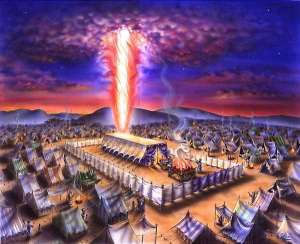
pillar-of-fireThey danced and sang into the night to celebrate the God who brought Light into the darkness.  They remembered the God that led their people through the utter darkness of a desert by blazing a fire into the night.
It was the dark of night, and yet the courtyard was bright like the light of day.

And it is in this context, in the middle of the festival of light, that I believe Jesus approached and said the words, which stunned the people…

“I am the Light of the world.”  (John 8:12)

Can you imagine him saying that?  I mean, he wasn’t just claiming to be smart, or unusually gifted.   He was claiming to be “The Light.”

He was declaring that he is the one who leads us and guides us and shows the best way to live in a world that is so full of darkness.

He was referencing the first thing that God creates in Genesis (light) and claiming to be that creative power in our midst.  As if he could once again recreate our dark world.

He was pointing at the brilliance of dancing flames all around and claiming to be the source of that light.

He was saying, that though the world lives by the darkness of fear, oppression, violence and power, that he offered the kind of life that could overpower that darkness for individuals and even all of humanity.

He was, as he looked around at the celebration, saying that the party was about him.

A beautiful statement.  Complex.  So full of subtle meaning and intent.  And scandalous to be sure.   To tell religious people that you are God, is fraught with controversy.  =)

But, it isn’t what Jesus says about himself that is most controversial.  I mean, from this side of history I can at least understand that Jesus would claim to be the “Light of the world”.

But read for a moment again what Matthew says he said about you…

“You are the light of the world.”  (Matthew 5:14)

Let that sink in for a moment . . .

Jesus calls YOU the light of the world.

Now, has Jesus just lost his mind here?  Does he really understand what he is saying?  Did somebody perhaps quote him wrong?  Did he mean to repeat that “he was the light” but goofed up?  I mean, which is it?  Is he the light or are you?

“I am the Light of the world.”      “You are the light of the world.”

What if Jesus really meant what he was saying?  What if both are true?  What if in some complex, meaningful way YOU really are a partner in the recreation of this world?  What if Jesus was simply saying that your life matters much more than you think?  What if He is counting on your light?

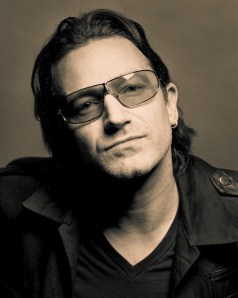
In their new album, “No Line on the Horizon”, U2 has a song titled “Get on Your Boots”.  And in this song, Bono is calling all of us to put on our boots and get to work re-forming this world into what God originally intended.

bono-11“You free me from the dark dream
Candy floss ice cream
All our kids are screaming
But the ghosts aren’t real

Here’s where we gotta be
Love and community
Laughter is eternity
If joy is real

You don’t know how beautiful
You don’t know how beautiful you are
You don’t know, and you don’t get it, do you?
You don’t know how beautiful you are”

Maybe Bono is right.  Maybe we really don’t know how beautiful we are.  Maybe we have sat around too much waiting for what God will do, when all along Jesus was saying, “YOU are the light of the world.  Go be the light!”

If this is true, than maybe my living room doesn’t need to stay dark.  Maybe I just need to turn on a light . . .

In Jesus’ day, the temple of the Jews sat on the hill elevated in the city of Jerusalem.   And because of its prominence, it could be seen from many parts of the city.

nightcourtyard2And there were some who said that on this night during the festival of booths that light from the courtyard of the temple was so bright that every courtyard in Jerusalem was lit.   Because the light was so intense it spilled out into the night and illuminated every other courtyard in the city.

Every courtyard was lit because of the light coming from the temple.

I wonder how many courtyards and driveways and living rooms around my city could be less dark because of the light in me.

Maybe my city is ready is ready for me to embrace not only Jesus’ statement that he is the light, but that because of him, I am now too.

“You are the light of the world.

A city on a hill cannot be hidden.  Neither do people light a lamp and put it under a bowl.  Instead they put it on its stand, and it gives light to everyone in the house.  In the same way, let your light shine before others, that they may see your good deeds and glorify your Father in heaven.”  (Matthew 5:14-16)

ReThinking Religion

I just finished reading a book, “ReJesus” by Alan Hirsch and Michael Frost.  I will be doing a full book review tomorrow, however, there was a great quote that I thought I would post today.   The quote comes as a bit of a “side-note” in the greater context of the book, but is well worth the space re-typing it  here.

————————————————————————————————————————-

“For many suburban, middle-class churches, niceness is the supreme expression of discipleship.  But any cursory reading of the Gospels will serve to remind you that Jesus wasn’t always nice.  He was good.  He was loving.  He was compassionate.  But he wasn’t always nice.  The church must abandon its preference for good-manners piety and adopt again the kingdom values as taught by Jesus.

rejesusAllow us to give you an example.  Some time ago Michael wrote an article for a Sydney newspaper, commenting on the influence of Sydney’s largest church, Hillsong.  In the article, he defended the church against various attacks in the media, but he also gently raised his concerns about Hillsong’s emphasis on prosperity doctrine (the so-called health and wealth gospel).  He received an avalanche of letters and emails berating him for daring to be publicly critical of another church.  A significant number of these angry correspondents claimed that it was un-Christlike to criticize the church in any way.

Now, whether you agree with Michael’s decision to write such a thing in the media or not is beside the point.  But the point is that somehow these people, most of them ministers, failed to recognize that Jesus was regularly and scathingly critical of the religious leaders of his faith community.  Furthermore, Jesus’ seven messages to the seven churches in the book of Revelation (Rev. 2:1-3:22) contain plenty of harsh critical comments directed at the church!

To claim that it is un-Christlike to criticize the church is to disregard the example of Jesus.”

—————————————————————————————————————————

Wow!  Nicely said.  In the Spirit of Jesus and the personality of those like yesterday’s Soren Kierkegaard, maybe the call is for at least a few to become this new voice of reformation in the church today.   Could it be that what is needed is not so much a voice that is critical of unbelievers, but an “inner-voice” within the church that is critical of what we have created out of Jesus’ teachings and life?

Of course there is no room for a spirit of meanness, disrespect and destruction, but maybe as much as any time in history, the church needs the new voices of Luther, Kierkegaard, Calvin and even Jesus Himself to be heard.

Rather than reacting with anger towards these voices calling us to reform, perhaps it is time to evaluate the merit of what is being said and look again with a critical eye at the static religion we have created out of the wild and beautiful revolution Jesus initiated.

Possibly we are due for a total re-calibration and re-centering on the person of Jesus in our organizational churches.

For a great start to this discussion, consider picking up a copy of “ReJesus“.

Think about it…