Why am I still sitting in the dark?

I am at home tonight all by myself.   The house is mostly dark, except for the dim 15-watt icicle-bulbs reflecting off the ornamental glass in the entryway and the soft-glow of SportsCenter spilling into my living room from the TV.

It amazes me how such a little amount of light can illuminate an area and shatter the otherwise complete darkness.

hagia_sophia_vestibule_christ_mosaicJesus knew about the dark.  Jesus knew just how dark the world could be.   Not the darkness of my living room.  But the darkness of poverty, discrimination, greed, disease, oppression, tragedy, broken relationship, economic crisis, violence and war.

And in the middle of that darkness, he came forward and made a radical claim.   But it isn’t just the claim that impresses me tonight, as I sit in darkness, it’s the context.

You see, once a year the Jews would celebrate a week long party called the “feast of booths” or the “feast of tabernacles” that served to remind them of their people’s history of being led around the Sinai desert, living in tents and provided for by God for 40 years.

And each year, at the end of the first day of the “feast of tabernacles” the Jews would hold a special celebration.   The daylight would grow dim and finally give way to the night sky and the people would gather in a specific courtyard of the temple called the court of women.

As the people gathered, four large candelabras accompanied by four large bowls of fire would be lit.   And as people arrived to this festival of light, musicians would begin to play and some would break out into song.   Soon everyone was singing the ancient songs of praise.   And dancers would fill the middle of the courtyard moving in sequence to the music and tossing lit torches into the sky.

pillar-of-fireThey danced and sang into the night to celebrate the God who brought Light into the darkness.  They remembered the God that led their people through the utter darkness of a desert by blazing a fire into the night.

It was the dark of night, and yet the courtyard was bright like the light of day.

And it is in this context, in the middle of the festival of light, that I believe Jesus approached and said the words, which stunned the people…

“I am the Light of the world.”  (John 8:12)

Can you imagine him saying that?  I mean, he wasn’t just claiming to be smart, or unusually gifted.   He was claiming to be “The Light.”

He was declaring that he is the one who leads us and guides us and shows the best way to live in a world that is so full of darkness.

He was referencing the first thing that God creates in Genesis (light) and claiming to be that creative power in our midst.  As if he could once again recreate our dark world.

He was pointing at the brilliance of dancing flames all around and claiming to be the source of that light.

He was saying, that though the world lives by the darkness of fear, oppression, violence and power, that he offered the kind of life that could overpower that darkness for individuals and even all of humanity.

He was, as he looked around at the celebration, saying that the party was about him.

A beautiful statement.  Complex.  So full of subtle meaning and intent.  And scandalous to be sure.   To tell religious people that you are God, is fraught with controversy.  =)

But, it isn’t what Jesus says about himself that is most controversial.  I mean, from this side of history I can at least understand that Jesus would claim to be the “Light of the world”.

But read for a moment again what Matthew says he said about you…

“You are the light of the world.”  (Matthew 5:14)

Let that sink in for a moment . . .

Jesus calls YOU the light of the world.

Now, has Jesus just lost his mind here?  Does he really understand what he is saying?  Did somebody perhaps quote him wrong?  Did he mean to repeat that “he was the light” but goofed up?  I mean, which is it?  Is he the light or are you?

“I am the Light of the world.”      “You are the light of the world.”

What if Jesus really meant what he was saying?  What if both are true?  What if in some complex, meaningful way YOU really are a partner in the recreation of this world?  What if Jesus was simply saying that your life matters much more than you think?  What if He is counting on your light?

In their new album, “No Line on the Horizon”, U2 has a song titled “Get on Your Boots”.  And in this song, Bono is calling all of us to put on our boots and get to work re-forming this world into what God originally intended.

bono-11“You free me from the dark dream
Candy floss ice cream
All our kids are screaming
But the ghosts aren’t real

Here’s where we gotta be
Love and community
Laughter is eternity
If joy is real

You don’t know how beautiful
You don’t know how beautiful you are
You don’t know, and you don’t get it, do you?
You don’t know how beautiful you are”

Maybe Bono is right.  Maybe we really don’t know how beautiful we are.  Maybe we have sat around too much waiting for what God will do, when all along Jesus was saying, “YOU are the light of the world.  Go be the light!”

If this is true, than maybe my living room doesn’t need to stay dark.  Maybe I just need to turn on a light . . .

In Jesus’ day, the temple of the Jews sat on the hill elevated in the city of Jerusalem.   And because of its prominence, it could be seen from many parts of the city.

nightcourtyard2And there were some who said that on this night during the festival of booths that light from the courtyard of the temple was so bright that every courtyard in Jerusalem was lit.   Because the light was so intense it spilled out into the night and illuminated every other courtyard in the city.

Every courtyard was lit because of the light coming from the temple.

I wonder how many courtyards and driveways and living rooms around my city could be less dark because of the light in me.

Maybe my city is ready is ready for me to embrace not only Jesus’ statement that he is the light, but that because of him, I am now too.

“You are the light of the world.

A city on a hill cannot be hidden.  Neither do people light a lamp and put it under a bowl.  Instead they put it on its stand, and it gives light to everyone in the house.  In the same way, let your light shine before others, that they may see your good deeds and glorify your Father in heaven.”  (Matthew 5:14-16)

ReThinking Religion

I just finished reading a book, “ReJesus” by Alan Hirsch and Michael Frost.  I will be doing a full book review tomorrow, however, there was a great quote that I thought I would post today.   The quote comes as a bit of a “side-note” in the greater context of the book, but is well worth the space re-typing it  here.

————————————————————————————————————————-

“For many suburban, middle-class churches, niceness is the supreme expression of discipleship.  But any cursory reading of the Gospels will serve to remind you that Jesus wasn’t always nice.  He was good.  He was loving.  He was compassionate.  But he wasn’t always nice.  The church must abandon its preference for good-manners piety and adopt again the kingdom values as taught by Jesus.

rejesusAllow us to give you an example.  Some time ago Michael wrote an article for a Sydney newspaper, commenting on the influence of Sydney’s largest church, Hillsong.  In the article, he defended the church against various attacks in the media, but he also gently raised his concerns about Hillsong’s emphasis on prosperity doctrine (the so-called health and wealth gospel).  He received an avalanche of letters and emails berating him for daring to be publicly critical of another church.  A significant number of these angry correspondents claimed that it was un-Christlike to criticize the church in any way.

Now, whether you agree with Michael’s decision to write such a thing in the media or not is beside the point.  But the point is that somehow these people, most of them ministers, failed to recognize that Jesus was regularly and scathingly critical of the religious leaders of his faith community.  Furthermore, Jesus’ seven messages to the seven churches in the book of Revelation (Rev. 2:1-3:22) contain plenty of harsh critical comments directed at the church!

To claim that it is un-Christlike to criticize the church is to disregard the example of Jesus.”

—————————————————————————————————————————

Wow!  Nicely said.  In the Spirit of Jesus and the personality of those like yesterday’s Soren Kierkegaard, maybe the call is for at least a few to become this new voice of reformation in the church today.   Could it be that what is needed is not so much a voice that is critical of unbelievers, but an “inner-voice” within the church that is critical of what we have created out of Jesus’ teachings and life?

Of course there is no room for a spirit of meanness, disrespect and destruction, but maybe as much as any time in history, the church needs the new voices of Luther, Kierkegaard, Calvin and even Jesus Himself to be heard.

Rather than reacting with anger towards these voices calling us to reform, perhaps it is time to evaluate the merit of what is being said and look again with a critical eye at the static religion we have created out of the wild and beautiful revolution Jesus initiated.

Possibly we are due for a total re-calibration and re-centering on the person of Jesus in our organizational churches.

For a great start to this discussion, consider picking up a copy of “ReJesus“.

Think about it…

Personality Highlight – Soren Kierkegaard

“My mission is to introduce Christianity into Christendom.”

kierkegaardLike Jesus attacking Pharisaism, Soren Kierkegaard came out swinging against every phoney form of institutionalized Christianity.

“An apostle proclaims truth, an auditor is responsible for discovering counterfeits,” wrote this nineteenth-century Danish philosopher and theologian.  He saw it as his mission to be an auditor of Christendom, an institution he charged with sanitizing Jesus and makeing light of his message.

Denmark’s state church, he wrote, was “just about as genuine as tea made from a bit of paper which once lay in a drawer beside another bit of paper which had once been used to wrap up a few dried tea leaves from which tea had already been made three times.”

One of the fathers of existentialism, this remarkably complex and intelligent man underwent a profound spiritual transformation at the age of thirty-five and thereafter sought to apply some of his existential ideas to Christianity and thus reintroduce his nation to Jesus.  Individuals, not the state, Kierkegaard argued, needed to make a “leap of faith” in order to enter into authentic Christianity.

As a little Jesus, he hoped that his attacks against the banality of institutional religion would anger Danish Christians enough to make them re-examine their relationship to Jesus.

(taken from “ReJesus” by Alan Hirsch and Michael Frost)

While I don’t agree with everything that Kierkegaard wrote and said, I love his spirit and passion for reform.  One wonders if we could use a few more people to take up his mantle in this culture and at this time to call us away from our religious idolatry and back to Jesus.

Think about it….

The End of Christian America

[great article link at the bottom of this post!]

Until recently, I lived in the most “unchurched” region of the country.

Now apparently, that designation has switched (very slightly) from the Northwest part of our country to the Northeast (though really “church” hasn’t been popular in either region for years).  But, whether we are first in “lack of churchiness” or second, if there is one thing I know it is living in a post-Christian religion environment.

Newsweek coverWhich is why it interested me to read several articles recently that seemed to indicate what many of us have thought for years, that the rest of the country is catching up to us… in godlessness, that is.   [see “The End of Christian America” and  “The Coming Evangelical Collapse”]

Recent studies find that American people are exiting the Christian religion in greater numbers than ever.  Be it evangelical, mainline, etc, America is losing it’s religion.

So what does this mean?  Well, I suppose that depends on who you ask.  Many people think that it isn’t exactly ideal.  I have heard many well-meaning preachers proclaim it as the beginning of the end; the ushering in of Armageddon.  Ahhh, you premillenialist friends are always looking for the signs of the end, aren’t you?  =)

But, it isn’t among just preachers.  There is panic among many everyday Christians.  There is fear that what has been the driving force of morality in this country is going to erode and leave their children depraved and godless.  I have sat in a pew next to many parents who feel this tension all too keenly.  Even in Seattle (where we have a several decade head start in living in this environment) the church (generally), is characterized by great fear in this arena.  It seems as though this decline in the Christian religion–at least in the form we are accustomed to–can only be a bad thing.

Now, before going any further, I’d like you to know that I understand this fear.  I think I understand why many of my brothers and sisters, whom I love, feel this way.  It is indeed scary to see the moral/religious fiber of your country shaken.  I can sympathize with this uncertainty.

christian_america2However, I think our fear may be causing us to behave strangely.  If you read this blog, you know that I often call-out the apparent un-Christlikeness of the church.   In doing so, I am not meaning to say that I don’t believe in Jesus.  I do.  I believe Jesus has opened the fullest and most meaningful way of life for all people.  I want more people to experience this life, not less.  And, I am not trying to say I don’t believe in the church.  Christians don’t necessarily have bad intentions.  I simply think we need to be very careful and think extremely critically about our methods of communicating a message.  Too often, the methods have become the message.  Too easily we believe that we should use any means necessary to convey our point and “the ends justify the means” should never be the attitude of Christ’s people.  Especially as it relates to the fear of “losing our Christian nation.”

Fear of the end of Christian America.

Because of this fear, we have seen (I believe) many Christians behaving in ways that do not show love.  Whether it is the polarizing political attempt to legislate Christianity, the stereotyping generality of protest signs or simply the attempt to shame those who are perceived as the danger through our bumperstickers, t-shirts and slogans.

Because of fear we have reacted poorly.

But, perhaps, we do not need to fear this decline so much as we have thought.  Maybe what we feel we need to protect doesn’t need protected at all.  Maybe, the cause of Christ could be advanced in a much more meaningful way if what we are scared to lose was really to disappear.

You see, living in Seattle, I have heard for as long as I can remember about how non-churched this region is.  I grew up knowing that I was among less than 10% of my local population that attended any type of church each week.   I heard these statistics as a teenager, while in Bible college and beyond in ministry.  I was taught that I was the only beacon of religion in a depraved land.

But, as I’ve hung out with people, got to know them and seen many of them make decisions to follow the life and example of Jesus with their lives authentically, I have learned that these statistics are a bit misleading.  The reality of my interaction with people in this “godless” land is not as dire as I had been made to believe.  In fact, while we may be declining in religious fervor, I have found people here to be more spiritually open to discussion than ever before.

Almost no one that I meet anymore is unwilling to have a spiritual discussion with me, as long as it is honest and not aimed at “converting” them.   And though this seems strange to some of you, I actually think that the message of Jesus is finding more traction in this culture that we fear than in the one we felt comfortable in previously.  It is almost as if the dismantling of the “civic religion of Christianity” is helping people to rediscover the Jesus behind this cultural influence.

church_stateOf course we all know people that would label themselves “Christian” though they make no attempt to follow and model the life of Jesus.  This country, since its beginning, has been labeled by the same generic label, “Christian.”  It has become a cultural and national label rather than an affiliation with the personhood of Jesus.  This faux Christianity, I contend, has actually made it much more difficult to lead people to authentic relationship with Jesus.  And to see it decline, in some odd sense (to some of you) gives me great hope for the future.

I believe we live in the greatest moment for followers of Jesus in the history of our world (and country).  I believe that this decline is preparing the soil (and has already) for a much deeper commitment to Jesus in the hearts of people than we have seen in our lifetimes.   It is not a day for fear, but for great expectation.  It is a great day to be a follower of Jesus!

I have included a link below to a blog by Greg Boyd.  His excellent blog lays out several reasons not to fear this decline.  Hopefully, it will be very helpful to some of you.

“Don’t Weep for the Demise of American Christianity”

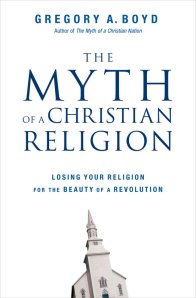
But he also has two excellent books on this subject.  The second of which just came out last week and is fantastic.  Both of these books should be required reading for Christians in America.  If you haven’t read them, please consider picking up a copy this week.

themythofachristiannation

myth of a christian religion

“Day of Silence” – Will You Be Heard?

I don’t think I’ve ever gone a whole day without talking.

In fact, I’m not actually sure I’ve made it through very many complete hours without talking.  It seems that I’m vary rarely at a loss of words or something to say.  (If you read this blog, you’ve already figured this out).  =)

But, tomorrow, I’m gonna stay quiet.

day of silenceTomorrow is the annual “Day of Silence.”  Many high school students will choose to “not talk” during the day tomorrow in order to show their solidarity with their many peers that are wrestling with LGBT issues in loneliness and fear.

Now, I know many Christians who vehemently oppose this movement each year.  In fact, last year I think I witnessed an all new low in Christian depravity as a local church actually held a protest outside a high school in my area (read last year’s blog here).

A church protesting high school students?  Huh?

Effectively, though the church leaders claim nobler intentions, the message was “God hates gay people and so do Christians.”

And while many people will not go so far as to hold a protest outside a school tomorrow, a noticeable amount of “Christian” students will be absent tomorrow in an effort to make their own statement of condemnation about it.  Others will attend but simply ridicule those participating and be as boisterous as possible in their disruption.

However, I would like to humbly suggest another alternative: PARTICIPATE.

In fact, I’d like to propose that maybe participation is the most CHRIST-LIKE thing we could possibly do.  For while I may not agree with a particular lifestyle that may be reflected in some people of this movement, Jesus calls me to show love to people that are different than me, not condemnation.

Wayne Jacobsen is the publisher of the best-selling book, The Shack. Recently on his Lifestream blog, he wrote:

…many public school students will observe a Day of Silence as a means to protest harassment and discrimination based on sexual orientation or gender identity. It has been going on for almost a decade and many parents who are against ‘the gay agenda’ feel the need to keep their kids home that day, or participate in a Day of Truth that makes sure everyone in their district knows they consider homosexuality to be immoral. Is this the way Jesus would respond?

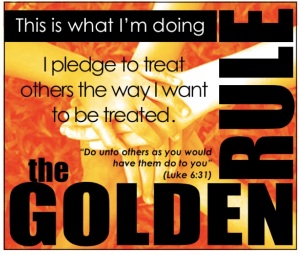
Perhaps a better way to encourage faith-based students to respond would be to adopt the Golden Rule Pledge. “I pledge to treat others the way I want to be treated.” It allows a pro-active response to sharing the burden to increase mutual respect for all, regardless of our differing points of view.

I agree whole-heartedly.  Maybe we should spend less time trying to “win a battle of accepted morality” and more time living a life of CHRIST-LIKE love.  Maybe Jesus’ model of love, compassion and grace really is more powerful than our protest.  Maybe to be silent in solidarity with the weak, in some Kingdom of God way, really is more transforming than our disruptive and polarizing vocalization.

So, I’m gonna stay quiet because even if I disagree with people about their lifestyle, I don’t think Jesus will allow me to treat them with any less love than everyone else.

I’m gonna stay quiet because too many young people wrestling with complex sexual orientation issues are afraid to talk about it for fear of ridicule, ostracization, or even physical harm.

I’m gonna stay quiet because Jesus commands me to treat other people like I would like to be treated, and I so desperately want to let His way of life direct and control my own.

If you’d like to consider participating or supporting those who do as well, please visit this great site for more information on an excellent alternative/compliment to the DOS:

www.goldenrulepledge.com

golden rule pledge

So, join me in trying a new way of life: LOVE.

Consider staying “SILENT.”  It may be that our LBGT community has heard enough of our voices already anyway.

Scary God or Scary People?

One of the toughest problems that I have been wrestling with in the last year is how to match up the God of the Old Testament that engages in so much violence with God as revealed completely in “gentle” Jesus of the New Testament.

jesus-with-rifleAs a follower of Christ, my primary belief is not in the Bible.  My faith is in Jesus.  I follow him, not a book.  However, I choose to read that book because of my belief in Him.  And when it comes to reading that book, I do so through the “lense” of Jesus.  I base all of my theology and understanding of God on the person of Jesus, and through that filter I read the rest of the book.  Which, of course, means that I read those very troubling Old Testament passages through how God has been revealed in Jesus as well.

This has been quite a journey for me over several years.  And yet, as I have re-focused my centrality around Jesus rather than just the Bible, I can only come to one conclusion:  I believe that violence is always wrong and outside of God’s ideal for me personally and humankind generally.  Whether it be in the form of war, personal vengeance or even self-defense, I believe I am always called to “return evil with good” and not claim my right to violence.

However, there is much to still be wrestled with in this arena.  And while I am still quite a work in progress, I think a lot of understanding is falling into place.

For those of you who may have found yourself wrestling with this same topic at some point, allow me to suggest some helpful resources.

First, is an excellent article that I came across this week by Brad Cole that deals with this topic called, “Scary God or Scary People.”  Take a read here, if you are interested.  (Scary God or Scary People)

Also, Greg Boyd (author and preacher) has some very good insights in his book:

themythofachristiannation“The Myth of A Christian Nation”

and in a series of blog entries that he did last year.  Here is a link to those posts as well.

Part I
Part II

Part III

Part IV

Part V

Part VI
Part VII
Part VIII

Part IX
Part X
Part XI
Part XII
PartXIII

Anyway, some of you have been asking about some good resources and hopefully this will help.  Happy thinking!

Love Connection – 3/22/09 – Part 2

Ok, this may be the most “scandalous” blog that I have written to date.  Wait, a minute… probably not.  The “Gay-Bath House” series was a bit scandalous too, huh? (Gay-Bath House article).

love-connection-jpgOh well, apparently my lot in life is to get involved in the dirty, messy and controversial subjects.   So, let’s jump right into the final question for this week, which almost gave me a coronary attack as I read it knowing I’d have to answer it!  Thanks everybody…  Let’s just get back to asking questions that are “safe,” huh?  LOL.


Question #3:
What are your views on masturbation?  Is it okay?

Wow, so we’re gonna go THERE now?  Ok.  I guess I should have known that we would eventually get here.   This question doesn’t necessarily have to do with relationships, however it is an issue that could impact relationships on many different levels.   So let’s go ahead and discuss it.

This is a very difficult question to answer.  On the one hand, many people believe it is wrong.  But, on the flip side, many Christians believe it is not.  Either way I answer I do two things:  1) I make half of everybody angry.  2) I assume that I actually know the answer.  (LOL)

So, let me give you my best effort at an answer.  It may not be perfect, but for better or worse, it is what I believe by faith right now.

First, the Bible has nothing to say directly about this issue.  The word “masturbation” is not in the Bible at all.  It is a subject, like dating, that isn’t discussed.  And without making too much of an “argument from silence” it does at least gives us a little bit of flexibility here.

However, there is one Bible text that has been used to condemn the behavior and it is worth mentioning here because its often use in this manner is not only unwarranted but flat-out coercive and wrong.

onanGenesis 38:8-10:  “Then Judah said to Onan, “Sleep with your brother’s wife and fulfill your duty to her as a brother-in-law to raise up offspring for your brother.  But Onan knew that the child would not be his; so whenever he slept with his brother’s wife, he spilled his semen on the ground to keep from providing offspring for his brother.  What he did was wicked in the LORD’s sight; so he put him to death also.”

Wow!  How’s that for a little provocative Bible reading?  Just tell your parents: “Hey, you wanted me to read the Bible.”

Now, when I was a teenager (like 100 years ago), this verse was quoted to me as God’s ultimate word against masturbation.  The line went like this, “See, Onan wasted his seed  (sperm) and God’s punishment for him was DEATH!!”

Nothing like a little fear that God will strike you dead to keep you from masturbating!

However, this story has ABSOLUTELY NOTHING TO DO WITH MASTURBATION.  It is a story about a strange, but merciful Jewish law that took care of widows and passed on family inheritance.

In the Jewish culture, if the husband of a woman died, his brother was required to marry her and save her from widowhood.  And if she did not have a son to pass the deceased husband’s land and assets to, then the brother was required to father a son with her.   This son would not be considered the brother’s son, but the deceased husband’s son and thus he would inherit the land.   It was God’s way of providing for families in crisis and ensuring rightful land inheritance.

In this text, then, God is not addressing masturbation at all.  He is punishing Onan for purposefully being disobedient and not taking care of his brother’s family.

So, if the bible doesn’t directly address this question, than what are we to make of it?  Is it okay?  Is it a sin?

Well . . . to say that it is a sin goes beyond what we have God directly saying to us in the Bible.  Because of this, theoretically, I believe that the act itself is not sin.

looking with lustHowever, while this makes sense theoretically, there is a very practical reality to consider.  Maybe most compelling are the inevitable thoughts that go along with this act.   And while no Bible text deals with masturbation, per se, Jesus does have some pretty radical things to say about our thought-life.

“You have heard it said that you should not commit adultery.  But I tell you that anyone who looks at a woman lustfully has already committed adultery with her in his heart.”  — Matthew 5:27-28

What Jesus is saying here is that our “thoughts” are as important as our “actions.”   The intention behind what we do or don’t do is as crucial as our actual actions.

Now, even if theoretically, masturbation isn’t a sin, think of all the thoughts that usually invade your mind during those moments.  I would say that it is extremely rare that one engages in that action without some sort of impure thoughts about another person, whether you know them or don’t know them (in the case of most pornography).  And these thoughts are IMPORTANT, because they affect our relationships with other people and how we see other people.  Particularly for guys, this type of visualization reinforces “objectification” of women–seeing women as “objects” to possess rather than people to be honored and loved.

Couple that with the fact that masturbation is about selfish gratification (as opposed to sexual intercourse which when performed “in love” as intended is done as much for the other person as for you) and you at the very least have a less than beneficial activity.

So when it comes right down to it, I’m not sure I can make that judgment call for you.  I don’t know what goes on in your head.  Only you do.  And I don’t know what God’s Spirit convicts you about.

But it might help as you think through this issue for yourself to be reminded that sin is not primarily a legal infraction.  Sin is not like a speeding ticket.  God isn’t necessarily keeping track of all your tickets and waiting for you to “pay-up.”

Instead, I believe sin is more like an infection.  It is something that messes up your relationships with God and other people, like an infection messes up the way your body is supposed to work.

With this in mind, I don’t think God is going to kill you for it and you won’t be sent to hell for masturbating too much.   However, it may warrant a bit of caution.  Just because something may not be sin, doesn’t necessarily mean that it is good for you or for your relationships with other people.   And if this issue causes problems between you and God or you and other people, you would be wise to listen to that prompting of the Spirit and choose differently.

Ok.  Hope that helps.

By the way, for those counting at home, I said the word, “masturbation” nine times.  Oops, make that ten.

Love Connection – Passage 3/22/09

love-connection-jpgWell, here we are in our last couple weeks of this series, “Love Connection” and I think it has been kind of fun.  Hopefully you have too.   I know we still have much to learn about our relationships with each other, and yet I think we’ve learned a bit along the way.  Hopefully this conversation will remain as a record of our time here.

Here are the questions from this weekend’s PASSAGE message.


Question #1:
Do you think dating in high school is necessary?

I’m actually kind of surprised that this question hasn’t come up previously.   It seems like there are a lot of opinions out there on this one.   Some people think dating is the best way to find a mate, and others think that dating is a cultural assumption that should be challenged.  One writer even wrote a book called, “I Kissed Dating Goodbye,” where he encouraged people to swear off dating all together.

And beyond the opinions, there are many different guidelines that parents set out for their students; each family has its own rules.  *DISCLAIMER:  you should do whatever your parents say!!!!

high school datingSo what does the bible teach us about dating?  Very little.  In fact, the Bible doesn’t really prescribe any particular way that people should date, court or be “arranged” for marriage.

That alone is interesting isn’t it?  You’d think that as much as we talk about it that it would have some pretty big “air-time” in the BIG BOOK.   But, sometimes a lack of discussion of a topic in the Bible might indicate something important.  Perhaps there isn’t a mention of a particular method of “love-finding” because there isn’t a “RIGHT” and “WRONG” way to do it, from God’s perspective.

I mean, if God has created us to be able to choose WHO we will love (rather than pre-determining who we will love) then maybe he has given us the choice as to HOW we choose this person as well.

So should you date in high school?  Maybe.  Should your parents arrange a marriage for you?  Maybe.  Should you go on only group-dates and build friendships that will lead to a love commitment?  Maybe.

Do you see what I’m saying?  Maybe the question is not whether or not we should date people exclusively, but what kind of “daters” or “non-daters” we will be…

Three weeks ago, after the last message I answered a question that got into this subject.  It might be worth a read or a re-read if you want some more on “the kind of daters” we should be.

You’ll find the discussion in “Question #1” at this link:

https://nickloyd.com/2009/02/26/love-connection-passage-22209-part-two/

Hope that’s helpful…

Question #2:
What is your opinion on long-distance relationships?

They are difficult.

Hahahaha…  Well, they are, aren’t they?

long_distance_love_cThis is a good question because many people start dating-from-afar.   Sometimes the physical distance between people is over many states or countries.  But, in another way, physical distance can be almost as far if you live in the same county but go to different schools and rarely see each other.

Look, I don’t think that there is anything wrong with a long-distance relationship.   They are different.  And they are difficult.  But all relationships are difficult.  Whether you are talking about long-distance or close-encounter relationships (hahaha, sounds like some weird alien love, LOL), there are both positives and negatives.

Let’s look at the positives.  In some ways long-distance relationships may have potential for greater health.   One benefit of distance is that it often forces people to learn about each other on a deeper level than just physical.  Obviously if you live far apart physical contact will be limited.  Because of this, phone conversations and text messages and facebook chats become the primary method of affection.  But this affection-from-a-distance is healthy in that you are LEARNING deep interests, motives, beliefs and personality traits of the other person.

Also, a little distance test is good for any relationship.  People in relationships formed in close physical proximity have a tendency to quickly become dependent on each other.  You know the feeling:  “I can’t live without seeing him today!”   And yet, we have already learned that we were never meant to find our fulfillment in other human being; only in God.   Being apart physically may help keep that distinction more obvious.

datingcartoon15However, while there are some benefits (in theory) there are also some drawbacks.  People living away from each other don’t have the opportunity to experience the other person in “real life.”   There is only so much you can learn from phone calls and late-night text messages.  Who a person is on the phone and who they are in everyday life with their family and friends may be very different.

Also, the time and focal commitment involved in “long-distance” relationships often comes at the expense of a person’s other relationships that are more local.  When a person’s mind is off with his girlfriend in “Arizona” it is then difficult to invest in relationships (friends, family, etc.) or responsibilities right here in Everett.  To some degree this is true of all relationships, but more so with long-distance ones, I think.

Anyway, I think there are probably more positives and negatives that could be said here, but hopefully you get my point.  Long-distance relationships may be either good or bad, but that probably has more to do with the convictions of the two people involved than the land (or sea) that is between them.

Thanks for the great question!

Love Connection – Passage 2/22/09 – Part Two

Ok, I apologize for getting these last two questions out a little late this week.  It has been a crazy week.  But, without any more excuses, here are they are!


Question #3
Why does it seem that just when you get a boyfriend, you immediately start liking someone else?

Well, I have to say that this question made me chuckle a little bit as I read it the first few times.   Not that it is a bad question; it’s just that I think I’ve experienced the feeling you are describing.   Ahhh, love can be maddening, right?   You get involved with someone on an exclusive level, and then almost immediately you begin to notice someone else that interests you.

flirt_fullOk.  Let’s see what we can make of this.  It is a legitimate question; especially for someone at your phase of life.  So, let me just say a few things.

Part of the reason this happens is because you are at a place in your life where you are starting to explore potential mates.  Which is a fun place to be!

Because of all of the options available to you, there will be curiosity and interest in a lot of different directions.  And in that way, the feeling may not be so bad.  You do want to learn about people and personalities and which of those you like being around and could live with for the long-haul.   Meeting and exploring interest in more than one person is probably healthy.

Now, I’m not one that thinks “exclusive dating” at your age is totally wrong.   I know some people think that young people should never date exclusively.  Personally, I’m not sure saying that is necessary.  However, I think these people do have a strong point in at least this area:  You should be very careful about exclusively dating one person while young.  And the reason is because of the feeling you are expressing in your question.

You aren’t ready to get married and be committed to one person, most likely.  You are just looking at options.  Choosing then to commit yourself to one person could be potentially harmful to them and you.  You aren’t promising to be with this person forever.  And they aren’t promising that to you.  Even if you say those very words, there isn’t really anything like a marriage certificate to back it up.

Young people tend to get hurt in relationships because they treat them like they are going to last forever, when in fact, both parties are still looking at all the options.

Maybe a good idea is to avoid the kind of difficulty that is suggested in your question and choose not to “exclusively date” every guy that you develop feelings for and interest in.   I know the normal pattern is:  “See guy.  Fall for guy.  Guy and girl start dating.  Guy and girl break-up.  Look for new guy.  See guy.  Fall for guy, etc.   The cycle continues until it finally sticks.

But, a lot of young people get hurt unnecessarily in the process—like for instance, the young man that you may be dating now that I know you have no desire to hurt.  You don’t want to hurt him.  But, you are still young and exploring options.
So, maybe you could find other ways to get to know guys better (through group events, deeper friendships, etc.) without creating that type of one-on-one exclusive relationship.

2004_chevrolet_astroAs an example:  when I go to buy a new vehicle, I like to drive around to many different dealership lots and see what is out there.  And before I get too serious about any of them specifically I want to go on a “test-drive”.  Now, when I tell the salesman that I’d like to drive it and see how it handles, I don’t also promise to be faithful to that car and only that car.  I don’t promise to love it and care only for it.  I just tell him I wanna try it out.  If it drives well, than maybe we can pursue it further.

2009_corolla_s3_02Now, I know people aren’t like cars.  But, that actually strengthens my point.  The boring biege Chevy Astro van isn’t going to be disappointed that in the end I choose the bright blue Toyota over it.   (Btw, I would never drive an astro-van).  But, people do get hurt.  And we need to be careful about the commitments we make to people, especially at a young age when we aren’t ready to deliver on those large commitments anyway.

Does this mean that you can’t ever “date” one guy?  No, of course not.  But, I would encourage you to be careful in making that your standard pattern at this age.  There will be time for commitment.  A huge, life-long, for better or for worse commitment.

But for now, maybe just admit that you aren’t quite ready for that and choose to have different kinds of relationships with guys.  Pursue friendships and explore romance in a group-date format and make dating “exclusively” an exception rather than the standard pattern.


Question #4
Is it possible for someone to grow-up with a brother/sister, but not really love them?

hillbilly-toothpasteThis question, like one we had a few weeks ago, isn’t about romantic love (well, at least I hope it isn’t!  Maybe in Arkansas it is! ☺   But, as Austin said on Sunday night, one type of love found in the Bible is between family members.  So, I would like to respond to this one anyway.

I think love for family shares at least one reference point with romantic love.  It is still a choice.  You must choose to love your family (in an agape, selfless understanding of love) as much as you must choose to love your future spouse.  The nature of love is that it is always based on choice.  If there is no choice, than it isn’t love;  it is only a reflex.

Are there moments when you “feel” loving towards family?  Sure.  Are there times when your “feelings” towards your family are anything but loving?  Yep.  But, true love as defined by the Bible isn’t about “feelings” but about actions rooted in choice.  You can choose to put your brother/sister above yourself (LOVE) whether or not you currently even like them.

I don’t know who sent this question and so I don’t know what the exact problem is that your question is addressing.  But, if you are struggling with “loving” a sibling, maybe one that has not been kind to you or loving to you, please remember this:  Love is not based on another person’s performance or behavior.  Love is YOUR CHOICE.

John put it this way:  “This is love: not that we loved God, but that he loved us and sent his Son as an atoning sacrifice for our sins.”  – 1 John 4:10 (TNIV)

Love was GOD’S CHOICE.  Before we chose to love God; maybe even when we had chosen not to; God CHOSE to love us.  It wasn’t based on whether we showed love back.  It was based on God’s choice to ACT with love.

Love is sacrificial.  Love isn’t always returned.  But, those of us who follow Jesus have decided that love is the only option to bring healing to our world.  We believe that the love of Jesus is the only hope for humanity.  And we choose to live our lives in the pattern of God and bring love to every person on the planet; even family members who don’t at times deserve it.

So, may your life be marked with LOVE.  And may your family experience greater love because of your decision to love them before they love you.  And may you in this greatest of ways show yourself to be a true child of your Father, God.

Love Connection – Passage 2/22/09 – Part One

love-connection-jpgI love ranch-flavored sunflower seeds.

Seriously.  I love those things.  I could eat them all day long.  Get me a diet coke and a bag or two of seeds and I’m content for the afternoon.

But I also love cookie crisp cereal, eggo waffles, ESPN, my daughter, University of Oregon sports and, of course, my iPhone.   I love my wife, music, God, video games, good friends, and coffee.

Love.  I say that I love many things.  But, what does “love” mean?  Obviously I don’t love my wife like I love my iPhone, right?   Well, those might be close.  Bad example.  But, it can’t be healthy.

I think you get what I’m saying.  Love for food, for family, for possessions, and for God all employ the same word but mean different things.   And if love can be used for so many things, than what does it really mean?

It’s almost as if since love has come to mean so many things that it doesn’t really mean anything.  Could that be part of our problem with relationships?  Maybe we aren’t really sure what love means anymore.

And so we love our wives like we love our video games.  We love our God like we love our sports.  And maybe that doesn’t hurt our love of video games and sports, but what if it is too shallow to create good relationships with people and God.   What if loving people like we love food is fine for the food but not caloric enough for people?

Well, we are on week three of this series, “Love Connection,” and this last week Austin talked about what love really means.   And here are the questions that came from that discussion.  Again, I’ll respond to two of them today and two more tomorrow.

Please join us.  Read the questions.  Follow the response.   And feel free to join in the dialogue.


Question #1
“What is the difference between loving someone and “being in love”?

This is a great question, because I think it gets to the heart of what we talked about on Sunday night.

3g-iphone-1The problem with both of these terms is they need defined.  When someone says, “love” what do you think of?  Love of what?  Sunflower seeds?  iPhone?   And if love is hard to define, than what about the phrase, “being in love.”  That one seems to have taken on a whole lot of fuzziness.  No one is quite sure what it means.  In fact, most people might tell you that it can’t really be defined at all.  It isn’t something you can describe; you can only feel it.

So, let’s start there because that might be a good clue.   Chances are if you can’t define it and can only “feel” it, then it isn’t real love.  At least not how I think God defines it.  Now because we can love tv-shows and birthday cake in our culture, you can call it whatever you want.  But, I don’t think the feeling of “being in love” is necessarily God-like love.

What I think most people mean when they say “being in love” are the overwhelming feelings of attraction that take over our minds.   You know, those initial feelings we experience when we meet someone we are attracted to.

And those are, in fact, hard to define.  But, we all know the things we feel in those moments of “being in love.”  All you want to do is spend every moment together.  You blow-off sleep to text late into the night.  A song plays on your iPod and you think of your future together.  You write notes and letters full of words of undying love.  All of a sudden you are a poet!  You lie awake day-dreaming of your wedding day.  Etc…

Now, none of these things is bad.  In fact, they are a huge part in bringing people together in relationships.  However, these feelings, as great as they are, aren’t love.

Love is something else entirely.  Now, we’ve covered this many times at this point, but love is not simply a feeling that overwhelms you, but a choice that is proven with actions.

Austin mentioned this last Sunday night, and I think he was right on.  He said we find a definition of sorts for love in the Bible.  1 John 4:10:  “Now this is love: not that we loved God, but that he loved us and gave himself up for us as an atoning sacrifice for our sins.”

il_430xn17617026In essence, John says, “You wanna know what love is?  Well, this is love.  This is it right here.  You know love because God, who is love, loved you.  He defined love for you.  But his definition can’t be found in a dictionary.  Love isn’t made of words and feelings, but of actions.  Love is a verb.  And he demonstrated this action of love by not claiming his own rights and choosing to come and give up his own life for you, though you didn’t deserve it.  In fact, before you even chose to love him.”

Real love is choosing to care about another person more than yourself.  Real love is self-sacrificial.  It chooses to love the other person even when the feelings of “being in love” are gone for a while.  Real love is a commitment of the will to give whatever is necessary, to sacrifice everything for another.

For, example:  real love doesn’t pressure other people to do what you want to do.  Real love asks what the other person needs not what they want.  Real love is honest and authentic and doesn’t need to pretend to be something or someone else.  Real love is willing to give up what would be fun for what would be most helpful or beneficial for the other person.   Real love is sacrifice.

Now, the feelings of “being in love” may be what help us enter into relationships.  The chemistry that we feel in these moments is good, exhilarating and a huge blessing.   But, I don’t think we were ever meant to then define them as love.   Love moves beyond these feelings to a conscious choice to give your whole life to this person regardless of how long those feelings last.

This idea of love, then, obviously moves beyond just romantic relationships.   Should you love your family, your friends and even God with this type of love?  Yeah, I think so.  But, certainly any serious romantic relationship should be built on it.

Which moves us to the next question…


Question #2
How do you know when you truly love someone?

Well, this is a great question, but I’m a little hesitant to respond with too much because we will be going into this one a lot deeper this next week.

However, at least one thing can be said:  because love is a choice, it isn’t as difficult to know when you really love someone as you might imagine.

waterslide0_000Think of it this way.   How do you know when you are really going down a water-slide at Wildwaves?  Well, I don’t know about you, but I know I’m going down the slide when I choose to do it and push off and head on down.   In other words, I know my decision pretty quick.  Either I’m yelling and screaming down a winding tube full of raging water or I’m not.  (I just wonder how many kids have peed in the pool at the bottom!).

Love is similar.   When you choose to start caring about someone more than yourself, than you have engaged in love.

Now, I know that is a little bit simplistic, and we’ll go into greater detail this next week.  (Look at you and your question being ahead of the curve!)  But, I think a lot of the difficulty we have with knowing whether or not we are “really in love” is based on our faulty assumption at the beginning that love is this magical “feeling” that we “fall” into rather than a “choice” that we make.

superman lunch boxI mean, we make choices all day long and don’t question it.  I don’t start eating my subway sandwich and think, “How do I know that I’m really eating lunch?”  (Some philosphers might, Rene Descartes wanted to know how to know he really existed!)  I know I’m eating lunch because I’ve decided it is noon and I’m hungry and that I’m going to eat now (which actually sounds like a good idea, cause all this food talk is making me hungry).

Do you get what I’m saying?  I know there is a bit more to it than just this.  Knowing when we have gone from just the fun feelings of “being in love” to real self-sacrificial God-like love may require the tests of time, security, knowledge, focus and a whole bunch of other stuff that we will get into this next week.

But, if love is really a choice, then at some point I can be sure that I have in fact made this choice.   Now, I could choose at some other point to go back on this choice and make a new choice.  But, that wouldn’t be very loving, would it?  ☺

Hope this partially answers your questions, and hang-in there, hopefully next week will be more helpful.